
The Role of Genetics in Fertility: What You Should Know
Yes, genetics can affect fertility. Genetic and chromosomal factors may influence egg or sperm production and function, embryo development, implantation, and whether a pregnancy continues. Chromosomal abnormalities in particular can contribute to both infertility and miscarriage.
They are, however, only one of many possible factors. Most couples who struggle to conceive do not have an identifiable genetic cause, and genetic testing or preimplantation genetic testing (PGT) is not automatically needed by every person or every IVF cycle. Whether testing makes sense depends on medical history, reproductive history, family history, age, and a specialist's assessment.
What Does Genetics Have to Do With Fertility?
Genetics influences reproduction at several points: when eggs and sperm form, at fertilization, during the embryo's first cell divisions, and at implantation.
Two situations are worth separating. In the first, a person carries a chromosomal change or gene variant that affects their own fertility or could be passed on. In the second, a random error occurs in a particular egg, sperm, or embryo, usually with no inherited cause. Both partners contribute genetic material, so either can be involved.
Genetic factors also sit alongside ovulation problems, tubal damage, endometriosis, uterine conditions, sperm problems, and age-related decline. Our guide to the other common causes of infertility in women covers those. Often several factors are present together, and sometimes none is found.
How Chromosomes Can Affect Fertility
Chromosomes are the structures that carry genes. An egg and a sperm each normally contribute 23, giving an embryo 46. A chromosomal abnormality is a change in their number or structure. In a numerical change, a chromosome is missing or extra. In a structural change, a segment is deleted, duplicated, or moved, as in a translocation.
The effect depends on the specific abnormality and the reproductive context. A person with a balanced translocation, for example, has all their genetic material, only rearranged. They may be healthy and learn of it only after repeated pregnancy losses, because some of their eggs or sperm carry too much or too little genetic material. Many chromosomal changes never affect fertility at all.
What Is Aneuploidy?
Aneuploidy means an abnormal number of chromosomes. An embryo with the typical number is called euploid. Aneuploidy usually arises when chromosomes fail to separate properly as an egg or sperm forms, or in early cell division. It is typically a chance event, not an inherited condition.
In embryos, aneuploidy can lead to failed implantation, early miscarriage, or, less often, a birth with a chromosomal condition such as Down syndrome (trisomy 21).
How Genetics Can Affect Female Fertility
Genetic causes are less common in women than ovulation, tubal or uterine causes. Examples include Turner syndrome, in which an X chromosome is missing in all or some cells and ovarian development is affected, and an FMR1 gene premutation, which is associated with premature ovarian insufficiency. Chromosomal rearrangements can contribute to infertility or recurrent pregnancy loss. The most relevant genetic issue for most women is age-related embryo aneuploidy, discussed below.
How Genetics Can Affect Male Fertility
Genetic factors are a recognized contributor to male infertility, mainly when sperm production is severely reduced or absent. Klinefelter syndrome (an extra X chromosome) can lower sperm production. Microdeletions on the Y chromosome are a recognized cause of very low or absent sperm. Variants in the CFTR gene can cause the sperm-carrying tubes to be absent. Chromosomal rearrangements can also lead to sperm with unbalanced genetic material.
Because these findings occur mostly in severe cases, genetic tests are usually considered in that setting, not for every abnormal semen result.
Genetics and Miscarriage
Chromosomal abnormalities are an important cause of pregnancy loss, particularly in the first trimester. A single miscarriage is usually a chance event.
Not every miscarriage is genetic, though. Uterine anatomy, thyroid and other hormonal conditions, and antiphospholipid syndrome are also assessed. Evaluation is generally advised after two or more losses. Where appropriate, genetic assessment may involve a karyotype of the couple, analysis of pregnancy tissue, or embryo testing.
How Age Relates to Chromosomal Abnormalities
The proportion of embryos with an abnormal chromosome number tends to rise with maternal age, particularly from the mid-to-late 30s. Eggs form before birth and wait for decades, and the process that separates their chromosomes appears to become less reliable over time. This is a population trend, not a prediction for an individual. Younger women also produce aneuploid embryos, and many older women produce embryos with a typical chromosome number.
What Genetic Testing Can Tell You
"Genetic testing" covers three different things, and they should not be mixed up.
Testing of an individual or couple. Tests such as a karyotype, Y-chromosome microdeletion analysis, or FMR1 testing look for conditions in the partners themselves. They are considered when history or findings point to a reason.
Carrier screening. This checks whether someone carries a variant for certain inherited conditions that could affect a child. Carriers are usually healthy. It does not diagnose infertility and does not check an embryo's chromosome number.
PGT. This tests embryos created through IVF for specific genetic or chromosomal findings.
What Is PGT?
Preimplantation genetic testing (PGT) tests embryos made through IVF before transfer, so IVF is required. After fertilization, embryos grow in the laboratory, usually to the blastocyst stage. A few cells are sampled from the outer layer and analyzed, and the embryos are generally frozen while the results are awaited. Results help guide which embryo to transfer. Our guide to how an IVF cycle works explains each stage.
PGT reports specific findings, such as an embryo with a euploid result or an embryo without the tested genetic abnormality. It does not make an embryo "healthy" and does not guarantee implantation, pregnancy or a healthy baby.
PGT-A vs PGT-M vs PGT-SR
These three tests answer different questions and are not interchangeable.
PGT-A (preimplantation genetic testing for aneuploidy) assesses chromosome number. It does not look for single-gene diseases. The evidence for routine use is limited: an ASRM and SART committee opinion notes that recent multicenter trials in women with available blastocysts found similar overall pregnancy outcomes with and without it, and that its effect on miscarriage is unclear.
PGT-M (for monogenic, or single-gene, conditions) tests for one specific known condition, such as thalassemia. It may be relevant when a condition runs in the family or both partners are carriers. The laboratory usually has to prepare the test in advance.
PGT-SR (for structural rearrangements) is used when a partner carries a rearrangement such as a balanced translocation to identify embryos that inherited an unbalanced arrangement.
Does Every IVF Patient Need PGT?
No. PGT is not automatically required for every IVF patient. The decision depends on age, reproductive history, genetic risk, infertility diagnosis, previous pregnancy outcomes, the type of PGT being considered, and specialist assessment.
A known inherited condition or chromosomal rearrangement gives a clearer reason to consider PGT-M or PGT-SR. For PGT-A, the case is less clear-cut and is best discussed individually.
When Should Someone Consider Genetic Testing for Fertility?
There is no rule that applies to everyone. Testing may be worth discussing with a fertility or genetics specialist when there is:
a relevant family history or a known genetic condition
recurrent pregnancy loss
severe male-factor infertility
an abnormal chromosome result
premature ovarian insufficiency
a previous pregnancy or child affected by a genetic condition
another clinically indicated situation
In Nepal, the availability of specific genetic tests and PGT varies among centers, and laboratories outside the country may process samples. It is reasonable to ask which test is being proposed, what it detects, where it is performed, and whether genetic counseling is available before and after testing.
Limitations of Genetic Testing and PGT
PGT checks only what it is designed to check. PGT-A does not screen for single-gene conditions, and PGT-M covers only its target condition.
A euploid result does not guarantee implantation or live birth.
Results can be complex, such as mosaic results, and need specialist counseling.
Only a few cells are sampled, so prenatal diagnostic testing is still usually offered after pregnancy.
Polygenic embryo screening, which aims to estimate the risk of complex traits and diseases, is not currently recommended for clinical use by the American Society for Reproductive Medicine (ASRM).
Frequently Asked Questions
Can genetics cause infertility?
Yes, in some cases. Certain chromosomal changes and gene variants can affect sperm or egg production, embryo development or pregnancy continuation. Most infertility has other or multiple causes.
Can chromosomal abnormalities cause miscarriage?
Yes. They are an important cause of early pregnancy loss, but many miscarriages have other causes.
Is genetic testing needed before IVF?
Not for everyone. A specialist may recommend it based on history, age, family history or previous outcomes.
Does PGT guarantee a healthy baby?
No. PGT tests only for specific findings, and no test can guarantee a pregnancy or a healthy child.
Can male infertility be genetic?
Yes, particularly severe sperm-production problems linked to conditions such as Klinefelter syndrome or Y-chromosome microdeletions.
Our Latest Blogs

Infertility Myths and Facts in Nepal: What Couples...
Quick AnswerInfertility affects an estimated 1 in 6 people globally during their reproductive years,...
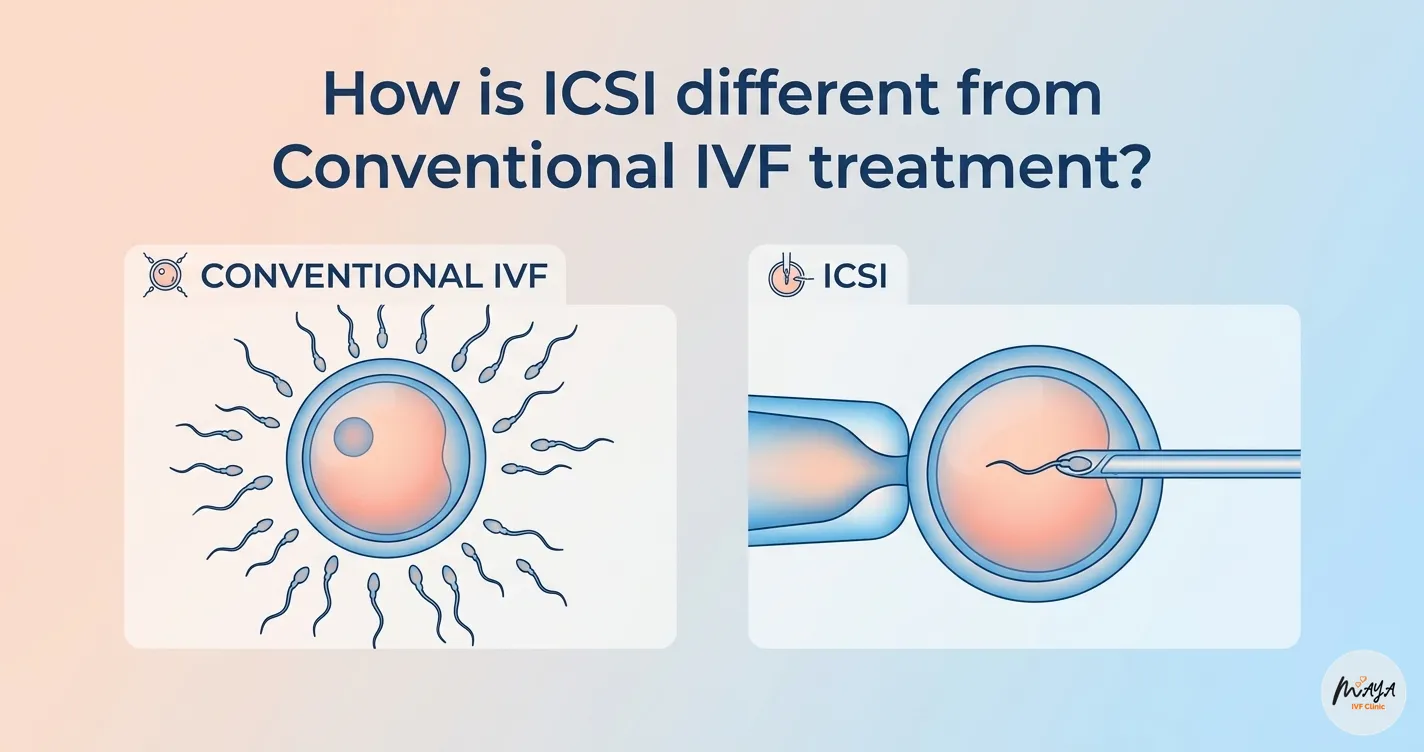
How Is ICSI Different From Conventional IVF Treatm...
OverviewConventional IVF places sperm and eggs together in a dish and allows fertilization to happen...
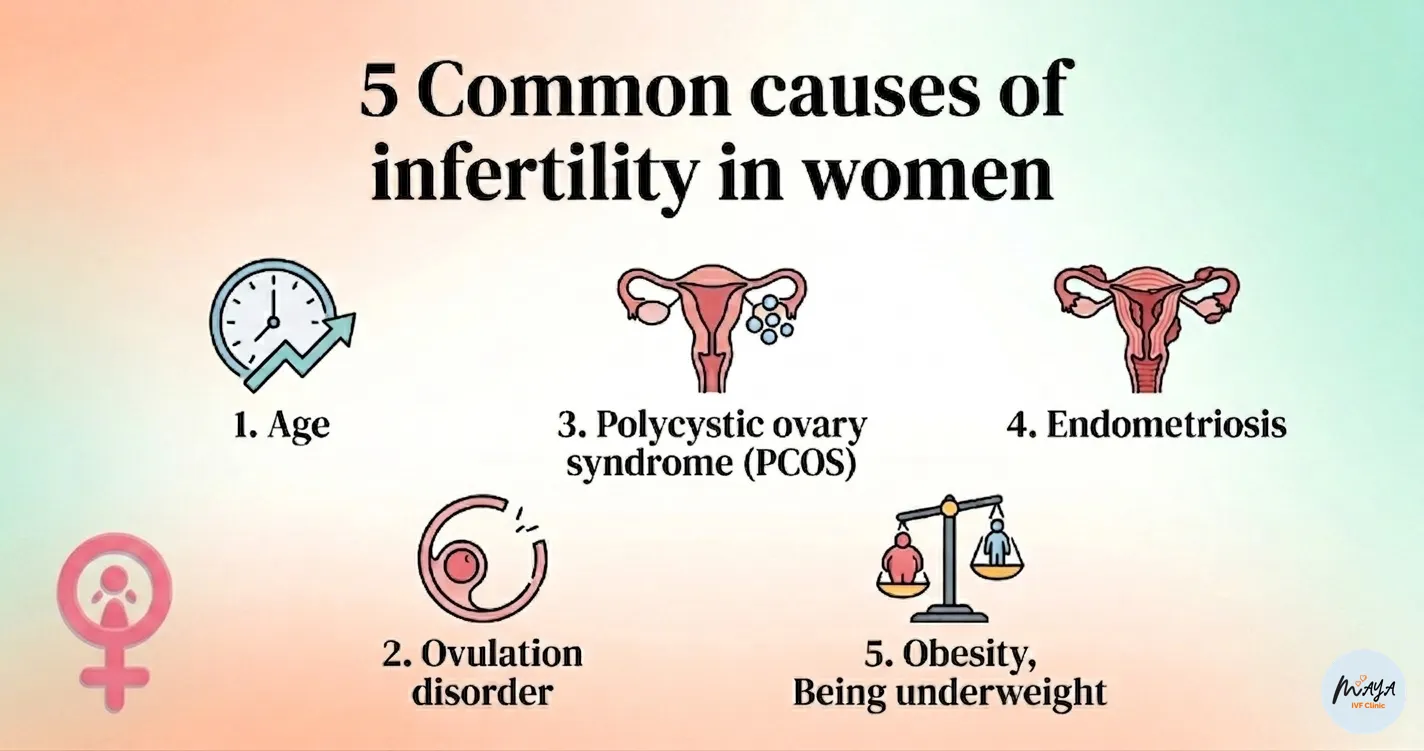
5 Common Causes of Infertility in Women
OverviewWhen months pass without a positive pregnancy test, worry tends to creep in quietly. If that...

 Nepal International Fertility and Laparoscopic Centre (NIFLC).
All rights reserved.