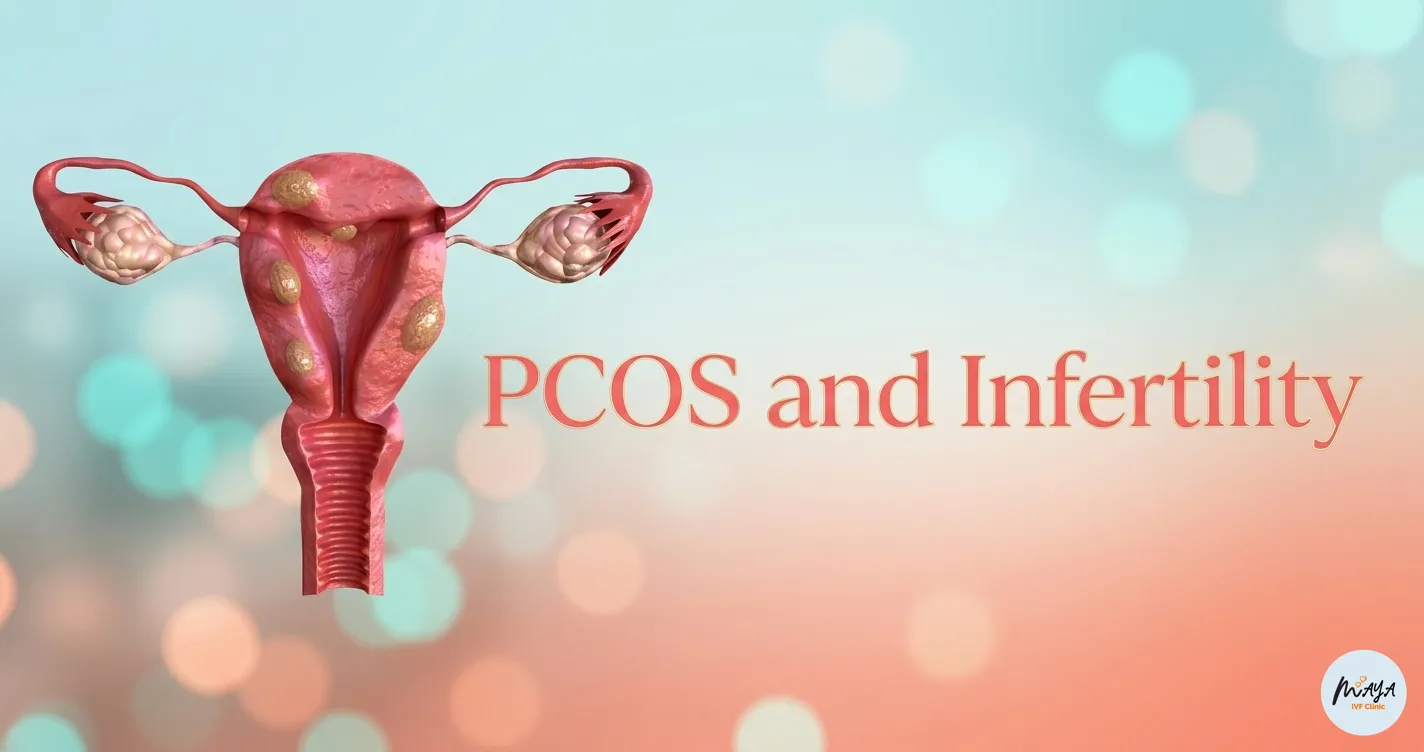
PCOS symptoms like irregular periods, weight gain, and abnormal hair growth, and its impact on women’s fertility.
Blog Details
- Home
- Blog Details
PCOS and Infertility: Can You Get Pregnant With PCOS?
PCOS can make it harder to become pregnant because hormonal changes may disrupt regular ovulation. However, PCOS does not mean pregnancy is impossible. Many people with PCOS conceive, either naturally or with fertility treatment. Whether treatment is needed, and which kind, depends on why conception is taking longer, and on factors such as age, ovarian function, tubal health, sperm quality and how long a couple has been trying.
An international consensus renamed polycystic ovary syndrome (PCOS) as polyendocrine metabolic ovarian syndrome (PMOS), because the old name suggested the condition was mainly about ovarian cysts. Most patients and clinics still say PCOS, so this article uses that term.
What Is PCOS?
Polycystic ovary syndrome (PCOS) is a hormonal and metabolic condition in which androgen levels are higher than expected, and ovulation is disrupted. Androgens are hormones that all women produce, usually in small amounts. The World Health Organization (WHO) says PCOS affects an estimated 10–13% of women of reproductive age and that up to 70% of them do not know they have it.
The name is misleading. The "cysts" are usually small follicles, each holding an immature egg, and a woman can have PCOS without them. How the ovaries look on ultrasound is one part of the diagnostic picture, not the definition. Symptoms differ from person to person, can change over time, and the condition continues beyond the reproductive years.
How Does PCOS Affect Fertility?
Ovulation is the release of an egg from an ovary. In a typical cycle, hormones from the brain prompt the ovaries to grow follicles. One follicle usually becomes dominant, matures and releases its egg, and the uterine lining prepares for a possible pregnancy. Conception can happen only when a released egg meets sperm.
In PCOS, higher androgen levels and altered hormone signalling interfere with this sequence. Insulin resistance, which is common in PCOS, can push androgen levels higher still. Follicles may start to grow but stall before one matures, so ovulation becomes infrequent, irregular, or absent. The chain is PCOS → hormonal changes → irregular or absent ovulation → fewer chances to conceive.
This is also why periods are irregular, and the fertile window is hard to predict. A woman may ovulate late in a long cycle or skip several months. Not everyone with PCOS stops ovulating, though. Some ovulate regularly, and others only occasionally.
Does PCOS Always Cause Infertility?
No. PCOS does not automatically mean infertility. Some people with PCOS conceive naturally, some need help to regulate ovulation, and some need more advanced treatment.
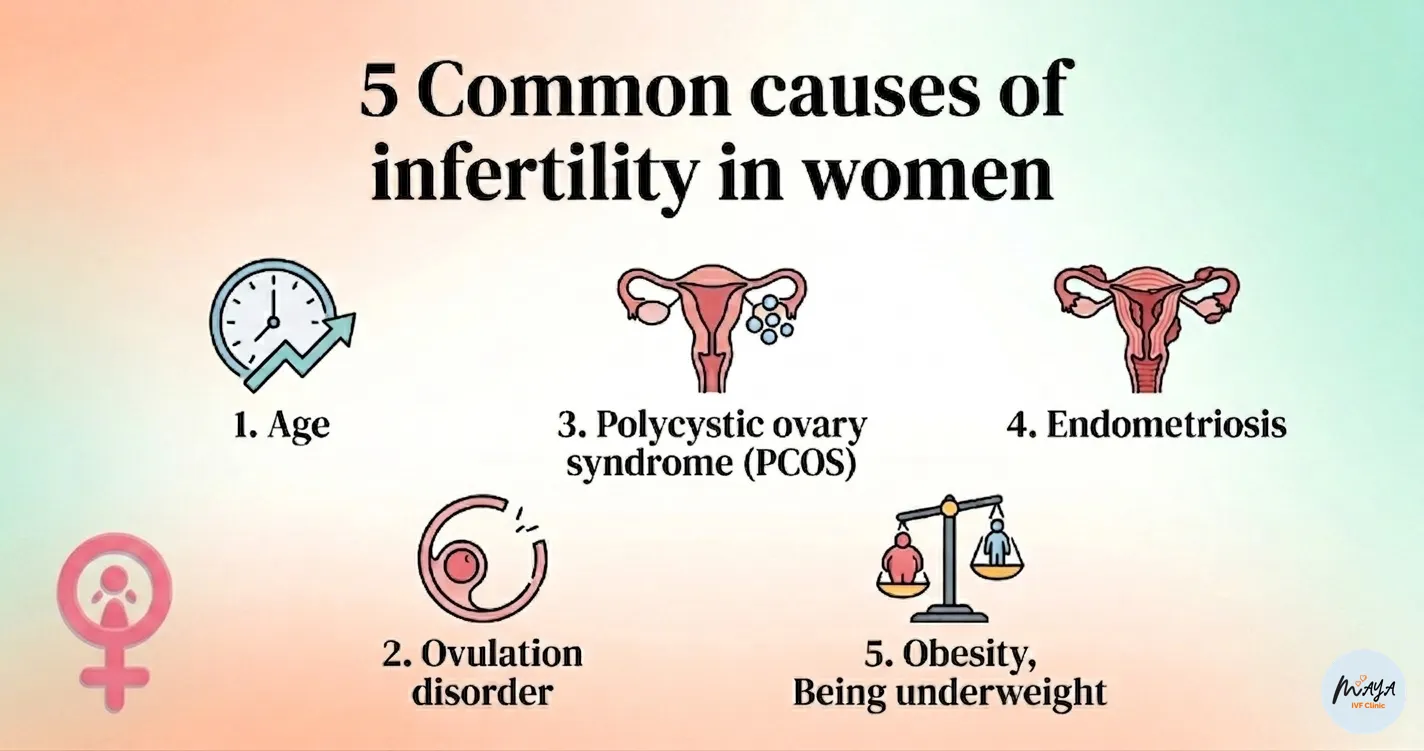
PCOS is also not always the reason a couple is struggling. Blocked fallopian tubes, endometriosis, uterine conditions, age-related decline in egg numbers, and sperm problems can all play a part, and our guide to the common causes of infertility in women explains them. Because someone can have PCOS and another problem at the same time, both partners should be evaluated, usually starting with a semen analysis. Infertility is a shared medical concern, not one person's fault.
What Are the Symptoms of PCOS?
Few people have every symptom. Common ones include:
irregular, infrequent, or absent periods (some women have heavy or painful periods instead)
difficulty conceiving
excess facial or body hair (hirsutism), caused by increased androgen activity
acne or oily skin
thinning scalp hair
weight gain, especially around the abdomen, in some women
Many women with PCOS are not overweight, so weight gain is not a requirement. Symptoms alone cannot confirm PCOS, because other conditions cause similar changes.
How Is PCOS Diagnosed?
Diagnosis needs a medical evaluation, not a self-check. A doctor usually reviews menstrual and medical history, looks for signs of raised androgens, and may arrange blood tests for hormone levels and ovulation. Ultrasound may be used where appropriate. The doctor also rules out conditions that can mimic PCOS, such as thyroid disease or raised prolactin.
Ovarian cysts on an ultrasound are not required for a diagnosis, and seeing them does not by itself mean a woman has PCOS. Life stage matters as well, because irregular periods are common in the first years after menstruation begins and in the years before menopause. WHO also recommends that newly diagnosed women have blood tests for insulin resistance and cardiovascular risk.
Can You Get Pregnant Naturally With PCOS?
Yes, it is possible. When ovulation happens, even irregularly, pregnancy can occur. The difficulty is fewer opportunities. If an egg is released only every few months, conception usually takes longer. Age and a partner's sperm health matter just as much, and natural conception cannot be guaranteed.
For couples in Nepal where one partner works abroad, unpredictable ovulation makes the limited time together harder to plan around. That is a good reason to seek advice earlier rather than waiting.
What Fertility Treatments Are Available for PCOS?
Treatment follows the reason conception is difficult. A fertility specialist usually begins with the least invasive option that suits the person.
Lifestyle and metabolic care
WHO advises healthy eating and regular physical activity for all women with PCOS, even when they do not lead to weight loss. For some women who are overweight, modest weight loss may help restore ovulation. Weight is not the cause of PCOS for everyone, and it is not a cure.
Ovulation induction
Ovulation induction uses prescribed medication to stimulate ovulation, with ultrasound monitoring. Current international guidance lists letrozole as the preferred first-line tablet for PCOS-related ovulation problems. Other options include clomiphene, metformin in selected cases, injectable gonadotrophins, and, occasionally, laparoscopic ovarian drilling. A doctor chooses and adjusts the treatment, and monitoring helps reduce the risk of multiple pregnancy.
IUI
Intrauterine insemination (IUI) places prepared sperm into the uterus around ovulation. It may be combined with ovulation induction when the fallopian tubes are open and sperm results are adequate. Not everyone with PCOS needs it. For a closer comparison, see how IUI and IVF differ.
IVF
In vitro fertilization (IVF) collects eggs, fertilizes them in a laboratory, and transfers an embryo to the uterus. It is one option within the pathway, not the automatic first step.
When Might IVF Be Considered for PCOS?
A fertility specialist may consider IVF when:
Ovulation induction, with or without IUI, has not led to pregnancy after appropriate attempts
Another factor is present, such as blocked tubes or significant sperm problems
Age or time makes a more direct route sensible
Earlier fertility treatment has been unsuccessful
Does PCOS Affect IVF Treatment?
Women with PCOS often have many small follicles, so the ovaries can respond strongly to stimulation. That raises the risk of ovarian hyperstimulation syndrome (OHSS), in which the ovaries swell and fluid leaks into the abdomen. Most cases are mild, and severe cases are uncommon. Specialists lower the risk through individualized stimulation, close monitoring, and choices about how eggs are matured and when embryos are transferred. Severe abdominal pain, rapid swelling, or breathlessness during treatment needs urgent medical attention.
PCOS does not mean IVF cannot work. Outcomes still depend on age, ovarian function, sperm quality, and embryo and uterine factors.
PCOS and Pregnancy Care
WHO notes that women with PCOS generally have a higher risk of pregnancy complications, such as gestational diabetes and high blood pressure, which is why extra monitoring is advised. A higher risk does not mean complications will happen. Tell your antenatal care provider that you have PCOS.
When Should You See a Fertility Specialist?
Evaluation is generally advised after 12 months of trying if you are under 35 and after 6 months if you are 35 or older. With PCOS, you need not wait: irregular or absent periods, an existing PCOS diagnosis, or a partner who is mostly abroad are all reasons to ask sooner.
An evaluation in Nepal usually looks at ovulation, the male partner's semen analysis, and tubal health. It is a conversation about your options, not a commitment to treatment. Choose a clinic that explains its reasoning, shares age-specific outcomes, and does not promise results. This article is general information, not a diagnosis or personal medical advice.
Frequently Asked Questions
Can PCOS cause infertility?
PCOS can make conception harder because it may disrupt regular ovulation. It does not always cause infertility, and many people with PCOS become pregnant.
Can you get pregnant with PCOS?
Yes. Many people with PCOS conceive, either naturally or with treatment such as ovulation induction. How easily this happens depends on ovulation, age, partner factors, and any other fertility problems.
Does PCOS mean you are infertile?
No. Infertility means not conceiving after 12 months of regular unprotected intercourse. PCOS is a risk factor for it, not a diagnosis of it.
Can women with PCOS get pregnant naturally?
Yes, if ovulation occurs, even irregularly. Conception may take longer because there are fewer chances each year.
What is the best treatment for PCOS infertility?
There is no single best treatment. Current international guidance lists letrozole as the preferred first-line tablet to stimulate ovulation. A fertility specialist chooses the approach based on your tests, age and goals.
Can PCOS be cured?
There is no cure, according to the WHO, but symptoms and fertility can be managed with lifestyle measures, medication, and fertility treatment.
Can you have PCOS with regular periods?
Yes. Blood tests can check whether ovulation is occurring in women who have regular cycles.
Does PCOS affect egg quality?
The main problem is ovulation. Evidence on egg quality is mixed, and PCOS is not a diagnosis of poor eggs.
Does losing weight help PCOS fertility?
For some women who are overweight, modest weight loss may help restore ovulation. Many women with PCOS are not overweight, and weight loss is not a cure.
Is IVF necessary for PCOS?
No. Many people conceive naturally or with ovulation induction, with or without IUI. IVF is considered when other treatments have not worked or other fertility factors are present.
Can IUI help with PCOS?
It can, usually combined with ovulation induction, when the fallopian tubes are open and sperm results are adequate. It is not needed by everyone with PCOS.
Does PCOS increase the risk of miscarriage?
Some studies suggest a higher risk, but the evidence is mixed. Insulin resistance and weight make it hard to separate the effect of PCOS itself. If you have had a miscarriage, a specialist can review your history.
How long does it take to get pregnant with PCOS?
There is no reliable single timeframe. It depends on ovulation, age, partner factors, and treatment.
Our Latest Blogs
Infertility Myths and Facts in Nepal: What Couples...
Quick AnswerInfertility affects an estimated 1 in 6 people globally during their reproductive years,...
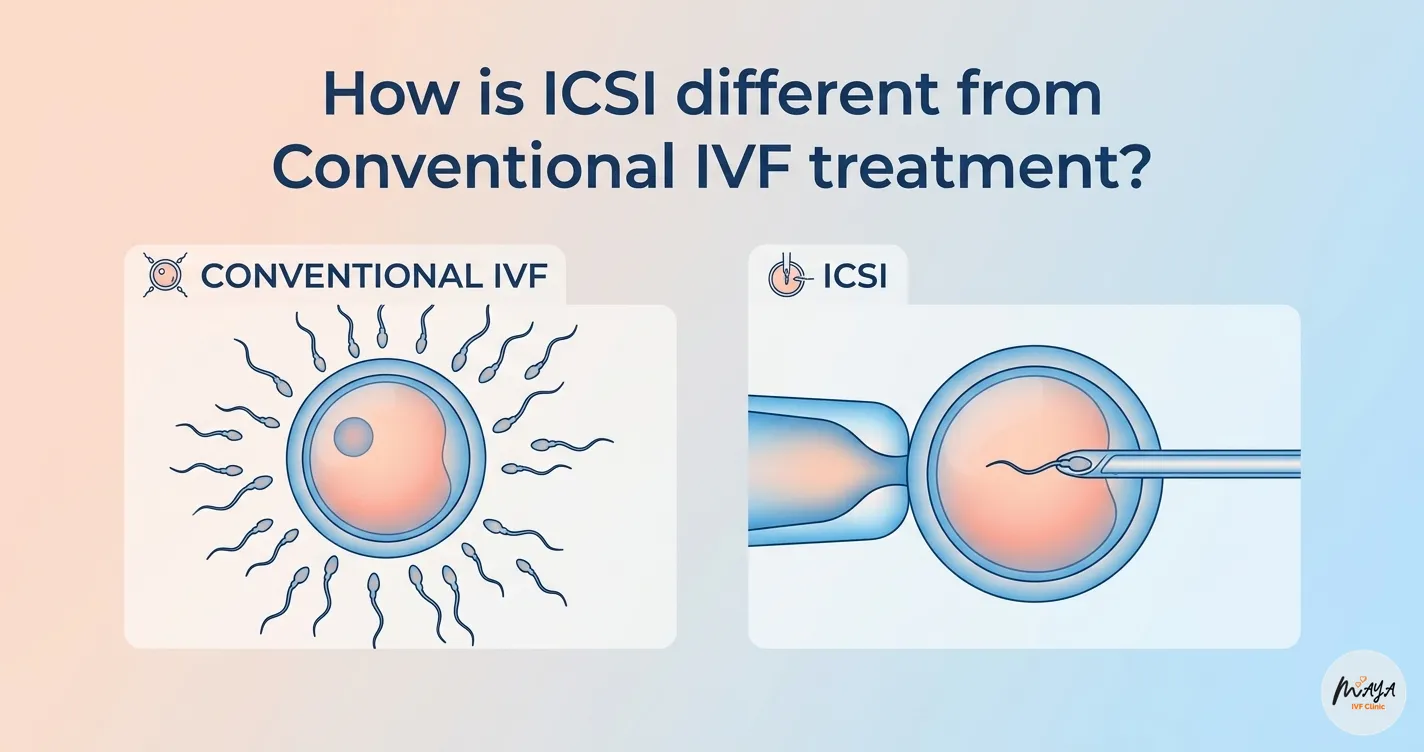
How Is ICSI Different From Conventional IVF Treatm...
OverviewConventional IVF places sperm and eggs together in a dish and allows fertilization to happen...
5 Common Causes of Infertility in Women
OverviewWhen months pass without a positive pregnancy test, worry tends to creep in quietly. If that...
 Nepal International Fertility and Laparoscopic Centre (NIFLC).
All rights reserved.