
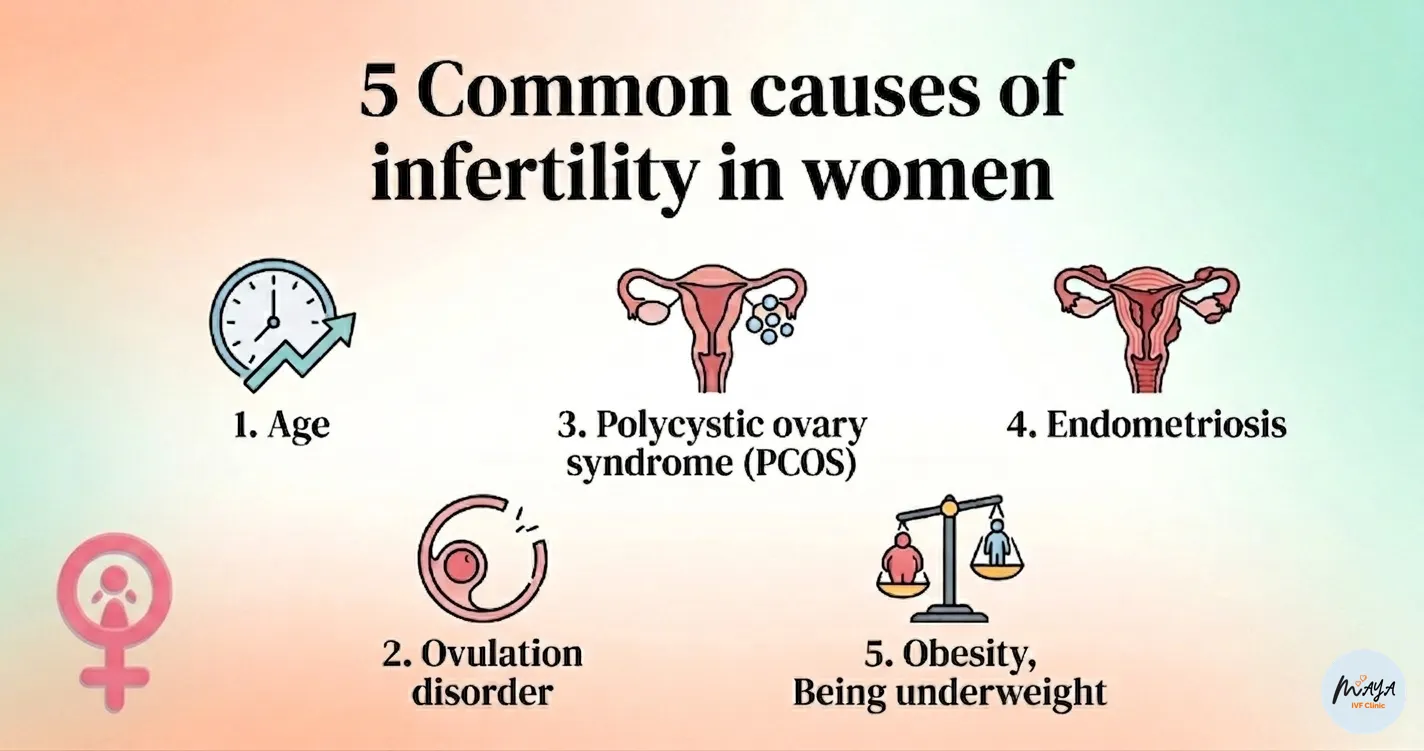
5 Common Causes of Infertility in Women
Overview
When months pass without a positive pregnancy test, worry tends to creep in quietly. If that is where you are, you are not alone, and difficulty conceiving is rarely anyone's fault. The causes of infertility in women are varied, and many can be identified and treated.
This guide explains five common causes, other factors that can affect fertility, the signs that deserve attention, how doctors look for answers, and when to seek help. It is general education, not a diagnosis. A qualified fertility specialist can tell you what applies to you.
What Is Infertility in Women
According to the World Health Organization (WHO), infertility is a disease of the reproductive system, defined as the failure to achieve pregnancy after 12 months or more of regular unprotected intercourse. WHO estimates that about 1 in 6 people worldwide experience infertility at some point in their lives.
The American Society for Reproductive Medicine (ASRM) advises starting an evaluation at 6 months when the woman is 35 or older, because fertility declines with age.
A diagnosis does not mean pregnancy is impossible. Many people conceive with treatment, and some conceive without it. Infertility is not only a female issue either. Fertility problems can affect either partner, which is why couples are usually assessed together.
What Causes Infertility in Women
The most common causes of infertility in women are ovulation disorders, blocked or damaged fallopian tubes, endometriosis, uterine conditions, and age-related decline in egg quantity and quality. Their order varies between studies and clinics, depending on the population studied.
Pregnancy requires several steps to happen in sequence. An ovary releases an egg, a fallopian tube carries it toward sperm, and the embryo implants in a healthy uterine lining. A problem at any step can lower the chance of conceiving. More than one factor can be present at once, and the NHS notes that for 1 in 4 couples, no cause can be identified.
5 Common Causes of Infertility in Women
1. Ovulation Disorders
Ovulation disorders are among the most frequent causes of female infertility. The US National Institute of Child Health and Human Development (NICHD) reports that failure to ovulate occurs in about 40% of women with infertility. Ovulation is the monthly release of an egg, controlled by hormone signals between the brain and the ovaries. When those signals are disrupted, eggs may be released irregularly or not at all, leaving nothing to fertilize.
Polycystic ovary syndrome (PCOS) is the best-known cause. NICHD describes it as one of the most common causes of female infertility. In PCOS, the ovaries produce more androgens (a type of hormone) than normal. The NHS now lists the condition under the name polyendocrine metabolic ovarian syndrome (PMOS), formerly called PCOS, so you may see both terms.
Other causes include thyroid disease, high prolactin, premature ovarian insufficiency, and cycle disruption from very low body weight or intense exercise. Being significantly overweight or underweight can also disturb the hormones that drive ovulation.
PCOS can make conception harder, but it does not mean pregnancy cannot happen. Many women with PCOS conceive, often with ovulation-stimulating treatment. Thyroid problems can also affect pregnancy itself; our guide on thyroid disorders and pregnancy explains how.
2. Blocked or Damaged Fallopian Tubes
Yes, blocked fallopian tubes can cause infertility. A blocked or damaged tube can stop sperm from reaching the egg or stop a fertilized egg from reaching the uterus. This is called tubal infertility.
Tubes can be damaged by pelvic inflammatory disease (PID), an infection of the upper genital tract that often follows untreated chlamydia or gonorrhea, sometimes with only mild symptoms. Previous pelvic or abdominal surgery, a past ectopic pregnancy, and endometriosis can also cause scarring. WHO guidance names untreated sexually transmitted infections and smoking as main risk factors for infertility.
Tubal problems often cause no symptoms and are usually found through imaging after conception is slow. A 2025 observational study in the Journal of Nepal Medical Association found tubal blockage in about 22% of the women among 170 infertile couples at one tertiary center. Studies like this describe patients who seek care, not the whole population.
Blocked tubes do not automatically mean IVF. Some blockages can be treated surgically, while IVF bypasses the tubes altogether. The right option depends on where the damage is and how severe it is.
3. Endometriosis
Endometriosis can affect fertility, but not in every case. It occurs when tissue similar to the uterine lining grows outside the uterus, often on the ovaries, tubes, or pelvic lining. This tissue responds to hormones each cycle, causing inflammation, pain, and scar tissue.
NICHD notes that scientists do not know the exact cause of infertility in women with endometriosis. Proposed mechanisms include pelvic inflammation that changes the environment for eggs, sperm, and embryos; adhesions that distort pelvic anatomy or restrict the tubes; and ovarian cysts called endometriomas, which may reduce ovarian reserve.
The effect varies widely. NICHD cites estimates that 30% to 40% of women with endometriosis are infertile, which means most are not. Pain severity does not reliably predict fertility either. Some women with mild disease struggle to conceive, while others with advanced disease conceive without difficulty. A diagnosis is a reason for informed planning, not a verdict. Our guide to endometriosis symptoms and fertility explains the condition in more detail.
4. Uterine Conditions
Fibroids, polyps, adhesions, and congenital uterine differences can sometimes affect fertility, depending on their size and location.
Fibroids are noncancerous muscle growths. Those that bulge into the uterine cavity are the most likely to matter, while many small fibroids cause no problems. Polyps are small overgrowths of the uterine lining. Intrauterine adhesions (scar tissue, sometimes called Asherman syndrome) can follow uterine surgery or infection and may narrow the cavity. Congenital abnormalities, such as a uterine septum, are present from birth and can affect implantation or raise the risk of miscarriage. Ultrasound or hysteroscopy usually identifies these conditions, and some can be corrected surgically. Uterine fibroids and infertility are linked in some women, but a fibroid alone is not always the reason.
5. Age-Related Decline in Fertility
Age affects female fertility. Egg quantity and quality decline with age, gradually and at a different pace for each woman. A woman is born with all the eggs she will ever have. This supply is called her ovarian reserve. As it falls, the share of eggs with chromosomal changes rises, which can lower the chance of conception and raise the risk of miscarriage.
Fertility does not suddenly stop at 35. The decline is gradual in the late 20s and early 30s and tends to speed up in the late 30s and 40s. ASRM's 6-month evaluation threshold at 35 reflects this trend, not a cliff. Many women conceive naturally in their late 30s and beyond. Age matters mainly because time matters: an earlier evaluation can give you clearer options before important decisions have to be made.
Other Factors That May Affect Female Fertility
Some factors influence fertility without being the sole cause. Smoking is linked to reduced fertility, and heavy alcohol use may interfere with conception. Obesity and very low body weight can both disrupt ovulation. Thyroid disease, diabetes, and autoimmune conditions may play a role, as may previous chemotherapy or pelvic radiation and certain medications. Some workplace or environmental chemical exposures have also been studied.
Stress and lifestyle are not always the cause, and many women with healthy habits still face fertility challenges. This is information, not blame.
What Are the Signs of Infertility in Women?
The main sign is not conceiving, and sometimes it is the only one. Clues to an underlying cause include irregular or absent periods, very painful periods or pelvic pain, heavy bleeding, and signs of excess androgens, such as persistent acne or unusual hair growth. A history of pelvic infection, endometriosis, fibroids, or pelvic surgery is also relevant.
Regular periods do not guarantee ovulation, so you can have a regular cycle and still have an ovulation problem. If you have these symptoms or risk factors, you do not need to wait a full year before asking for an evaluation.
How Is Female Infertility Diagnosed?
Doctors find the cause by combining your history with targeted tests rather than testing everything at once. The process starts with your medical, surgical, and menstrual history and a physical exam. Tests may then include:
Ovulation and hormone tests: cycle tracking and blood tests for thyroid hormones, prolactin, and others.
Ovarian reserve: an ultrasound, antral follicle count, and an AMH blood test.
Pelvic ultrasound: an exam of the uterus and ovaries.
Tube evaluation: hysterosalpingography (HSG) or a similar imaging test.
Male partner: a semen analysis, usually done early.
Not everyone needs every test, and your clinician interprets the results together. Learn more about fertility assessment and diagnostics.
When Should You See a Fertility Specialist?
See a specialist after 12 months of regular unprotected intercourse if you are under 35, and after 6 months if you are 35 or older. If you are over 40, or already have a known condition such as endometriosis, irregular or absent periods, past pelvic infection, or prior cancer treatment, do not delay an evaluation.
If you and your partner live apart for work, only time with regular intercourse counts toward these timeframes, not calendar months. It is worth speaking to a doctor about your situation rather than waiting.
Can Female Infertility Be Treated?
In many cases, yes. Treatment depends on the cause and is often less intensive than people expect. Options include treatment for thyroid or prolactin problems, ovulation-inducing medication, surgery in selected cases (for polyps, adhesions, endometriosis, or tubal disease), intrauterine insemination (IUI), and IVF or other assisted reproductive technologies. IVF is not automatically required. A specialist can explain which approach fits your diagnosis, age, and goals. See how IUI and IVF differ.
Frequently Asked Questions
What are the most common causes of infertility in women?
Ovulation disorders (including PCOS), tubal damage, endometriosis, uterine conditions, and age-related decline. More than one can be present, and sometimes no cause is found.
Can PCOS cause infertility?
Yes, because it can disrupt ovulation. It does not always cause infertility, and many women with PCOS conceive, often with treatment.
Can blocked fallopian tubes cause infertility?
Yes. A blocked tube can stop sperm from reaching the egg or an embryo from reaching the uterus. Imaging can check the tubes, and treatment depends on the findings.
Can endometriosis cause infertility?
It can, but not in every case. Many women with endometriosis conceive, naturally or with treatment.
Does age affect female fertility?
Yes. Egg quantity and quality decline gradually, and faster in the late 30s and beyond, but the pace differs from person to person.
When should a woman see a fertility specialist?
Women under 35 should consider an infertility evaluation after 12 months of trying to conceive without success. For women aged 35–39, evaluation is generally recommended after 6 months. Women over 40, or those with known fertility risk factors, may benefit from seeking evaluation sooner.
Conclusion
Infertility in women rarely has a single cause. The most common are ovulation disorders such as PCOS, blocked or damaged fallopian tubes, endometriosis, uterine conditions like fibroids and polyps, and the gradual decline in egg quantity and quality with age. More than one can be present at once, and sometimes no cause is found. Most of these conditions are well understood, and many can be diagnosed and treated. A diagnosis is not a verdict. Many women with PCOS or endometriosis conceive; some tubal and uterine problems can be corrected surgically, and IVF is not always needed. Regular periods do not guarantee ovulation, so pelvic pain, heavy bleeding, or signs of excess androgens deserve attention even when your cycle seems normal. Timing matters because fertility declines gradually, not suddenly at 35. See a specialist after 12 months of trying if you are under 35, and after 6 months if you are 35 or older. If you are over 40 or already have a condition such as endometriosis, irregular periods, past pelvic infection, or prior cancer treatment, do not wait.
If you are concerned about your fertility, whether you have been trying for months or already know you have a condition such as PCOS, a fertility specialist can review your history and recommend appropriate tests. You do not have to work it out alone. You can contact MAYA IVF Clinic in Kupandole, Kathmandu, or call +977-1-5455499 to ask about an evaluation. For updates and fertility information, follow us on Facebook.
Our Latest Blogs
Infertility Myths and Facts in Nepal: What Couples...
Quick AnswerInfertility affects an estimated 1 in 6 people globally during their reproductive years,...
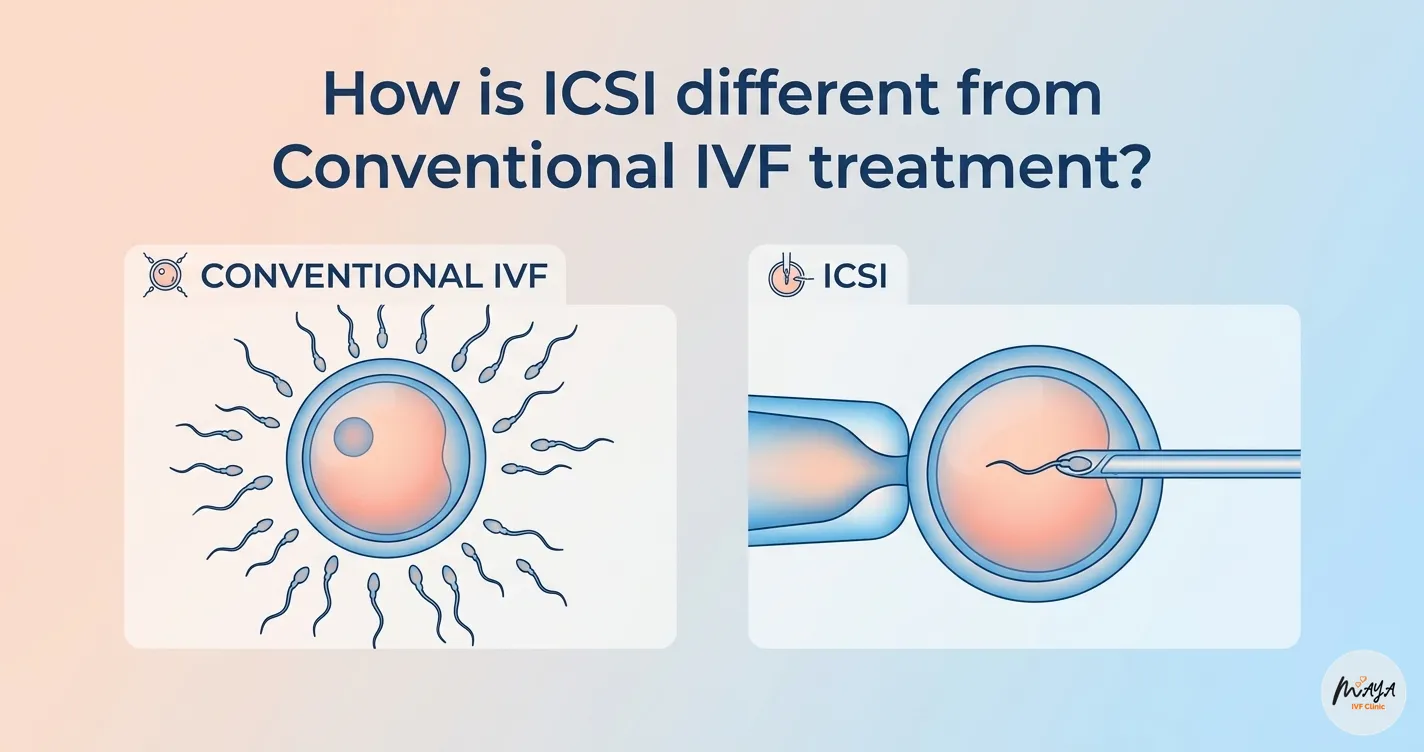
How Is ICSI Different From Conventional IVF Treatm...
OverviewConventional IVF places sperm and eggs together in a dish and allows fertilization to happen...
5 Common Causes of Infertility in Women
OverviewWhen months pass without a positive pregnancy test, worry tends to creep in quietly. If that...
 Nepal International Fertility and Laparoscopic Centre (NIFLC).
All rights reserved.