

Overview
IVF does not automatically lead to twins. The number of embryos transferred matters most. Placing more than one embryo in the uterus raises the chance of a multiple pregnancy. A single embryo lowers that chance considerably but cannot remove it entirely, because one embryo can occasionally split and develop into identical twins.
Many couples arrive at their first consultation having heard that IVF "always means twins." It is one of the most common IVF myths we hear in Nepal. Some couples hope for twins, and others quietly fear them. Both reactions make sense, and both are better served by clear facts than by rumor.
Does IVF Increase the Chance of Twins?
Compared with natural conception, yes. Twins are more common after IVF. The cause is usually the number of embryos placed in the uterus, not IVF itself.
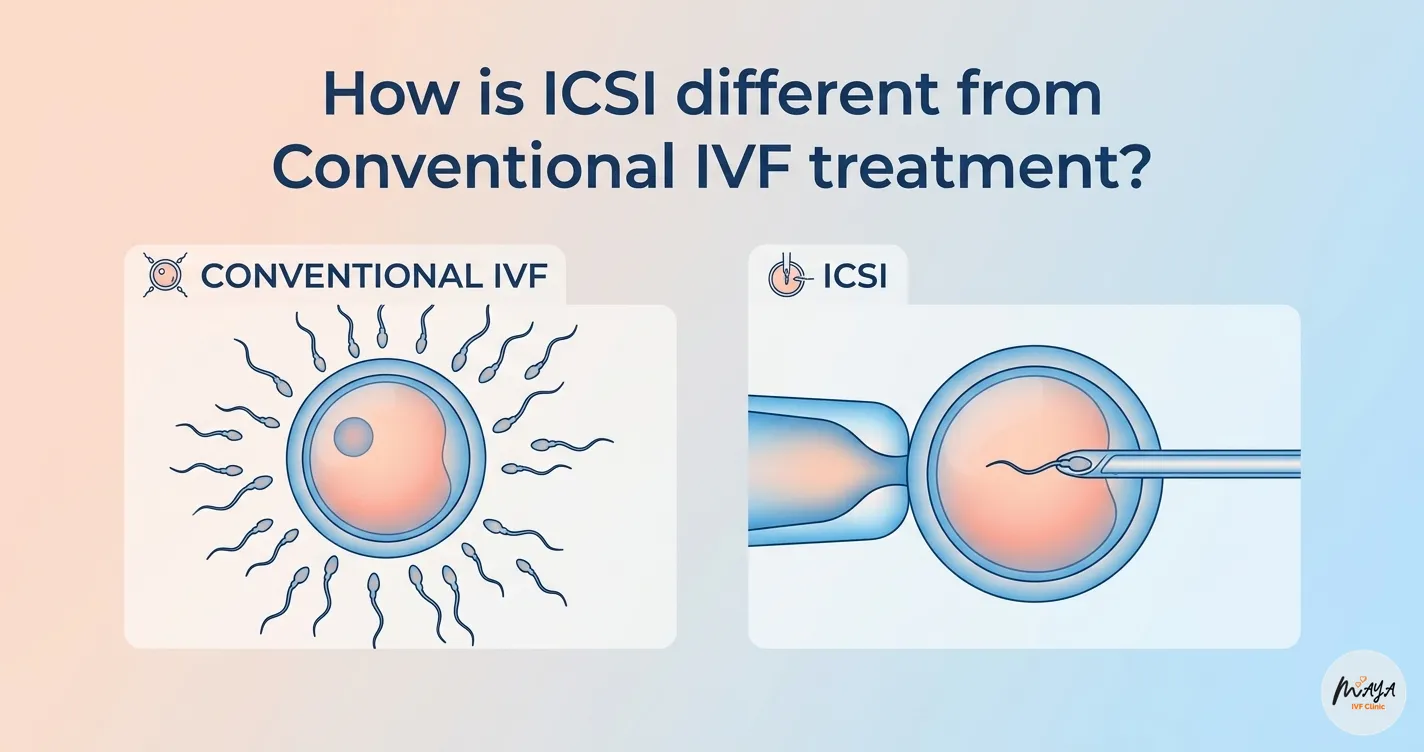
In IVF treatment, eggs are fertilized with sperm in the laboratory, and one or more of the resulting embryos are transferred to the uterus. Whether one embryo or two are transferred has the biggest effect on whether twins are possible.
Practice has changed a great deal. In the early 1990s, the average multiple birth rate from IVF in the UK was around 28%, compared with an estimated 1–2% in natural conception. By 2023, the UK average had fallen to 3.4%, a preliminary figure that is among the lowest in the world. Over the same period, single embryo transfer rose from about 10% of cycles in the early 2000s to 88% in 2023.
These are UK figures, so please don't read them as a Nepal average. Rates in any country depend on local practice, patient age, and embryo quality.
How Twins Happen After IVF
Twins can form in two different ways, and IVF can influence both.
Fraternal (dizygotic) twins | Identical (monozygotic) twins | |
How they form | Two separate embryos each implant | One embryo splits in two. |
Link to IVF | More likely when two embryos are transferred | Can occur even after a single embryo transfer |
Genetic makeup | As similar as any siblings | Nearly identical |
When more than one embryo is transferred
Transferring two embryos can raise the chance of pregnancy from a single transfer, which is why the practice became common. The trade-off is a higher chance of twins, and professional guidelines now weigh that trade-off carefully.
Two embryos do not guarantee twins. Often only one implants, and sometimes neither does.
When a single embryo splits
Occasionally one embryo divides after transfer and develops as identical twins. It is uncommon. In a study of more than 154,000 live births after single embryo transfer in Australia and New Zealand, about 1.5% were identical twins, compared with roughly 0.4% in natural conception.
The same study found that transferring an embryo at the blastocyst stage (day 5 or 6) was linked to about double the odds of splitting compared with an earlier-stage embryo. Splitting was also less common after frozen (vitrified) transfers than fresh transfers, and the rate had fallen over the years studied. The absolute risk remains small in every group, and researchers are still working out why it happens.
Can IVF Result in Triplets or More?
It can, but it is now uncommon when current guidelines are followed. Preventing triplets and higher-order multiples has long been an explicit aim of professional bodies. It is one of the main reasons limits on the number of embryos exist.
Why Do Fertility Specialists Try to Limit Multiple Pregnancy?
The wish for twins is easy to understand. Medically, though, a multiple pregnancy carries more risk than a singleton pregnancy for both the mother and the babies.
The UK regulator, the HFEA, lists risks that include preterm birth, pre-eclampsia, and stillbirth. Twins are also more likely to be born early and smaller. A large population study found that twin pregnancies conceived through IVF carried higher absolute obstetric risks than IVF singleton pregnancies and than twin pregnancies conceived without IVF. None of this means a twin pregnancy will go badly. Many twins are born healthy. It does explain why modern IVF generally aims for one healthy baby at a time.
Does Single Embryo Transfer Prevent Twins?
It substantially lowers the chance of fraternal twins, because only one embryo is available to implant. It cannot prevent identical twinning, which is rare and happens after the embryo has been placed.
International guidance now favors single embryo transfer in many situations. The European Society of Human Reproduction and Embryology (ESHRE) describes elective single embryo transfer as the preferred approach. The American Society for Reproductive Medicine (ASRM) recommends transferring just one embryo when it has been tested and found chromosomally normal (euploid). Pre-implantation genetic testing (PGT-A) is one way embryos are assessed in this way before transfer.
Single transfers do not mean fewer chances. In the UK, a typical IVF patient today has one fresh embryo transferred in the first cycle, and any additional good embryos are frozen for later use. Both bodies still leave room for individual circumstances, including age, embryo quality, and treatment history.
What Determines the Chance of Twins After IVF?
No single factor decides it. The main influences are:
The number of embryos transferred
Embryo quality and stage of development
The patient's age and previous treatment outcomes
Whether fresh or frozen embryos are used
The small natural chance of an embryo splitting
Questions to Ask Your Fertility Specialist
How many embryos to transfer is a medical decision. It depends on your age, your embryo quality, any previous cycles, and your overall health, so no article can give you the right number. It helps to arrive with a few questions:
What is your approach to single embryo transfer, and when would you recommend more than one?
How do my age and embryo quality shape that recommendation?
What would a twin pregnancy mean for my own health?
A good clinic explains risks plainly and answers these without hurry. If you are still comparing options, our guide on how to choose a good IVF clinic lists what to look for.
Frequently Asked Questions
Does IVF increase the chance of twins?
Yes, compared with natural conception. This is mainly because more than one embryo may be transferred. Single embryo transfer reduces the chance considerably.
Can one IVF embryo become twins?
Yes, though it is rare. A single embryo can split and develop as identical twins. In a large Australian and New Zealand study, about 1.5% of live births after single embryo transfer were identical twins.
Does transferring two embryos mean I will have twins?
No. One embryo may implant, both may implant, or neither may. Two embryos raise the chance of twins, but they do not make it certain.
Can IVF cause triplets?
It is possible but uncommon today. Current guidelines are designed specifically to prevent higher-order multiple pregnancies.
Does single embryo transfer prevent twins?
It greatly reduces the chance of fraternal twins. It cannot rule out identical twins.
Are twins after IVF riskier than twins conceived naturally?
Some large studies suggest IVF twin pregnancies carry higher absolute obstetric risks. Your own risk depends on your age, your health, and how the pregnancy progresses, so your obstetrician is the right person to ask.
How do doctors reduce the risk of multiple pregnancy during IVF?
Mainly by recommending single embryo transfer where it suits the patient, selecting the embryo with the best potential, and following professional limits on how many embryos are transferred.
If you have questions about your own treatment, our fertility team at Maya IVF Clinic in Kupandole, Kathmandu is happy to talk them through with you.


 Nepal International Fertility and Laparoscopic Centre (NIFLC).
All rights reserved.