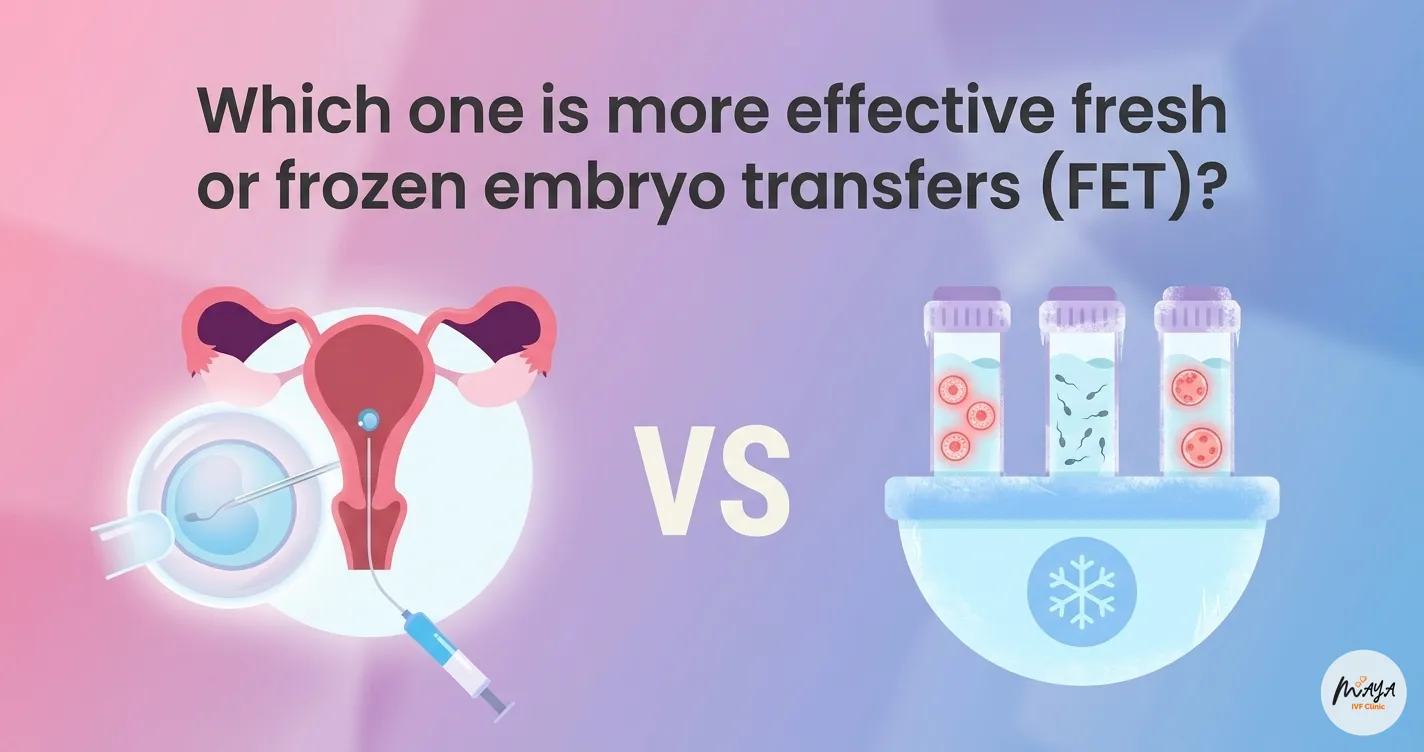
Which one is more effective fresh or frozen embryo transfers (FET)?
Patients starting in vitro fertilization (IVF) in Nepal are often told their embryo will be transferred fresh or that embryos will be frozen and transferred later. Both approaches are established practice. Choosing between fresh vs frozen embryo transfer is a clinical decision shaped by each patient's situation, not a ranking of good and poor treatment.
Direct Answer
Neither fresh nor frozen embryo transfer is more effective for every patient. In a fresh embryo transfer, the embryo is placed in the uterus during the same IVF cycle as the egg retrieval. In a frozen embryo transfer (FET), the embryo was previously frozen and is transferred in a later, separately prepared cycle.
Large trials have not shown that one approach gives better results for everyone. The better option depends on ovarian response, hormone levels, uterine lining, risk of ovarian hyperstimulation syndrome (OHSS), embryo status, whether genetic testing is planned, and previous treatment history.
What Is Fresh Embryo Transfer?
A fresh embryo transfer places an embryo in the uterus during the same cycle in which the eggs were collected. It is one of the stages of the IVF process, alongside ovarian stimulation, egg retrieval, fertilization in the laboratory, and embryo culture.
The transfer does not happen immediately after retrieval. Fertilization and early development take time, so a fresh transfer usually takes place a few days after egg retrieval, most often on day 3 or day 5 of embryo development. The exact day depends on how the embryos grow and on the clinic's treatment plan.
Fresh transfer keeps the cycle moving without a pause, and no freezing is involved. Its limitation is that the uterus is exposed to the high hormone levels produced by ovarian stimulation, which may not suit every patient. The transfer must also go ahead on the schedule the embryos set, even if the treatment team would prefer to wait.
What Is Frozen Embryo Transfer (FET)?
Frozen embryo transfer (FET) uses an embryo that was previously frozen and stored. Embryo cryopreservation, the freezing of embryos at very low temperatures, is usually done by vitrification, a rapid-cooling method that limits ice formation. Embryos may be frozen because the team planned a "freeze-all" cycle or because good-quality embryos were left over after a fresh transfer.
When the transfer is planned, the embryo is warmed (thawed) and placed in a uterus prepared for it. FET takes place in a later cycle. That may be the next menstrual cycle, a few months later, or years later if embryos are stored for future children. It does not have to be years.
Preparing the uterus can follow different routes. In a natural-cycle FET, the transfer is timed to the patient's own ovulation, tracked with ultrasound and sometimes blood tests. In a hormone-prepared FET, estrogen and progesterone are given to build the endometrial lining, the tissue lining the uterus where an embryo implants. Some clinics use a modified approach with limited medication. Not every patient needs hormone medication; the method depends on the patient's cycles and the clinic's protocol.
FET offers scheduling flexibility, gives the body time to recover from stimulation, allows time for genetic test results, and avoids another egg retrieval when embryos are already stored. Its limitations are an additional treatment cycle with its own monitoring and medication, freezing and storage costs, and the small chance that an embryo does not survive warming.
Fresh vs Frozen Embryo Transfer: Key Differences
Which Is More Effective: Fresh or Frozen Embryo Transfer?
There is no single winner for every patient. Early practice favored fresh transfer. Freezing methods then improved, and some trials reported better results with frozen transfer in particular groups. Larger comparisons give a more balanced picture.
The E-Freeze randomised trial published in Human Reproduction enrolled 619 couples in the UK. The women were aged 18 to 41 and had at least three good-quality embryos. They were randomly assigned to freeze all embryos and transfer later, or to have a fresh transfer. Routine freeze-all did not produce a higher rate of healthy babies than fresh transfer. The authors noted that freeze-all was associated with a higher live birth rate in high responders (women who produce many eggs), but a similar or lower rate in normal responders.
Other trials point in different directions for different groups. Trials in women with polycystic ovary syndrome (PCOS) have reported slightly higher live birth rates with frozen transfer, partly because of fewer miscarriages. A trial in women with a low chance of success found that freeze-all gave a lower live birth rate than fresh transfer.
Baby outcomes matter too. A meta-analysis found that singleton babies conceived by FET had a lower risk of preterm birth, low birthweight and small size for gestational age than those conceived by fresh transfer. Some studies have also linked hormone-prepared FET cycles with a higher risk of hypertensive disorders in pregnancy, and research on this continues.
FET may be preferred in certain circumstances, and fresh transfer may remain appropriate for selected patients. The goal is not simply to choose fresh or frozen, but to choose the transfer strategy that offers the best balance of safety and treatment outcomes for the individual patient.
When Might Frozen Embryo Transfer Be Recommended?
A fertility specialist may consider FET in situations such as:
Risk of OHSS. OHSS is a condition in which the ovaries over-respond to stimulation drugs, causing swelling and fluid build-up in the abdomen. A pregnancy can prolong or worsen it, so freezing all embryos and transferring later may be recommended for patients with a high response.
Hormone levels or lining concerns. If hormone levels after stimulation or the uterine lining suggest conditions are not ideal, transfer can be delayed.
Genetic testing. Preimplantation genetic testing (PGT) involves taking a few cells from the embryo for analysis. Results take time, so embryos are frozen until they are available.
Medical reasons to delay. These include illness, a need for further uterine assessment or treatment, or personal circumstances.
Existing frozen embryos. Surplus embryos from an earlier cycle can be used without repeating stimulation and retrieval.
None of these situations automatically means FET is required. They are factors the treatment team weighs together.
When Might Fresh Embryo Transfer Be Considered?
Fresh transfer remains a sound option and should not be seen as outdated. It may be considered when the patient responds appropriately to stimulation, hormone levels and the endometrial lining are suitable, embryo development is on track, and there is no clinical reason to delay. For some patients, such as those who produce few eggs, avoiding the extra step of freezing and a separate cycle may be reasonable. The final decision rests with the treatment team.
Fresh vs Frozen Embryo Transfer Success Rates
Success figures are easy to misread, so it helps to know what is being measured:
Pregnancy rate: the proportion of transfers that lead to a positive pregnancy test.
Clinical pregnancy rate: pregnancies confirmed by ultrasound.
Live birth rate: the proportion that results in a baby being born. This is the outcome that matters most to patients.
Why these measures are not interchangeable
A clinic can report a high pregnancy rate and a lower live birth rate, because some pregnancies end in miscarriage.
Rates can be reported per transfer, per started cycle, or cumulatively over several transfers, and these cannot be compared directly.
A clinic can report a high pregnancy rate and a lower live birth rate, because some pregnancies end in miscarriage.
Rates can be reported per transfer, per started cycle, or cumulatively over several transfers, and these cannot be compared directly.
How to read study results
Study results describe groups, not individuals.
Figures depend on the study population, the women's age, embryo quality, and whether embryos were transferred at an early stage or as blastocysts.
They should not be read as a prediction for any one patient.
Study results describe groups, not individuals.
Figures depend on the study population, the women's age, embryo quality, and whether embryos were transferred at an early stage or as blastocysts.
They should not be read as a prediction for any one patient.
What this means in Nepal
Reliable, directly comparable data on fresh versus frozen outcomes across clinics in Nepal is limited, so this article does not quote a Nepal-specific percentage.
If a clinic quotes figures, it is reasonable to ask how it defines them, which age group they cover, and whether they are per transfer or per cycle.
Does Freezing Affect Embryo Quality?
Modern vitrification has made freezing much more reliable than older slow-freezing methods. Most good-quality embryos survive warming; in the E-Freeze trial, about 89% did. A small proportion may not survive, which is one reason clinics freeze more than one embryo when possible. An embryo that survives warming generally continues to develop normally. Outcomes still depend mainly on the embryo's quality and the woman's age when the eggs were collected.
How Long After IVF Can a Frozen Embryo Be Transferred?
It depends on the plan. After a freeze-all cycle, many clinics wait for the next menstrual cycle or longer so the body can recover from stimulation. After genetic testing, transfer follows once results are back. For embryos stored for future use, transfer can take place months or years later. Storage limits depend on the clinic's policies and applicable rules, so it is worth asking at the start.
Fresh and Frozen Embryo Transfer in Nepal
Patients in Nepal may meet both approaches, sometimes within the same treatment journey. A clinic may plan a fresh transfer and switch to freezing if the cycle changes, or use embryos stored from an earlier cycle later. Because the plan can change during treatment, it helps to understand the options before stimulation begins. Questions worth asking your clinic:
About the treatment plan
Why do you recommend a fresh or frozen transfer for my situation?
Under what circumstances might the plan change during the cycle, for example, if my response to stimulation is high?
Why do you recommend a fresh or frozen transfer for my situation?
Under what circumstances might the plan change during the cycle, for example, if my response to stimulation is high?
About what the package includes
Does it cover embryo freezing, storage, warming, and the monitoring and medication for a frozen transfer cycle?
Is a frozen transfer billed as a separate cycle?
Does it cover embryo freezing, storage, warming, and the monitoring and medication for a frozen transfer cycle?
Is a frozen transfer billed as a separate cycle?
About storage
How long can embryos be stored, and what is charged beyond that period?
What happens to stored embryos if storage is not renewed?
How long can embryos be stored, and what is charged beyond that period?
What happens to stored embryos if storage is not renewed?
Costs vary between clinics and treatment plans, so ask for an itemized breakdown in writing instead of relying on general figures.
Fresh vs Frozen Embryo Transfer: Which One Is Right for You?
The question is rarely which is better in general. It is which approach suits a particular cycle. A specialist will usually weigh how the ovaries responded, hormone levels, the lining, embryo number and quality, any planned genetic testing, previous IVF outcomes, and the patient's own priorities. Useful questions to ask include:
Why do you recommend fresh or frozen for me?
What are the risks of the alternative?
How would the plan change if my response to stimulation changes?
Frequently Asked Questions
Is frozen embryo transfer better than fresh?
Not for everyone. FET may be preferred when the risk of OHSS is high or genetic testing is planned, while fresh transfer remains appropriate for selected patients. The better option depends on the individual cycle.
Fresh vs frozen embryo transfer: which has the higher success rate?
Neither is more successful for everyone. Results depend on age, embryo quality, ovarian response and the chosen strategy, and trials show different results in different groups. Pregnancy rate, clinical pregnancy rate and live birth rate are different measures, so one figure cannot answer the question for an individual.
What is the difference between fresh and frozen embryo transfer?
A fresh transfer places the embryo in the uterus during the same IVF cycle as the egg retrieval. A frozen transfer uses an embryo that was previously frozen, then warmed and transferred in a later prepared cycle.
How many days after egg retrieval is a fresh embryo transferred?
Usually a few days, most commonly day 3 or day 5 of embryo development, depending on how the embryos grow and the clinic's plan.
How long after IVF can a frozen embryo be transferred? Can it be months later?
Yes. A frozen transfer may happen in the next cycle, a few months later, or years later if embryos are stored. Timing depends on the treatment plan, the patient's circumstances, and the clinic's storage policies.
Does freezing affect embryo quality?
Modern vitrification is reliable, and most good-quality embryos survive warming. A small proportion may not, and outcomes still depend mainly on embryo quality and the woman's age when the eggs were collected.
Is FET safer than fresh transfer?
FET may be preferred when OHSS risk is high, and some studies show lower rates of preterm birth and low birthweight after FET. Other findings, such as hypertensive disorders with some hormone-prepared cycles, are still being studied, so neither is safer for everyone.
Why would a doctor recommend frozen embryo transfer?
Common reasons include OHSS risk, the need for genetic testing, hormone or lining concerns, medical reasons to delay, or having stored embryos from a previous cycle.
Does frozen embryo transfer always need hormone medication?
No. A natural-cycle FET is timed to the patient's own ovulation, while a hormone-prepared FET uses estrogen and progesterone. The method depends on the patient's cycles and the clinic's protocol.
Is fresh transfer faster than FET?
Fresh transfer happens within the same cycle, so it is quicker. FET adds a later cycle but offers more flexibility in timing.
Our Latest Blogs

Infertility Myths and Facts in Nepal: What Couples...
Quick AnswerInfertility affects an estimated 1 in 6 people globally during their reproductive years,...
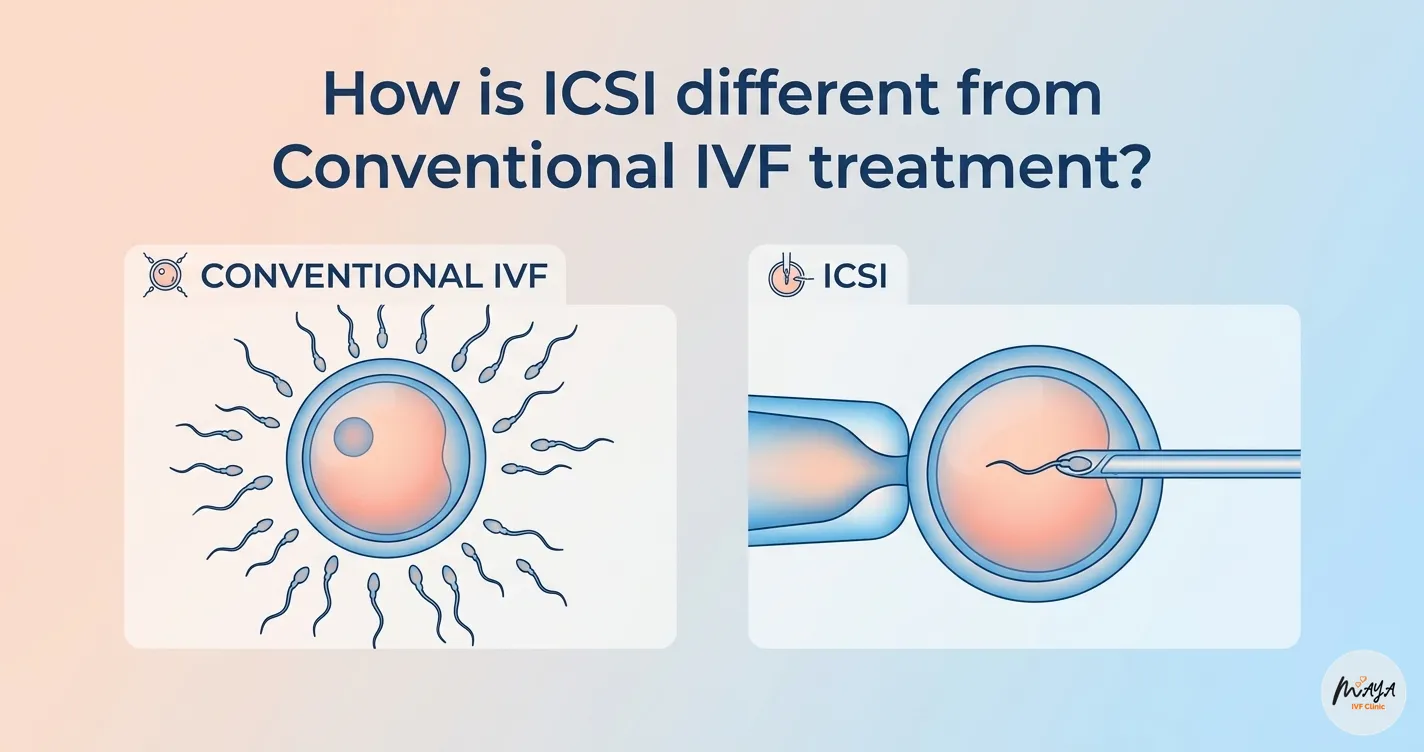
How Is ICSI Different From Conventional IVF Treatm...
OverviewConventional IVF places sperm and eggs together in a dish and allows fertilization to happen...
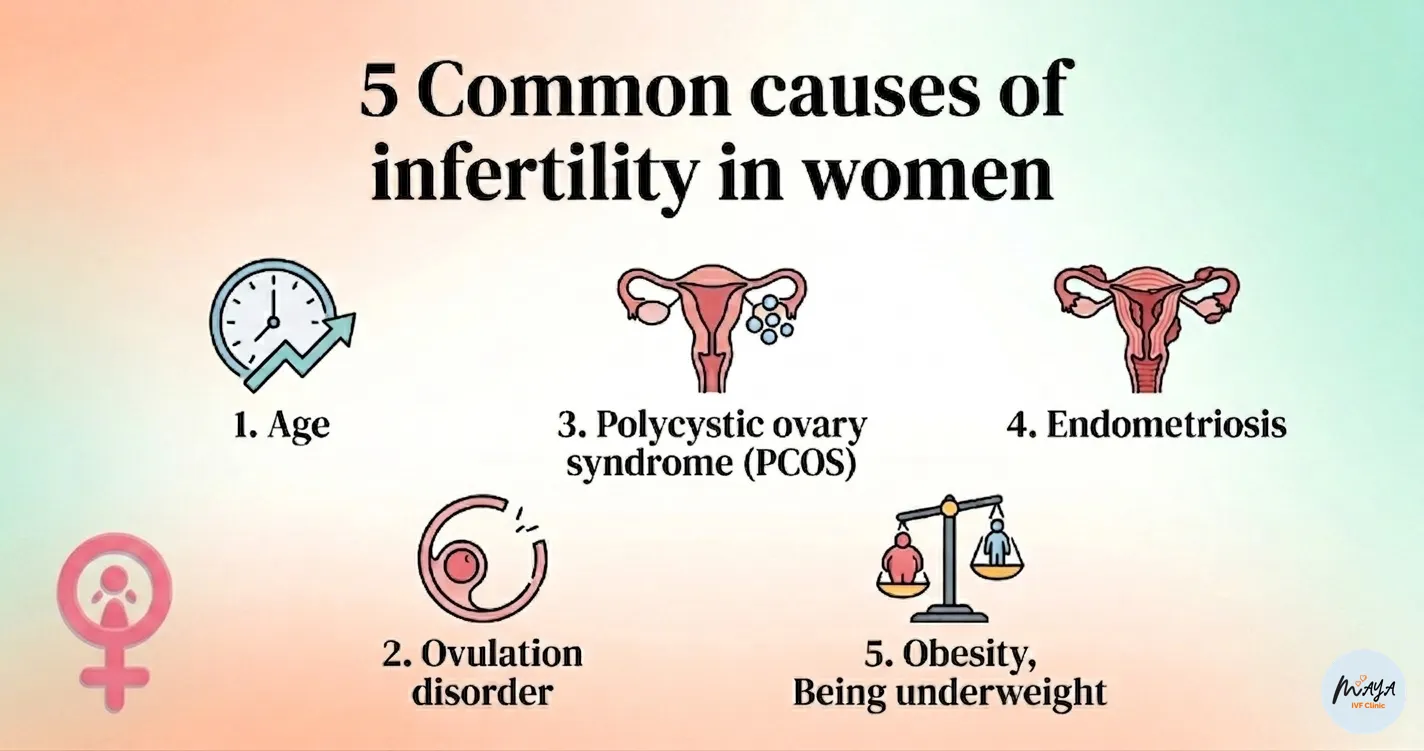
5 Common Causes of Infertility in Women
OverviewWhen months pass without a positive pregnancy test, worry tends to creep in quietly. If that...

 Nepal International Fertility and Laparoscopic Centre (NIFLC).
All rights reserved.