

Illustration showing causes, common symptoms, and treatment options for Urinary Tract Infection (UTI) to help maintain urinary health.
Blog Details
- Home
- Blog Details
Urinary Tract Infection (UTI): Causes, Symptoms, Treatment, and Prevention
Overview
If it burns when you pass urine and you feel the urge to go again soon afterwards, a urinary tract infection (UTI) is a likely explanation. UTIs are bacterial infections of the urinary system, most often the bladder, and they are very common. Most are straightforward to treat. A few, particularly those that reach the kidneys or happen during pregnancy, need prompt medical attention.
This guide explains what causes UTIs, how doctors confirm and treat them, what they can mean in pregnancy, and why a UTI should not be confused with infections that can affect fertility.
What is a urinary tract infection?
A urinary tract infection is an infection in any part of the urinary tract, which is made up of the kidneys, the ureters, the bladder, and the urethra. Doctors describe it by where it sits. A lower UTI affects the bladder (cystitis) or the urethra (urethritis) and is the common type. An upper UTI affects the kidneys (pyelonephritis) or the ureters. It is less common, but it is more serious because a kidney infection can make a person very unwell. When people talk about a "bladder infection" or a "urine infection," they usually mean a lower UTI.
What causes a UTI?
Most UTIs start with bacteria from the bowel. They reach the opening of the urethra, travel upward, and settle in the bladder. Escherichia coli (E. coli) is the most frequent culprit.
Anything that stops the bladder from emptying fully gives bacteria more time to multiply. Kidney stones, an enlarged prostate, and a urinary catheter can all do this. Sexual activity can also push bacteria towards the urethra, which is why some women notice symptoms after sex.
What are the symptoms of a UTI?
A bladder infection usually announces itself clearly. You may notice:
Burning or pain when passing urine
A frequent or urgent need to go, often producing only a little urine
Cloudy or strong-smelling urine
Blood in the urine
Pain or pressure low in the abdomen
If the infection has reached the kidneys, the picture changes. Fever, chills, pain in the back or side, nausea, vomiting, and a general feeling of being very unwell are the signs to watch for.
Symptoms can look different in some groups. Young children may only have a fever, poor feeding, or irritability. Older adults may become confused or unusually drowsy rather than complaining of burning.
Who is more likely to get a UTI?
Anyone can develop a UTI, but women are affected far more often than men. The female urethra is short and sits close to the genital area, so bacteria have a shorter distance to travel.
Risk also rises after menopause. Falling oestrogen levels change the lining of the urinary tract, which can make infection more likely. Pregnancy, diabetes, a weakened immune system, kidney stones, and long-term catheter use all raise the risk as well.
UTIs are less common in men, so when one occurs, doctors usually look for an underlying cause such as prostate enlargement or a blockage.
UTI during pregnancy
A UTI in pregnancy deserves prompt attention. The American College of Obstetricians and Gynecologists (ACOG) describes UTI as one of the more common complications of pregnancy, affecting roughly 8% of pregnancies in the data it reviews.
One reason it needs care is that bacteria can be present in the urine without causing any symptoms, a situation called asymptomatic bacteriuria. For this reason, ACOG advises a urine culture once early in antenatal care. Untreated UTIs have been linked to kidney infection, preterm delivery, and low birth weight, and a kidney infection in pregnancy is usually treated in hospital at first.
If you are pregnant, avoid taking leftover antibiotics or buying them over the counter. Medicines in pregnancy are chosen carefully and matched to the urine culture result. Frequent urination is normal in pregnancy, but burning, pain, fever, or back pain are not, so mention them to your doctor or midwife.
Can a UTI cause infertility?
No. An ordinary UTI is not an established cause of infertility. The infection stays within the urinary system and does not damage the ovaries, the uterus, or the fallopian tubes.
The worry usually comes from sexually transmitted infections (STIs). Chlamydia and gonorrhea can cause burning when you pass urine, and some women assume they have a UTI. The difference matters because these infections can travel up the reproductive tract and cause pelvic inflammatory disease (PID), which can scar the fallopian tubes. The US Centers for Disease Control and Prevention describes both infections as important preventable causes of PID and infertility, and many women who have them notice no symptoms at all.
It is worth asking for STI testing if urinary symptoms continue after UTI treatment, if you have vaginal discharge, pelvic pain, or bleeding between periods, or if a partner may have an infection. If you are trying to conceive, tell your doctor about any recent infections. For a wider look at what can affect female fertility, you may find this guide to the common causes of infertility in women helpful.
How is a UTI diagnosed?
Diagnosis starts with a conversation about your symptoms, followed by a urine test. Two tests are commonly used:
A urinalysis or dipstick test gives a quick check for signs of infection in the urine.
A urine culture grows the bacteria in a laboratory and shows which antibiotics will work against them.
For a healthy, non-pregnant woman with typical symptoms, a doctor may decide on treatment from the symptoms and a dipstick result alone. A culture is usually advised in pregnancy, in men and children, when a kidney infection is suspected, and when symptoms last or come back after treatment. Culture testing can be hard to access in some parts of Nepal, so if your infections keep returning, ask your doctor where a sample can be tested.
Testing also matters because urinary symptoms are not always a UTI. Vaginal infections, STIs, kidney stones, and bladder irritation can feel very similar. If infections are frequent or a blockage is possible, your doctor may suggest an ultrasound or other imaging.
How is a UTI treated?
A bacterial UTI that is causing symptoms is usually treated with antibiotics. Which one, and for how long, depends on where the infection is, your age, whether you are pregnant, your medical history, and any culture result.
A few points are worth knowing:
Not every urinary symptom requires antibiotics: Outside pregnancy, bacteria may sometimes be found in the urine without causing symptoms, and treatment is not always necessary. Some mild bladder infections may improve without antibiotics, but it is not possible to know at home whether an infection will resolve on its own. A healthcare professional should decide whether treatment is needed.
Take antibiotics exactly as prescribed: If you are prescribed antibiotics, follow the instructions provided by your healthcare professional, even if you start feeling better after a day or two.
Avoid self-medicating with antibiotics: Do not use leftover antibiotics or take antibiotics without medical advice. The medication may be inappropriate for the infection, may not fully treat it, and unnecessary antibiotic use can contribute to antibiotic resistance, which is a documented concern with urinary infections.
Contact your healthcare professional if symptoms do not improve: If you are not feeling better after about two days of treatment, or if your symptoms become worse or return, seek medical advice.
Stay hydrated and manage discomfort: Drinking enough fluids and using appropriate pain relief may help ease discomfort, but these measures do not replace medical evaluation or prescribed treatment when an infection requires it.
A kidney infection may need stronger treatment, sometimes in hospital. Cranberry products are often mentioned, but the evidence for them is mixed, and they do not cure an infection that is already active.
What is a recurrent UTI?
A UTI is considered recurrent when you have two infections within six months or three within a year. Possible reasons include incomplete bladder emptying, kidney stones, diabetes, sexual activity, and, after menopause, lower oestrogen levels.
If this sounds familiar, it is worth seeing your doctor rather than treating each episode on your own. Your doctor may test the urine each time, look for an underlying cause, and talk through ways to prevent the next one. For some women after menopause, vaginal oestrogen may be considered. In selected cases, doctors may use a low-dose antibiotic to prevent further infections, but only under medical supervision.
How can you reduce the chance of a UTI?
No habit guarantees protection, but these simple steps are commonly recommended:
Wipe from front to back after using the toilet.
Pass urine soon after sex.
Drink fluids regularly, and avoid holding urine for long stretches.
Skip douches and perfumed products around the genital area.
Treat constipation and keep diabetes well controlled.
When should you see a doctor?
Book an appointment if this is your first episode, if symptoms last more than a couple of days, or if you are pregnant. The same applies if the person affected is a child, a man, or an older adult.
Seek urgent care if you have a fever or shaking chills, pain in the back or side, vomiting, blood in the urine, or symptoms that are getting worse quickly.
Irregular periods and difficulty conceiving are not symptoms of a UTI. They have different causes and need their own assessment, for example, for polycystic ovary syndrome (PCOS). For a clear general overview of symptoms and care, the NHS has a helpful page on urinary tract infections.
Frequently asked questions
How do I know if I have a UTI?
Burning when you pass urine, together with a frequent urge to go, is the classic pattern. Other conditions can feel similar, so a urine test can confirm it.
Can a UTI go away on its own?
Some mild bladder infections do, but it is hard to predict, and an untreated infection can reach the kidneys. Please see a doctor, especially if you are pregnant, have a fever or have back pain.
Do I need a urine culture?
Not always. A culture is usually recommended during pregnancy, in men and children, when a kidney infection is suspected, and when symptoms persist or keep coming back.
Is a UTI an STI?
No. A UTI is usually caused by bowel bacteria entering the urethra, while an STI is passed on through sexual contact. Their symptoms can overlap, so ongoing symptoms deserve testing for both.
Can a UTI cause infertility?
An ordinary UTI does not. Untreated chlamydia or gonorrhea, however, can damage the fallopian tubes, which is why persistent symptoms should be tested rather than assumed to be a UTI.
Is a UTI dangerous during pregnancy?
It can be if it is left untreated. The infection may reach the kidneys, and it has been linked to preterm delivery. Early screening and prompt treatment lower that risk.
Why do I keep getting UTIs?
Common reasons include sexual activity, menopause, incomplete bladder emptying, kidney stones, and diabetes. If you have had two infections in six months or three in a year, you should see a doctor for a review.
Does menopause increase the risk of UTI?
Yes. Lower oestrogen changes the lining of the urinary tract and can make infection more likely. If infections keep returning, your doctor can talk through the options with you.
Our Latest Blogs

Infertility Myths and Facts in Nepal: What Couples...
Quick AnswerInfertility affects an estimated 1 in 6 people globally during their reproductive years,...

How Is ICSI Different From Conventional IVF Treatm...
OverviewConventional IVF places sperm and eggs together in a dish and allows fertilization to happen...
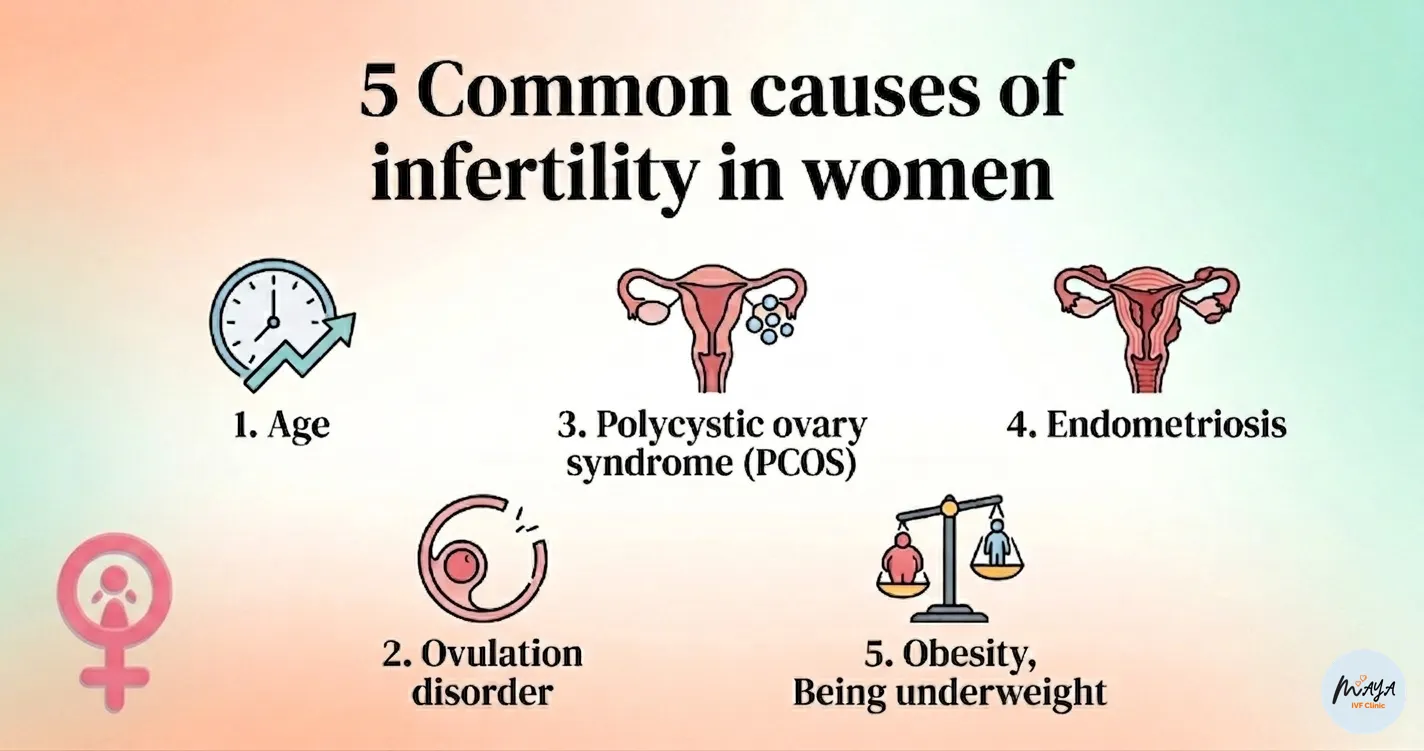
5 Common Causes of Infertility in Women
OverviewWhen months pass without a positive pregnancy test, worry tends to creep in quietly. If that...

 Nepal International Fertility and Laparoscopic Centre (NIFLC).
All rights reserved.