

A couple discussing unexplained infertility with a fertility specialist at Maya IVF Clinic.
Blog Details
- Home
- Blog Details
Unexplained Infertility: What It Means When Tests Are Normal
Introduction
You have been trying to get pregnant for a while. Maybe longer than a year. Your doctor ran some tests. The results came back normal. Your partner's sperm count looks good. Your fallopian tubes are open. You are ovulating each month. But the pregnancy tests keep coming back negative. This scenario happens more often than you might think. In fertility medicine, we call it unexplained infertility. The name makes it sound like we have no answers. That is not quite right. What unexplained infertility really means is that standard medical testing did not find a clear reason for your difficulty conceiving. There is likely something subtle happening. Routine tests just cannot pick it up. This guide walks you through everything you need to know. You will learn what this diagnosis means, why pregnancy might still be difficult, what treatments actually work, and what you can realistically expect moving forward.
What Unexplained Infertility Actually Means
Unexplained infertility is a diagnosis given when basic fertility tests show normal results, but pregnancy has not occurred after a reasonable period of trying. The word "unexplained" does not mean doctors are giving up. It means the standard testing toolkit did not reveal the answer. Think of it like a car that makes a strange noise but passes every basic inspection. Something is wrong. The mechanic has not found it yet.
How common is this situation
About one in every five to six couples who seek fertility help receives this diagnosis. In some clinics, the number goes up to one in three. It is actually one of the most common diagnoses we make.
The three basic tests involved the following:
Before using the term "unexplained infertility," doctors need to confirm three things:
You are releasing eggs. This is called ovulation. Blood tests or urine kits can confirm it.
Your partner has enough healthy sperm. A semen analysis looks at sperm count, movement, and shape.
Your fallopian tubes are open. An HSG or similar test checks for blockages that would prevent egg and sperm from meeting.
When all three of these areas look normal on paper, but pregnancy has not happened after 12 months of trying (or 6 months for women over 35), we use the term unexplained infertility.
What this diagnosis does NOT mean:
It does not mean that nothing is wrong
It does not mean you or your partner caused the problem
It does not mean pregnancy is impossible
It does not mean treatment will not work
Many people leave the doctor's office feeling confused or dismissed after receiving this label. A good specialist will take time to explain that "unexplained" simply means the easy answers have been ruled out. Deeper answers may require more advanced testing or treatment.
Why Pregnancy Is Not Happening Despite Normal Reports
This is the question that keeps people awake at night. "Everything looks fine on paper. So why is this not working?" The honest answer is that basic fertility tests are fairly crude. They tell us the major systems are working. They do not tell us those systems are working perfectly. Pregnancy is a complicated process. Many things have to go exactly right. A small problem at any step can prevent conception, even when all the big things look fine.
Here are the most likely hidden reasons:
The egg may not be healthy enough: Ovulation tests tell us that an egg was released. That is all. They tell us nothing about whether that egg is genetically normal or capable of developing into a pregnancy. As women get older, a higher percentage of their eggs have chromosomal abnormalities. These eggs may look normal, but they cannot produce a viable pregnancy.
The sperm may have hidden damage: A standard semen analysis counts sperm and watches them move. It does not check whether the DNA inside the sperm is intact. Some men have high levels of sperm DNA fragmentation. Their sperm count looks fine, but the genetic material is broken. This damages fertilization and embryo development.
Fertilization may be failing: Sometimes the sperm reaches the egg but cannot get inside. Sometimes the egg does not respond properly. This problem is invisible until you try fertilization in a lab setting during IVF.
The embryo may not implant: The embryo must attach to the uterine lining to establish a pregnancy. Implantation can fail for many reasons. The lining may be too thin. The timing may be off. The embryo may have a problem that was not visible. The immune system may be overactive.
The timing may be off: Even with ovulation prediction kits, many couples miss the fertile window. That window lasts only about six days per cycle. Having intercourse even one day too early or too late means conception cannot happen that month.
These hidden factors are not picked up by routine blood work, ultrasound, or semen analysis. That is why the diagnosis remains "unexplained" until more advanced testing or treatment is done.
The Complete Fertility Testing Process
Before any responsible doctor labels your situation as unexplained infertility, you should go through a thorough evaluation. Here is what that looks like in plain language.
Ovulation testing:
Doctors need proof that you are actually releasing eggs. This can be done in several ways:
A blood test for progesterone around day 21 of your cycle
Urine ovulation predictor kits you use at home
A series of ultrasounds to watch an egg follicle grow and then disappear
Semen analysis:
The male partner provides a sample. A lab examines it under a microscope. The report includes three main numbers:
Count: How many sperm are present
Motility: What percentage are swimming forward
Morphology: What shape are the sperm
Normal ranges have been established by the World Health Organization. A result within those ranges is considered normal for basic testing.
Fallopian tube testing:
The tubes must be open for the egg and sperm to meet. The most common test is called an HSG (hysterosalpingogram). Here is how it works:
A small tube is placed through the cervix
Dye is injected into the uterus
X-rays show whether the dye flows through the fallopian tubes
The test takes about five minutes. Most women feel cramping similar to a menstrual period. It is uncomfortable but usually not painful.
Pelvic ultrasound:
A vaginal ultrasound looks at the uterus, ovaries, and surrounding structures. The doctor checks for:
Fibroids or polyps inside the uterus
Abnormal shape of the uterus
Ovarian cysts
The number of small eggs visible in the ovaries (called antral follicle count)
Hormone blood tests:
These typically include:
AMH (Anti-Müllerian Hormone): Estimates how many eggs remain in your ovaries
FSH (Follicle-Stimulating Hormone): Measures how hard your brain is working to stimulate your ovaries
TSH (Thyroid Stimulating Hormone): Checks your thyroid function
Prolactin: High levels can prevent ovulation
Only when all of these tests come back within normal ranges do fertility doctors use the term unexplained infertility.
Hidden Conditions That Standard Testing May Miss
Research over the past twenty years has identified several subtle conditions that contribute to unexplained infertility. These are not checked in routine testing but may be playing a role in your situation.
Mild endometriosis:
Endometriosis occurs when tissue similar to the uterine lining grows outside the uterus. Even mild cases create inflammation in the pelvic cavity. This inflammation can make the environment around the eggs, sperm, and embryos less friendly. Standard ultrasound often misses mild endometriosis. The only way to see it for sure is with a surgical procedure called laparoscopy.
Sperm DNA fragmentation:
This refers to breaks in the genetic material inside sperm. A man can have a completely normal count, movement, and shape, but his sperm DNA may be damaged. High fragmentation is linked to:
Failed fertilization
Poor embryo development
Higher miscarriage rates
A specialized test called the sperm DNA fragmentation assay is required to diagnose this condition.
Chronic endometritis:
This is a low-grade infection or inflammation of the uterine lining. It often causes no symptoms. But it can prevent embryos from implanting. It is diagnosed by taking a small biopsy of the uterine lining and sending it to a lab for analysis.
Luteal phase defect:
After ovulation, the ovary produces progesterone to prepare the uterine lining for an embryo. Some women produce enough progesterone, but their uterine lining does not respond properly. This subtle problem is difficult to diagnose with routine testing.
Overtraining or low body weight:
Women who exercise intensely or have very low body fat may ovulate irregularly or produce poor-quality eggs. Routine ovulation tests may still show a positive result, but the egg released may not be healthy enough for pregnancy.
These hidden causes are not checked in a standard fertility workup because testing for them is more invasive or more expensive. But they are real and may explain your situation.
Can You Get Pregnant Naturally With Unexplained Infertility
Many couples want to know whether they should keep trying on their own or move straight to medical treatment.
Here is the direct answer based on medical research:
Natural pregnancy is still possible. But the chances depend heavily on two factors: the woman's age and how long the couple has already been trying.
For women under age 35:
If you have been trying for 12 to 24 months, the chance of conceiving naturally over the next 12 months is about 15 to 25 percent. That is lower than fertile couples, who have about a 20 to 25 percent chance each month. But it is not zero.
For women between 35 and 39:
Natural pregnancy rates drop noticeably. The chance over the next 12 months may be 10 percent or less. Age-related decline in egg quality is the main reason.
For women aged 40 and above:
Natural conception rates are very low, often below 5 percent per year, even when test results look normal. At this age, most fertility specialists recommend moving directly to treatment rather than waiting.
The single most important predictor: duration of infertility.
Research consistently shows that couples who have been trying for three years or more with no pregnancy have very low chances of natural conception without treatment. The longer you wait, the lower the odds become. I share these numbers not to discourage you. I share them because many couples waste precious time waiting for a natural pregnancy that statistics say is unlikely. For couples over age 35, waiting is often not the best strategy.
Medical Treatments For Unexplained Infertility
Modern fertility medicine offers several effective treatments for this condition. The goal is not necessarily to identify the hidden cause. The goal is to overcome whatever barriers exist using medical techniques.
Here are the standard options, arranged from least to most intensive.
Timed intercourse with monitoring.
A doctor tracks your cycle using ultrasound or urine tests. When the egg is about to be released, you are told to have intercourse that day and the following day. This removes timing errors. For some couples, this simple step is enough.
Ovulation induction with oral medications.
Medications called clomiphene citrate (Clomid) or letrozole (Femara) are taken for five days early in the cycle. They stimulate the ovaries to develop and release two or three eggs instead of one. More eggs mean more chances for fertilization. These medications are often combined with timed intercourse or IUI.
Intrauterine insemination (IUI):
Here is how IUI works:
A semen sample is collected
The lab processes the sample to concentrate the healthiest sperm
A thin, flexible tube is passed through the cervix
The concentrated sperm is placed directly into the uterus
The procedure takes two to three minutes. Most women say it feels similar to a Pap smear. IUI works by bypassing the cervix and putting a high number of healthy sperm very close to the egg.
In vitro fertilization (IVF):
Here is how IVF works:
You take daily injections to stimulate the ovaries to develop multiple eggs
The eggs are retrieved using a needle guided by ultrasound
Eggs and sperm are combined in a laboratory dish
Fertilization happens outside the body
Embryos are grown in the lab for five to six days
One or two embryos are transferred into the uterus
IVF gives the highest success rates per cycle because it bypasses most potential barriers. It also provides diagnostic information. For example, if eggs do not fertilize in the lab, that tells us there is a sperm or egg function problem that was not visible on routine tests.
Which treatment should you choose?
That depends on your age and how long you have been trying.
Under 35, trying less than two years: Often three to four cycles of oral medication with IUI before considering IVF
35 to 37: A more aggressive approach. Often, three cycles of IUI with medication, then IVF if not successful
38 and above: Many specialists recommend moving directly to IVF. Time is critical at this age
IUI For Unexplained Infertility: Detailed Information
Let me give you specific details about IUI since it is often the first medical treatment couples try.
The complete process:
You take oral medication (Clomid or letrozole) for five days, starting around day three of your cycle
Around day 10 to 12, you come in for an ultrasound to measure the developing egg follicles
When a follicle reaches about 18 to 22 millimeters, you take an injection of hCG (human chorionic gonadotropin)
This injection triggers ovulation to occur about 36 hours later
Your partner provides a semen sample on the day of the procedure
The lab washes the sample to remove inactive sperm, debris, and fluid. This takes about one hour
You lie on an exam table. A speculum is placed. The doctor passes a thin catheter through your cervix and injects the concentrated sperm into your uterus
You rest for five to ten minutes and then go home
Success rates for IUI:
Average pregnancy rate per IUI cycle: 8 to 15 percent
Cumulative rate after three cycles: 30 to 40 percent
After six cycles, rates do not improve significantly
Most fertility specialists recommend three to four IUI cycles. If pregnancy has not occurred by then, moving to IVF typically offers better odds.
Who is a good candidate for IUI?
Women under age 38
Couples who have been trying for less than three years
Women with normal fallopian tubes
Couples with mild or no male-factor infertility
Who should skip IUI and go directly to IVF?
Women over age 38
Women with low ovarian reserve (low AMH level)
Couples who have been trying for more than three years
Couples who have had previous failed IUI cycles
IVF For Unexplained Infertility: Detailed Information
IVF is the most effective treatment for unexplained infertility. But it also serves a second important purpose. It often reveals the hidden problem.
What IVF can show you about your fertility:
Fertilization rate:
After eggs and sperm are combined in a lab dish, embryologists check them 16 to 18 hours later. In a normal situation, about 70 to 80 percent of eggs are fertilized. If your rate is much lower, it suggests a sperm or egg function problem. This finding may lead to a technique called ICSI (intracytoplasmic sperm injection), where a single sperm is injected directly into each egg.
Embryo development:
Embryos are observed in the lab for five to six days. Some stop growing on day two or three. Some make it to the blastocyst stage. Poor development often points to egg quality issues, sperm DNA damage, or both.
Implantation:
Even a good-looking embryo may fail to implant after transfer. This can indicate a uterine lining problem, an immune issue, or an embryo problem that was not visible under the microscope.
Success rates for IVF in unexplained infertility:
Success depends almost entirely on the woman's age at the time eggs are retrieved.
These numbers come from large fertility registries. Your individual chances may be higher or lower depending on your specific test results. One important note: these success rates reflect one transfer. Some couples need two or three transfers to achieve a live birth.
Lifestyle Factors That Support Fertility
Lifestyle changes alone rarely cure unexplained infertility. But they improve your overall health and may increase the effectiveness of medical treatments.
Body weight matters:
Both being underweight and being overweight reduce fertility. For overweight women, losing just 5 to 10 percent of body weight can restore ovulation and improve pregnancy rates. For underweight women, gaining a few pounds often helps regulate cycles.
A healthy diet matters:
A diet rich in fruits, vegetables, whole grains, and lean protein supports reproductive health. Healthy fats from olive oil, avocados, nuts, and fatty fish are beneficial. Limit processed foods, added sugar, and trans fats.
Smoking is harmful to fertility:
Smoking ages the ovaries by approximately ten years. It damages egg DNA and reduces IVF success rates by 30 to 50 percent. The same applies to male partners. Smoking damages sperm DNA. Quitting is one of the most effective things you can do.
Alcohol and caffeine
Drinking more than four alcoholic beverages per week is associated with reduced fertility. Many specialists recommend complete avoidance during treatment cycles. For caffeine, keep intake below 200 milligrams per day. That is roughly one 12-ounce cup of coffee.
Exercise in moderation:
Thirty to forty-five minutes of moderate exercise five days per week supports fertility. Walking, jogging, swimming, and cycling are good choices. Extreme exercise, such as marathon training or high-intensity classes six days per week, can actually suppress ovulation.
Sleep and stress:
Poor sleep disrupts hormone regulation. Chronic stress can delay ovulation or stop it entirely. Basic stress management, such as regular sleep, talking with your partner, and taking breaks from trying, is helpful.
None of these changes guarantees pregnancy. But they create the best possible environment for conception and treatment success.
The Emotional Reality Of Unexplained Infertility
I want to address this directly because it affects every patient I see with this diagnosis.
Unexplained infertility carries a unique emotional burden. When there is no clear medical problem, patients often turn their confusion inward.
Common feelings include:
Frustration that tests show nothing wrong
Guilt or self-blame
Anxiety before each pregnancy test
Strain on the relationship
Jealousy of friends who conceive easily
Exhaustion from the monthly cycle of hope and disappointment
What helps:
Talking openly with your partner about what you are feeling
Setting boundaries with well-meaning friends and family
Finding a trusted friend or counselor to talk to
Taking planned breaks from trying when needed
What does not help:
Blaming yourself or your partner
Believing that stress caused your infertility
Waiting indefinitely without a medical plan
Having a clear plan reduces anxiety. When you know what you will do next month, the current month becomes easier to handle.
When To See A Fertility Specialist
Many couples wait too long to seek specialist care. Do not make that mistake.
Make an appointment now if:
You are under 35 and have been trying for 12 months with no pregnancy
You are 35 to 40 and have been trying for 6 months
You are over 40. Do not wait. See a specialist before you start trying or after three months of trying
Your cycles are irregular (shorter than 21 days or longer than 35 days)
You have a known condition, such as endometriosis, PCOS, or a history of pelvic infection
You have had two or more miscarriages
You have failed IUI or other fertility treatments elsewhere
What happens at your first visit:
Complete medical history review
Ordering of appropriate fertility tests
Discussion of your timeline and goals
Creation of a personalized treatment plan
The most common regret I hear from patients is "I wish I had come sooner." "Do not let that be you.
Realistic Expectations And Honest Hope
Let me close with both honesty and hope.
The truth:
Unexplained infertility is real. It is not in your head. Standard treatments do not work for everyone. IVF does not guarantee a baby. Some couples will never find a clear cause, even after advanced testing.
The hopeful truth:
The majority of couples with unexplained infertility eventually conceive. Some with time. Some with IUI. Some with IVF. The success rates I shared earlier are real. Tens of thousands of babies are born each year to couples who started with this same diagnosis.
What matters most for your success:
The woman's age at the time of treatment
How long have you been trying
The number of treatment cycles you are willing to pursue
Your job is not to find the cause. Your job is to make informed decisions with a specialist. Let us worry about the diagnosis. You focus on the plan. Keep moving forward. Get a specialist involved. Make a plan. Protect your emotional health along the way.
Frequently Asked Questions
1. Is unexplained infertility a permanent diagnosis?
No. Some couples eventually conceive naturally. Others find answers through more advanced testing or IVF. The diagnosis simply means basic tests did not find a cause.
2. Can IUI work for unexplained infertility?
Yes. IUI with fertility medication has a success rate of 8 to 15 percent per cycle. Three cycles typically yield a cumulative pregnancy rate of 30 to 40 percent.
3. Do I need IVF for unexplained infertility?
Not necessarily. Many couples conceive with IUI or ovulation induction alone. However, IVF has the highest success rates and is recommended for women over 38 or after failed IUI cycles.
4. How long should I try IUI before moving to IVF?
Most fertility specialists recommend three to four IUI cycles. If no pregnancy after that, IVF typically offers better odds.
5. Can stress cause unexplained infertility?
Stress can disrupt ovulation and reduce sexual frequency, but it is rarely the sole cause of infertility. It may worsen an existing problem but it does not create it.
Our Latest Blogs

Infertility Myths and Facts in Nepal: What Couples...
Quick AnswerInfertility affects an estimated 1 in 6 people globally during their reproductive years,...
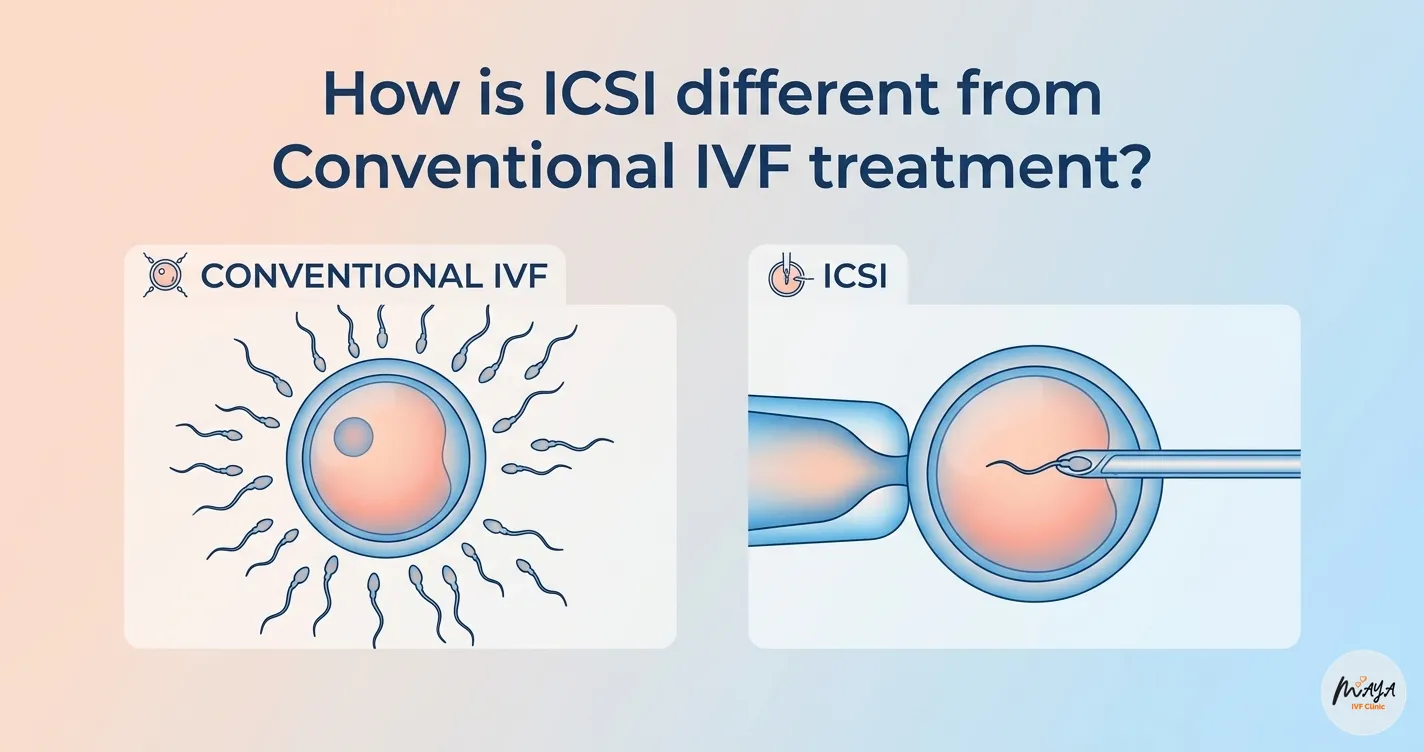
How is ICSI different from Conventional IVF treatm...
ICSI and Conventional IVF both are forms of assisted reproductive treatment (ART) in which eggs are...
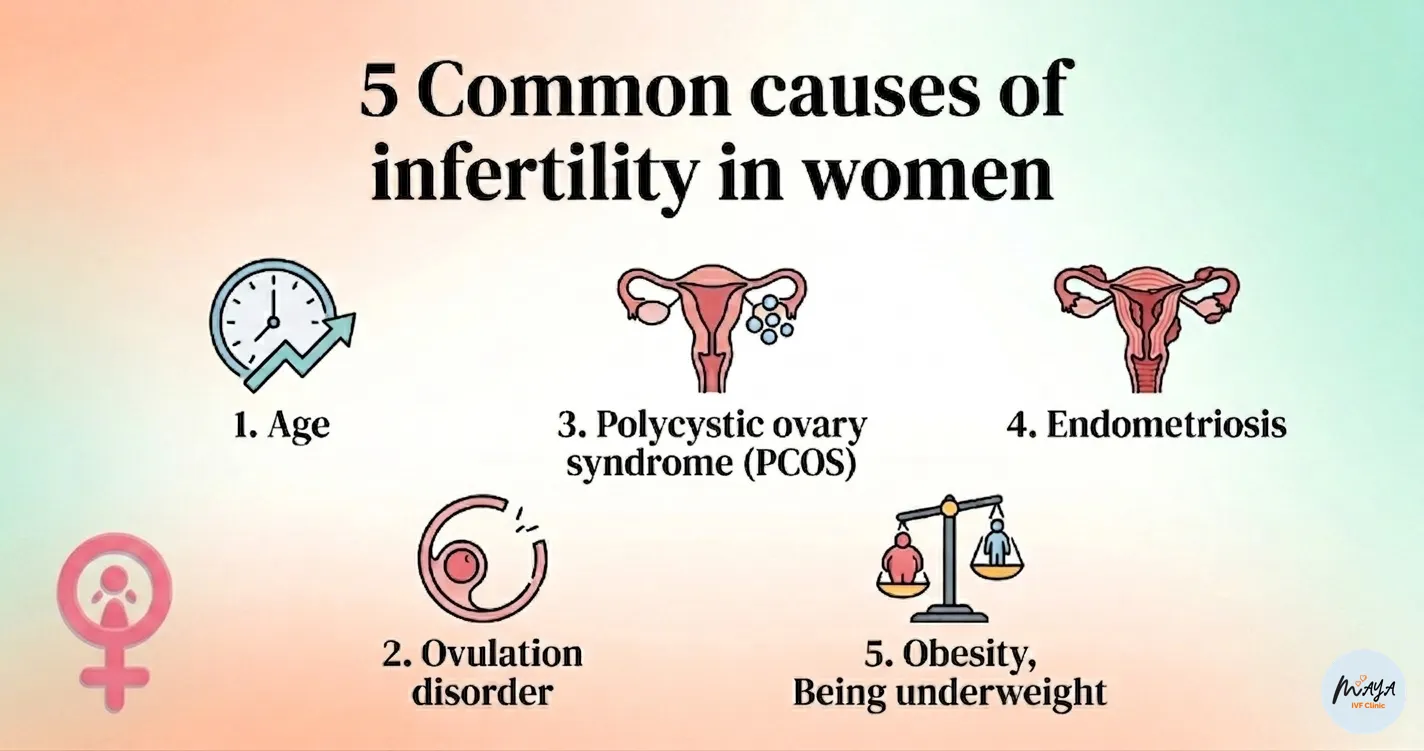
5 Common causes of infertility in women
A condition is diagnosed as infertility when a heterosexual couple is unable to conceive after one y...

 Nepal International Fertility and Laparoscopic Centre (NIFLC).
All rights reserved.
Nepal International Fertility and Laparoscopic Centre (NIFLC).
All rights reserved.