
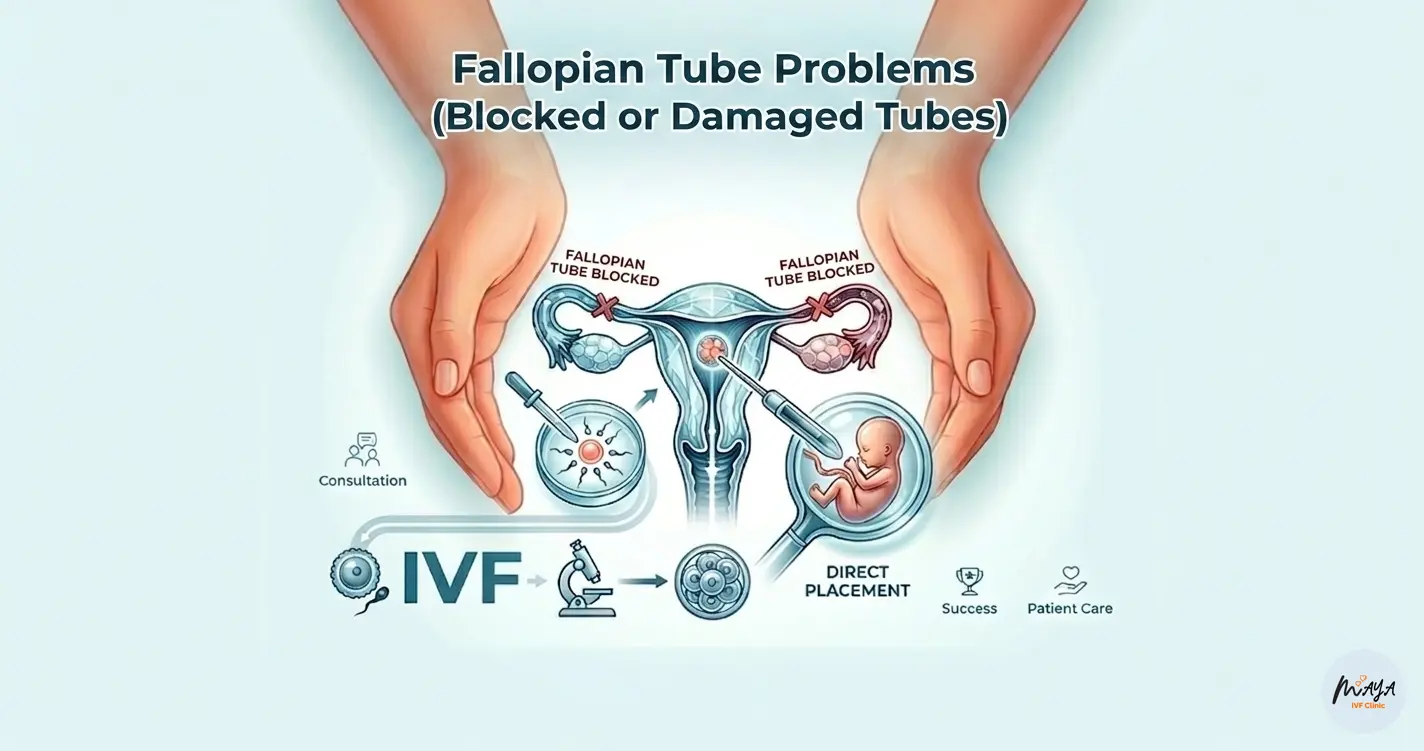
Concept image showing how IVF bypasses blocked fallopian tubes to help achieve pregnancy by fertilizing eggs outside the body.
Blog Details
- Home
- Blog Details
Fallopian Tube Problems: A Clinical Guide for Patients (Blocked or Damaged Tubes)
Introduction
Let me start with something I tell patients almost every week in my clinic. You have been trying to get pregnant. Maybe for six months. Maybe for two years. And now a doctor has mentioned the words “fallopian tube problems.” Or perhaps you are still searching for answers, and you found your way here.
I want to be direct with you. Fallopian tube problems are one of the most common reasons for infertility that we diagnose. But here is what I also want you to know: they are also one of the most treatable. In many cases, we have clear, effective paths forward. I will explain exactly what we look for, how we test for it, and what treatments actually work. I will not promise miracles. But I will give you the honest, medically accurate information that I give to my own patients.
Let us begin.
What Are Fallopian Tubes
Most patients come to me knowing very little about their fallopian tubes. That is completely normal. Until you are trying to conceive, these structures rarely get attention.
Here is what you need to know. You have two fallopian tubes. One on the left side of your uterus. One on the right. They are not large. Each tube is about the width of a thin spaghetti strand and roughly four to five inches long.
What do they actually do?
Each month, your ovary releases an egg. That egg drifts into the space near the end of your fallopian tube. The tube has tiny finger-like projections at its opening. Doctors call these fimbriae. These projections gently sweep the egg into the tube. Once inside, the tube becomes a waiting area. Sperm swim up through the uterus and into the tube. The egg and sperm meet inside the widest part of the tube. Fertilization happens there. Then the tiny embryo travels down the rest of the tube and into the uterus for implantation. The fallopian tube is the meeting place for sperm and an egg. Without a healthy, open tube, natural fertilization cannot happen.
What Are Fallopian Tube Problems
When I diagnose a patient with fallopian tube problems, I am usually describing one of four specific situations.
Blocked Fallopian Tubes
This means something is obstructing the tube completely. The blockage can be near the uterus. Doctors call this proximal blockage. Or it can be near the ovary. We call that distal blockage. In either case, the egg and sperm cannot reach each other.
Damaged Fallopian Tubes
Sometimes the tube is physically open. There is no blockage. But the inside lining is damaged. The tube has tiny hair-like cells called cilia that wave to push the egg toward the uterus. If those cilia are scarred or flattened, the egg never moves. The tube is essentially paralyzed.
Partial Blockage
This is a dangerous situation. The tube is not fully closed. It is narrow or sticky inside. Sperm may get through. The egg may get through. But the resulting embryo is often too large to pass back to the uterus. This is a major cause of ectopic pregnancy.
Hydrosalpinx
This is a specific type of distal blockage. The end of the tube seals shut, and the tube fills with clear fluid. That fluid is not harmless. It contains inflammatory substances that can be toxic to an embryo. In clinical practice, we often recommend removing a hydrosalpinx before any fertility treatment.
Causes of Blocked or Damaged Fallopian Tubes
Many patients ask me, “Doctor, why did this happen?” Most of the time, there is a clear cause. But occasionally, we cannot find one.
Pelvic Inflammatory Disease (PID)
This is the most common cause. PID is usually the result of untreated sexually transmitted infections, especially chlamydia or gonorrhea. The infection causes inflammation and scarring inside the tubes. In clinical practice, we see this frequently in patients who had an STI years ago and never knew it.
Previous Abdominal or Pelvic Surgery
Any surgery in the lower belly can create adhesions. Adhesions are bands of internal scar tissue. They can kink or pull on the tubes. Common culprits include appendectomy, C-section, bowel surgery, or previous ovarian cyst removal.
Endometriosis
This condition occurs when tissue similar to the uterine lining grows outside the uterus. It can grow directly on the tubes. It can also create severe inflammation that glues the tubes to the ovaries or the pelvic wall.
History of Ectopic Pregnancy
If you have had a pregnancy that implanted in a tube before, that tube is often scarred afterward. Treatment with surgery or medication can leave the tube permanently blocked or damaged.
Tuberculosis (In Some Regions)
In parts of the world where pelvic tuberculosis is more common, this infection can cause extensive tubal scarring. We see this less frequently in many Western countries, but it remains an important cause globally.
Uterine Fibroids or Polyps
Large fibroids near where the tube enters the uterus can physically pinch the tube closed. This is less common but worth mentioning.
Symptoms of Fallopian Tube Problems
Here is something that surprises many patients. Most women with blocked or damaged tubes have no symptoms at all. You cannot feel a blockage. You still get your period. You still ovulate. You still have normal sexual function. That is why many patients only discover tubal problems after a year of unexplained infertility.
When symptoms do appear, they may include:
Chronic pelvic pain: A dull, persistent ache low in the belly that is not related to your menstrual cycle.
Pain during periods: Heavier or sharper cramping than usual.
Pain during intercourse: Deep pain, particularly if endometriosis is present.
Unusual vaginal discharge: Yellow, green, or foul-smelling discharge suggests an active infection, not just a blockage.
Fever and severe pain: This can indicate a pus-filled tube called a pyosalpinx. This is a medical emergency.
The key point: Lack of symptoms does not mean lack of a problem. Do not wait for pain to seek testing.
How Fallopian Tube Problems Affect Pregnancy
Let me explain the mechanics clearly, because this is where many patients get confused.
Both tubes are fully blocked
Sperm and egg cannot meet. There is no physical path. Natural pregnancy is impossible. However, that does not mean you cannot have a child. It simply means you need medical assistance to bypass the tubes.
One tube blocked, one tube open
This is a partial problem. If you ovulate from the side with the open tube, you have a normal chance of conceiving that month. If you ovulate from the blocked side, that egg is lost. On average, this reduces your monthly chance of pregnancy by about half.
Damaged tubes with an open passage
Even if dye passes through on an X-ray, the tube may still not function properly. The cilia may be too damaged to move the egg. In this situation, pregnancy is extremely unlikely without assistance.
The serious risk: ectopic pregnancy
If a tube is partially blocked, sperm may reach the egg, but the resulting embryo cannot return to the uterus. It implants inside the tube. The tube cannot stretch like a uterus. If not caught early, the tube can rupture and cause life-threatening internal bleeding.
Any positive pregnancy test with one-sided pelvic pain requires immediate medical attention.
How Doctors Diagnose Tube Problems
In my clinic, we use several methods to evaluate the fallopian tubes. Each has a specific purpose.
HSG (Hysterosalpingogram)
This is the most common first test. We inject a dye through the cervix into the uterus. Then we take X-ray images. If the dye spills out of the tubes and into the abdominal cavity, the tubes are open. If the dye stops, there is a blockage.
What patients should know: The test takes about five minutes. Most women experience cramping similar to a bad period. The discomfort is temporary.
Saline Infusion Sonography
This is similar to an HSG, but we use salt water and an ultrasound instead of dye and an X-ray. It provides less detail about the tubes but can be useful for evaluating the uterine cavity.
Laparoscopy
This is surgery, but it is minimally invasive. We make a small incision at the navel and insert a camera. Then we inject blue dye through the cervix. If we see blue dye coming out of the tube ends, the tubes are open. Laparoscopy is the most accurate method, but it requires general anesthesia. In clinical practice, we usually start with HSG. If the results are unclear or if we suspect other problems like endometriosis, we move to laparoscopy.
Ultrasound
A standard ultrasound cannot reliably determine if tubes are open. However, it can identify hydrosalpinx. A fluid-filled, sausage-shaped structure next to the ovary on ultrasound is often a hydrosalpinx.
Blood tests
Blood tests do not diagnose blocked tubes. But they help us understand your overall ovarian health, which guides treatment decisions.
Treatment Options for Blocked Tubes
Treatment depends entirely on the location and severity of the blockage, your age, and your overall fertility health.
Medication
If an active infection is causing inflammation, antibiotics can clear the infection. However, antibiotics cannot remove old scar tissue. Once the tube is scarred, medication alone will not open it.
Surgery (Laparoscopic Repair)
For certain types of blockage, surgery can help.
Proximal blockage (near the uterus): A small wire or catheter can sometimes be passed through the blockage. Success rates are moderate.
Distal blockage (near the ovary): A surgeon can cut away scar tissue from the end of the tube or open a sealed end.
Adhesions: We can cut the bands of scar tissue that are kinking the tubes.
Important limitation: Surgery works best for mild to moderate disease. For severely damaged tubes or hydrosalpinx, surgery is often not effective.
Salpingectomy (Tube Removal)
This sounds counterintuitive, but it is an important treatment. If a tube has hydrosalpinx, keeping it actually lowers pregnancy success rates with IVF. The fluid leaks back into the uterus and prevents implantation. Removing the damaged tube improves IVF outcomes.
IVF (In Vitro Fertilization)
For many patients with significant tubal disease, IVF and infertility is the most effective and fastest route to pregnancy. I will explain this fully in the next section.
IVF for Blocked Fallopian Tubes
I want to be very clear about this. IVF completely bypasses the fallopian tubes. We do not need them at all.
How IVF works for tubal ligation factor infertility
You take medication to stimulate your ovaries to grow multiple eggs.
We retrieve those eggs using a thin needle through the vaginal wall. You are sedated and comfortable.
In the laboratory, we combine your eggs with sperm. Fertilization happens in a dish.
The resulting embryos grow in the lab for several days.
We transfer one or two healthy embryos directly into your uterus through a thin catheter.
Notice what is missing: The fallopian tubes are never involved. The embryo starts exactly where it needs to be.
Realistic success expectations
Tubal factor infertility is actually one of the better diagnoses for IVF. Why? Because your uterus is typically healthy. The only issue was the tubes.
For a woman under 35 with tubal blockage alone, the chance of a live birth per embryo transfer is approximately 50 to 60 percent in good clinics. For women over 40, the success rate is lower, primarily due to egg quality rather than the tubes.
Emotional reassurance
Many patients cry when I explain this. They have been told their tubes are blocked, and they assume that means they cannot have a biological child. That is not true. You just need a medical bridge around the blockage.
Can You Get Pregnant Naturally With Blocked Tubes?
I give patients honest answers to this question every week. Both tubes fully blocked: No. Natural pregnancy is not possible. You need surgery to open the tubes or IVF to bypass them.
One tube open, one blocked: Yes, but only half the time. You have a normal chance of conception only when you ovulate from the open side. This often takes longer.
Partial blockage: Possibly, but the risk of ectopic pregnancy is significantly elevated. Most fertility specialists would not recommend trying naturally with known partial blockage.
Damaged but open tubes: Very unlikely. The cilia are needed to move the egg. Without functional cilia, the egg never reaches the uterus.
Prevention Tips
Not all tubal damage can be prevented. But some can.
Practice safer sex. Untreated chlamydia and gonorrhea are the leading preventable causes of blocked tubes.
Get tested after unprotected sex with a new partner. Many STIs have no symptoms.
Complete the full course of antibiotics if you are diagnosed with pelvic infection.
Do not ignore pelvic pain. Early treatment of infections prevents scarring.
After pelvic surgery, ask your surgeon about adhesion prevention barriers.
Emotional Impact of Tubal Infertility
I need to address something that medical textbooks often ignore. This diagnosis is emotionally heavy. When a patient hears “blocked tubes,” the unspoken thought is often, “I am broken.” Let me address that directly. You are not broken. You have a mechanical issue in one part of your reproductive system. That is all. Tubal factor infertility does not predict your ability to be a loving parent. It does not reflect on your femininity or your worth.
Coping strategies that help my patients
Separate intimacy from baby-making. Schedule sex without tracking or pressure.
Find a support group for tubal ligation factor infertility. Other patients understand in ways your family may not.
Set a time limit on uncertainty. Decide, “We will try this treatment for six months, then reassess.”
Consider speaking with a reproductive therapist. The grief of losing the “natural conception” dream is real and valid.
When to See a Doctor
Do not wait for symptoms that may never come.
Under 35: See a fertility specialist after 12 months of regular, unprotected intercourse.
Over 35: See a specialist after 6 months.
Any age: See a doctor immediately if you have a known history of pelvic infection, STI, ectopic pregnancy, or pelvic surgery.
The HSG test is quick, safe, and provides definitive answers about your tubes. Knowing is always better than wondering.
Frequently Asked Questions
1. Can blocked fallopian tubes be treated without surgery?
Sometimes. If the blockage is from mucus or debris, an HSG test itself can flush it open. But true scar tissue requires surgery or IVF.
2. Can you get pregnant with one blocked tube?
Yes, but only when you ovulate from the open side. This roughly halves your monthly chance.
3. How serious is tubal blockage?
It is a serious cause of infertility but not dangerous unless it causes ectopic pregnancy or hydrosalpinx.
4. Is IVF the only option for blocked tubes?
For complete distal blockage or hydrosalpinx, yes. For proximal blockage or mild adhesions, surgery may work.
5. What causes fallopian tube damage besides STDs?
Endometriosis, previous abdominal surgery, fibroids, ectopic pregnancy history, and pelvic tuberculosis.
Our Latest Blogs

Infertility Myths and Facts in Nepal: What Couples...
Quick AnswerInfertility affects an estimated 1 in 6 people globally during their reproductive years,...
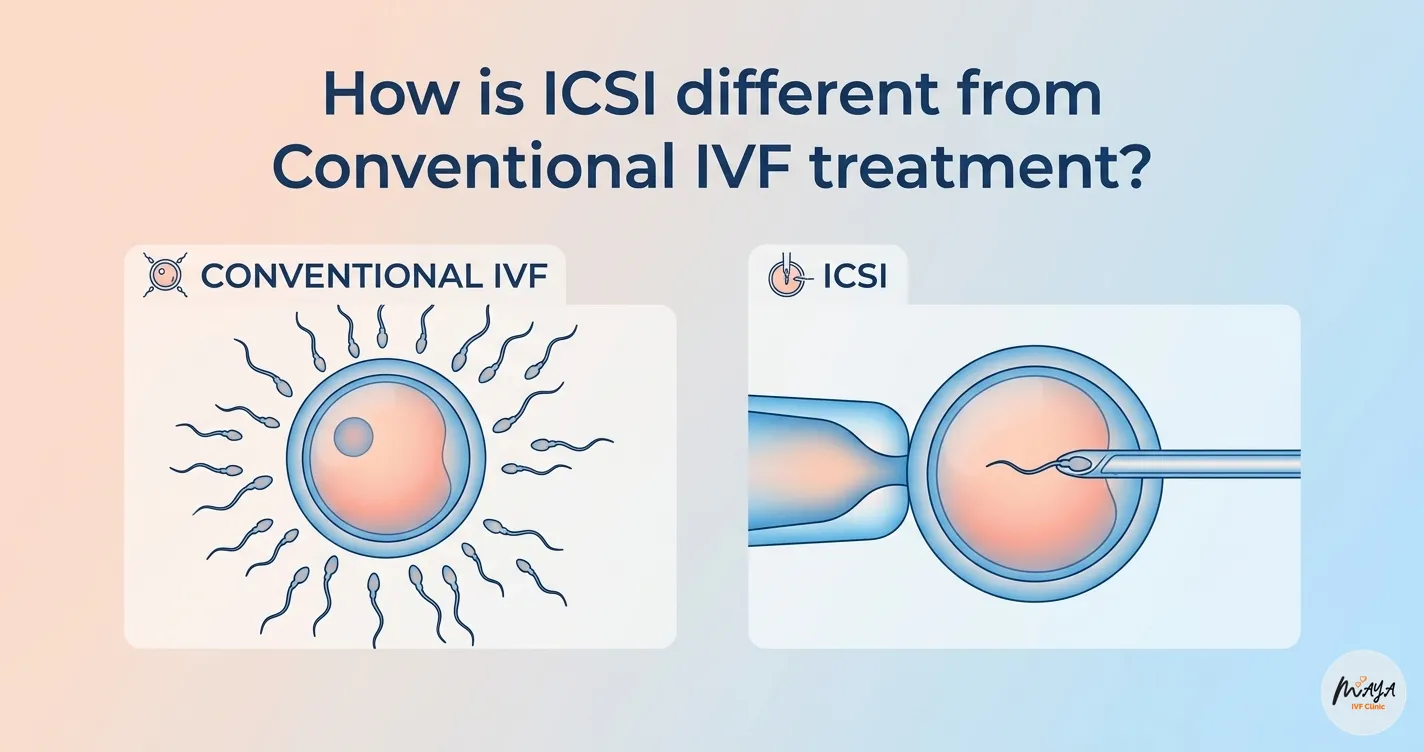
How is ICSI different from Conventional IVF treatm...
ICSI and Conventional IVF both are forms of assisted reproductive treatment (ART) in which eggs are...
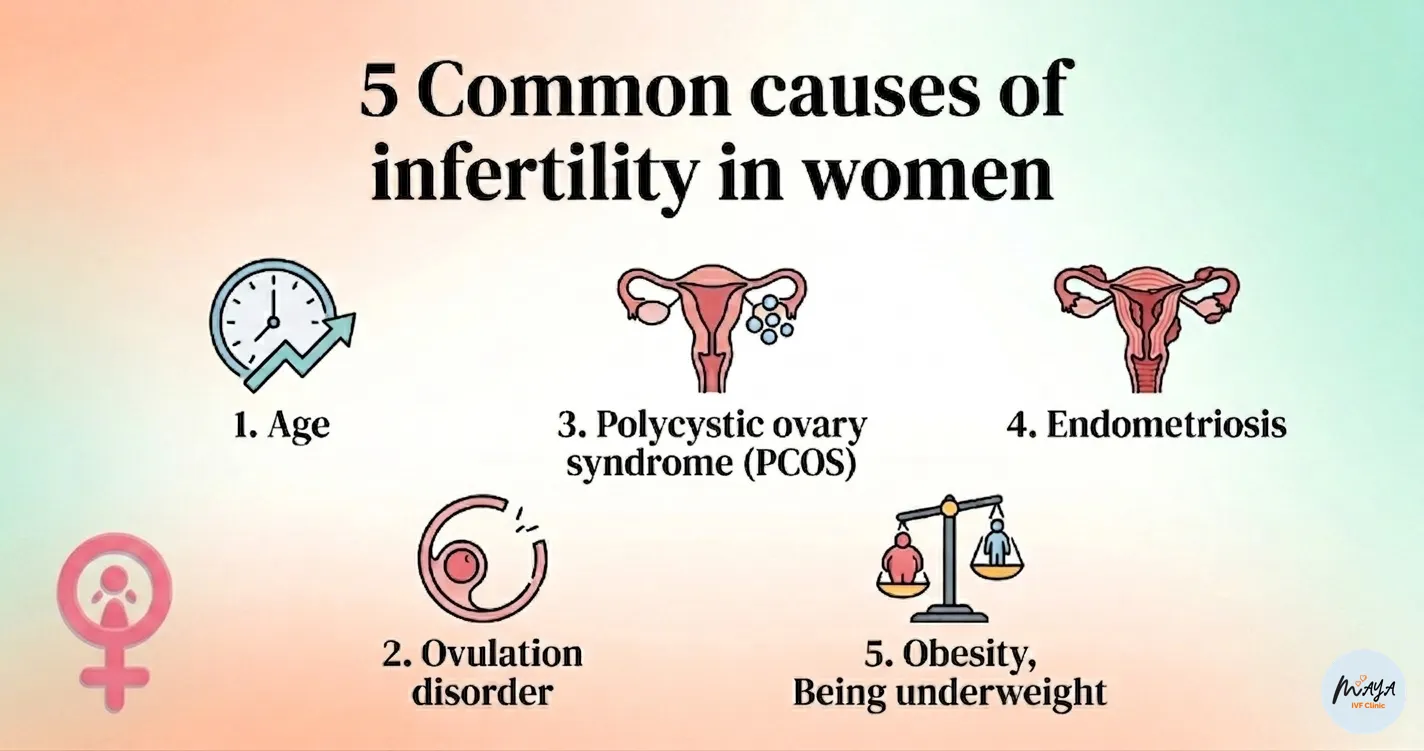
5 Common causes of infertility in women
A condition is diagnosed as infertility when a heterosexual couple is unable to conceive after one y...
 Nepal International Fertility and Laparoscopic Centre (NIFLC).
All rights reserved.
Nepal International Fertility and Laparoscopic Centre (NIFLC).
All rights reserved.