
A senior fertility specialist explains the difference between IVF and ICSI, who needs which treatment, success rates, and risks.
Blog Details
- Home
- Blog Details
IVF and ICSI Explained by a Real Fertility Doctor | Treatment
Introduction
IVF and ICSI are fertility treatments used when pregnancy does not happen naturally. IVF means eggs and sperm are fertilized in a laboratory dish. ICSI is a specific type of IVF where a single sperm is injected directly into the egg. Doctors recommend ICSI mainly for male infertility.
This guide explains both treatments in simple terms, including who needs them, how they work, success rates, risks, and when to see a fertility specialist.
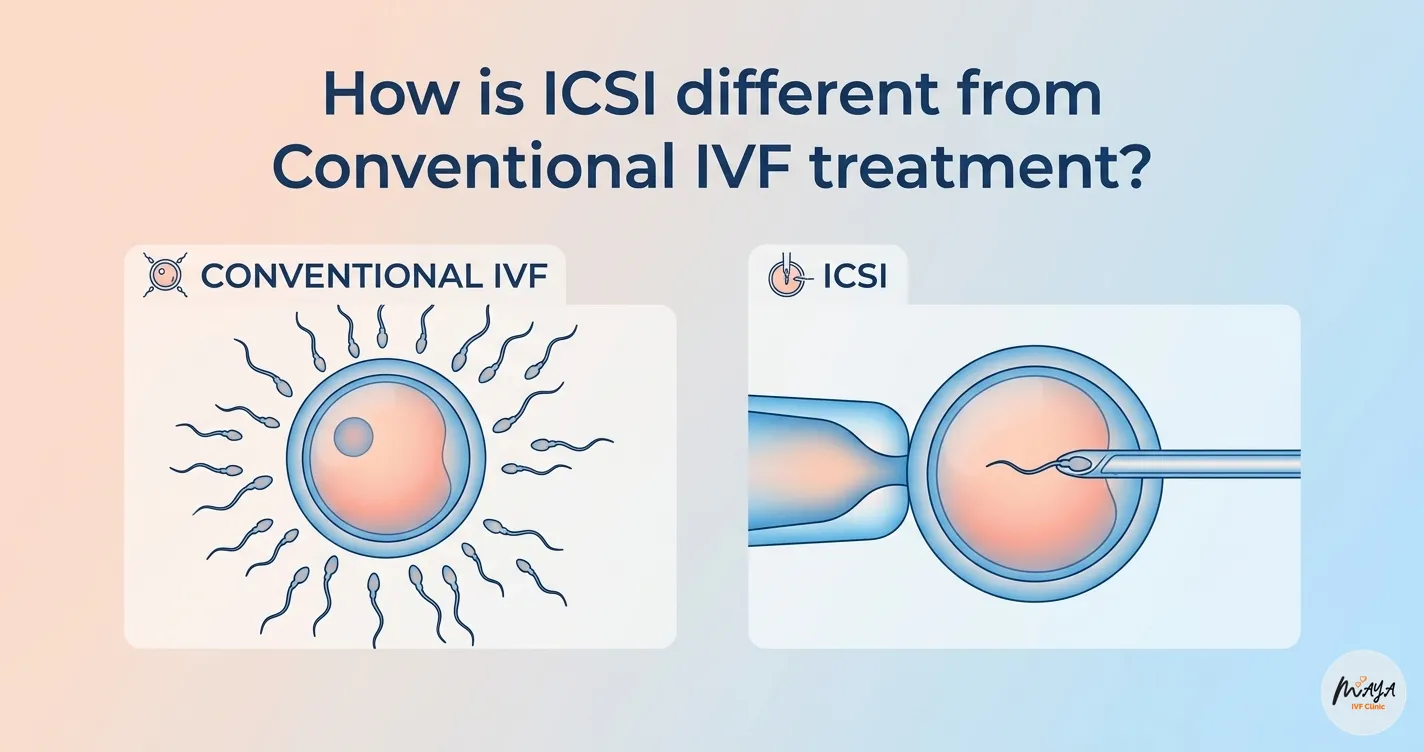
IVF (In Vitro Fertilization) has been used successfully since 1978. It is the most common form of assisted reproductive technology. The process involves stimulating the ovaries to produce multiple eggs, retrieving those eggs, combining them with sperm in a lab, and transferring a resulting embryo into the uterus. ICSI (Intracytoplasmic Sperm Injection) was developed in 1992 to treat severe male infertility. Before ICSI, men with very low sperm count or poor sperm movement had few options. ICSI changed that completely. Today, over 70% of IVF cycles in some countries use ICSI. The only difference between IVF and ICSI is how fertilization happens. In standard IVF, sperm naturally swim to and penetrate the egg. In ICSI, an embryologist injects a single sperm directly into the egg. All other steps—egg retrieval, embryo development, and embryo transfer—are identical. Choosing between IVF and ICSI depends on your specific diagnosis. Couples with normal sperm do not need ICSI. Couples with male infertility often benefit significantly from ICSI. This guide will help you understand which treatment fits your situation, what to expect during the process, and how to prepare for your first fertility consultation.
What Are IVF and ICSI?
IVF (In Vitro Fertilization) is a medical treatment where eggs are removed from a woman’s ovaries, combined with sperm in a lab, and fertilized outside the body. The resulting embryo is then placed into the uterus.
ICSI (Intracytoplasmic Sperm Injection) is a specialized form of IVF. Instead of letting sperm swim to the egg, an embryologist uses a tiny needle to inject one healthy sperm directly into the egg.
Key point: The difference is only in how fertilization happens. The egg retrieval, embryo development, and embryo transfer are the same for both.
Why Couples Need IVF or ICSI
Infertility affects both men and women. IVF and ICSI treat specific medical conditions that prevent natural conception.
Female factors treated with IVF:
Blocked or damaged fallopian tubes
Severe endometriosis
Ovulation disorders (including PCOS)
Unexplained infertility after failed simpler treatments
Male factors treated with ICSI:
Low sperm count (less than 5 million per mL)
Poor sperm movement (motility below 30%)
Abnormally shaped sperm (less than 4% normal forms)
No sperm in the ejaculate (azoospermia) – sperm retrieved surgically
Previous IVF cycle with no fertilization
When both treatments are used:
Unexplained infertility
Multiple failed IUI cycles
Genetic concerns requiring embryo testing
Difference Between IVF and ICSI
The table below shows the key differences. Everything outside the fertilization step is identical.
When IVF alone is enough: If the male partner’s semen analysis is normal (count above 15 million/mL, motility above 40%, normal forms above 4%), standard IVF works just as well as ICSI.
When ICSI is needed:
Sperm count below 5 million/mL
Sperm movement below 30%
More than 95% of sperm have an abnormal shape
The previous IVF cycle had zero or very low fertilization
Using frozen sperm with poor motility
Surgically retrieved sperm (TESA, PESA)
Step-by-Step IVF Process
A complete IVF cycle takes approximately 4–6 weeks. Here are the exact steps.
1. Ovarian stimulation (10–12 days)
Daily hormone injections stimulate the ovaries to grow multiple eggs. Unlike a natural cycle, where only one egg matures, IVF aims for 8–15 eggs.
Clinic visits every 2–3 days for blood tests and vaginal ultrasound
Adjust medication based on egg growth
2. Trigger shot (one injection)
When eggs reach maturity, a final “trigger shot” of HCG or Lupron prepares them for retrieval. Egg retrieval is scheduled exactly 36 hours later.
3. Egg retrieval (30 minutes, sedation)
Under IV sedation (you are asleep), a doctor inserts an ultrasound probe into the vagina. A thin needle passes through the vaginal wall into each follicle. Fluid containing eggs is suctioned out.
You go home 1–2 hours later
Typical recovery: mild cramping, bloating
4. Sperm collection (same day)
The male partner provides a fresh sperm sample. For severe male infertility, options include:
Frozen sperm (collected earlier)
Surgically retrieved sperm from the testicle (TESA)
Donor sperm
5. Fertilization – IVF or ICSI
IVF: Sperm and eggs are placed in a dish together. Sperm fertilize eggs naturally overnight.
ICSI: Embryologist selects one healthy sperm, immobilizes it, and injects it directly into the egg.
6. Embryo development (3–6 days)
Fertilized eggs (now embryos) grow in a specialized incubator.
Day 3: 6–8 cells
Day 5 or 6: Blastocyst stage (100+ cells, ready for transfer)
7. Embryo transfer (5–15 minutes, no sedation)
One or two healthy embryos are loaded into a soft catheter. The doctor passes the catheter through the cervix into the uterus. You watch on an ultrasound screen.
No pain (similar to a Pap smear)
No bed rest required
8. Luteal phase support (14 days)
Progesterone medication (pills, vaginal suppositories, or injections) supports the uterine lining for implantation.
9. Pregnancy test (blood test)
Exactly 14 days after transfer, blood is drawn to measure hCG (pregnancy hormone).
Positive: Repeat test in 48 hours to check rising levels
Negative: Stop medications and schedule a review appointment
How ICSI Actually Works
An embryologist performs ICSI under a high-power microscope (400x magnification). The procedure takes 10–15 minutes for all eggs.
Step-by-step ICSI process:
Holding the egg: A gentle holding pipette stabilizes the egg.
Selecting the sperm: An embryologist finds a single healthy, normally shaped sperm.
Immobilizing the sperm: The sperm’s tail is gently broken with the injection needle. This activates the sperm.
Injecting: The needle pierces the egg’s outer shell (zona pellucida) and enters the egg’s cytoplasm. The sperm is released.
Checking: The embryologist confirms the egg is intact and the injection was successful.
ICSI success rates by sperm source:
Fresh ejaculated sperm (low count/poor motility): 70–85% fertilization
Frozen sperm: 65–75% fertilization
Surgically retrieved sperm (TESA): 50–60% fertilization
Risk of egg damage: About 3–5% of injected eggs may degenerate. Without ICSI for severe male infertility, 80–90% of eggs would never fertilize.
IVF and ICSI Success Rates
Success depends primarily on female age, egg quality, and sperm quality. ICSI does not improve success if the sperm are normal. For male infertility, ICSI dramatically improves fertilization.
Live birth rates per embryo transfer (one cycle):
Important: These are averages. Individual success depends on the following:
Egg quality (AMH level, antral follicle count)
Sperm quality and DNA fragmentation
Uterine health (fibroids, polyps, scar tissue)
Embryo quality (grading, genetic normality)
Clinic experience and lab standards
What ICSI does NOT improve:
Embryo implantation rates
Miscarriage rates
Live birth rates when sperm is normal
What ICSI does improve:
Fertilization rates in male infertility range from 20–30% (IVF) to 70–85% (ICSI)
Common Fears Patients Have (Answered)
Here are real concerns patients bring to fertility clinics. Each answer is honest and practical.
“Will IVF be painful?”
Injections: Mild sting, 5–10 seconds
Egg retrieval: Under sedation, with zero pain during the procedure. Mild cramping 1–2 days after.
Embryo transfer: No pain. Feels like a Pap smear.
Most patients say emotional stress is harder than physical discomfort.
What if the cycle fails
Failed cycles happen. About 50% of patients under 35 need more than one cycle.
Review the cycle with your doctor (egg quality, fertilization, and implantation).
Adjust protocol for the next attempt (medication changes, ICSI if not used, genetic testing)
Consider alternatives (donor eggs, donor sperm, gestational carrier)
Are IVF/ICSI babies healthy
Yes. Over 8 million IVF babies have been born worldwide.
Major birth defect rate: Natural conception ~3%, IVF/ICSI ~4–5%
Most differences are minor and correctable
The small risk increase is due to underlying infertility, not the procedure itself
Will treatment hurt my relationship?
It can. IVF creates stress around scheduling, finances, sex, and disappointment.
Talk openly with your partner every day
Say “I feel scared” instead of shutting down
Attend appointments together when possible
See a fertility counselor if communication breaks down
Can we afford multiple cycles
Cost is a real concern. In the US, one IVF cycle averages
12,000–12,000–15,000. ICSI adds 1,500–2,500.
Ask clinics about shared risk programs (pay for multiple cycles, refund if no baby)
Check insurance coverage (some states mandate fertility coverage)
Consider fertility grants and loans
Compare medication prices across pharmacies
Emotional Impact of Fertility Treatment
Fertility treatment creates predictable emotional responses. Knowing them helps you prepare.
Common emotional challenges:
Anxiety before every update: “Did my eggs grow? Did the embryos survive? Is the pregnancy test positive?”
Jealousy and isolation: Seeing pregnancy announcements, baby showers, or friends with toddlers
Guilt and self-blame: “Is this my fault?” Infertility is a medical condition, not a failure.
Hopelessness after failed cycles: Normal, but temporary. Many couples succeed in subsequent cycles.
Financial stress: The pressure of spending large sums without a guaranteed outcome
What actually helps:
Limit Google searches. Dr. Google feeds fear without context.
Join an online or in-person support group (Resolve.org offers free groups).
Take one step at a time. Do not mourn a failed cycle before starting.
Keep non-fertility activities alive (hobbies, exercise, date nights without baby talk).
See a therapist who specializes in infertility.
Lifestyle Changes That May Improve Fertility
Lifestyle adjustments can improve egg and sperm quality, but they cannot fix blocked tubes or severe male infertility. Focus on what is evidence-based.
For women (before IVF):
Do these:
Take a prenatal vitamin with 400–800 mcg folic acid for at least 3 months
Achieve a healthy BMI (18.5–24.9). Obesity and being underweight both reduce IVF success.
Eat a Mediterranean-style diet (vegetables, fruits, whole grains, fish, olive oil)
Sleep 7–8 hours per night
Manage stress through gentle exercise, therapy, or meditation
Avoid these:
Smoking or vaping (reduces IVF success by 30–50%)
Alcohol during stimulation (many clinics recommend zero)
High-intensity exercise after day 6 of stimulation (risk of ovarian torsion)
Extreme diets or detoxes
For men (before ICSI):
Do these:
Take a male fertility supplement (zinc, selenium, CoQ10, vitamin C, vitamin E) for 3 months (sperm take 90 days to form)
Wear loose-fitting underwear
Achieve a healthy weight
Eat antioxidant-rich foods (berries, nuts, tomatoes, leafy greens)
Avoid these:
Smoking or marijuana (damages sperm DNA)
Heavy alcohol use
Hot baths, saunas, or placing laptops on the lap (heat kills sperm)
Anabolic steroids (cause severe or permanent low sperm count)
Common Mistakes Couples Make
Avoid these errors. They delay pregnancy and waste time and money.
1. Delaying fertility evaluation
Under 35: After 1 year of trying
35–40: After 6 months of trying
Over 40: Start testing immediately
Waiting longer than these guidelines does not improve chances. It only delays treatment.
2. Ignoring male fertility testing
40% of infertility is due to male factors. 40% due to female factors. 20% due to either or unexplained.
Always test the male partner first. Semen analysis is cheap, noninvasive, and gives immediate answers.
3. Believing internet myths without evidence
“IVF babies have more birth defects.” → Slightly higher risk, but most babies are healthy.
“Stress causes IVF to fail” → No. Stress does not cause implantation failure.
“You must be on bed rest after the transfer." → False. Bed rest reduces blood flow to the uterus.
4. Trying unproven “natural fertility” treatments for years
Herbal supplements, acupuncture, and special diets have limited evidence. They do not treat blocked tubes, severe male infertility, or advanced age. Do not delay medical treatment for years while trying unproven methods.
5. Not asking clinics the right questions
Before choosing a clinic, ask:
What is your live birth rate per embryo transfer for my age?
Do you report your success rates to CDC or SART?
How many cycles do patients typically need?
Do you offer shared risk or refund programs?
When to See a Fertility Specialist
Do not wait if you have any of these signs.
Immediate referral needed:
For women:
Trying to conceive for 1 year (under 35)
Trying to conceive for 6 months (35–40)
Age 40 or older (start testing now, without waiting)
Irregular cycles (longer than 35 days or shorter than 21 days)
Known PCOS, endometriosis, or recurrent miscarriages (2 or more)
Previous pelvic infection or surgery
For men:
Inability to conceive after 12 months of unprotected sex
History of testicular injury, infection, or surgery
Sexual dysfunction (erectile or ejaculatory issues)
Known genetic conditions (Klinefelter syndrome, Y chromosome microdeletion)
What happens at the first visit:
Female evaluation:
Blood work: AMH (egg reserve), FSH, estradiol (ovarian function)
Vaginal ultrasound: Antral follicle count (egg quantity)
HSG or saline sonogram: Checks if the fallopian tubes are open and the uterus is normal
Male evaluation:
Semen analysis: Count, motility (movement), morphology (shape)
If abnormal: Repeat the test, then see a male reproductive specialist (urologist)
Results timeline: 1–2 weeks for all testing. Then a treatment plan is presented.
IVF and ICSI: Summary of Key Facts
IVF is the standard treatment. ICSI is a specialized version used mainly for male infertility.
The only difference between IVF and ICSI is how sperm meets the egg. All other steps are identical.
For normal sperm, IVF and ICSI have the same success rates. ICSI offers no benefit.
For low sperm count or poor motility, ICSI improves fertilization from 20–30% to 70–85%.
Female age is the single most important factor for live birth rates.
IVF/ICSI does not guarantee pregnancy. Many couples need 2–3 cycles.
The small increased risk of birth defects with ICSI (1–2% above natural conception) is mostly due to underlying infertility, not the procedure.
Lifestyle changes help but do not replace medical treatment.
Frequently Asked Questions (FAQs)
1. What is the main difference between IVF and ICSI?
IVF allows sperm to naturally swim to and fertilize the egg in a lab dish. ICSI injects a single sperm directly into the egg. ICSI is used for male infertility.
2. Is ICSI more successful than IVF?
Only if the male partner has a low sperm count, poor movement, or abnormal shape. For normal sperm, success rates are identical. ICSI is not “better”—it is different.
3. Does ICSI increase birth defects?
Very slightly. Major birth defects occur in about 3% of natural conceptions and 4–5% of ICSI conceptions. Most differences are minor.
4. Is IVF painful?
Injections sting mildly. Egg retrieval is under sedation (no pain). Embryo transfer is painless. Mild cramping after retrieval is common.
5. How long does one IVF cycle take?
4–6 weeks from starting injections to pregnancy test. Egg retrieval around day 14. Embryo transfer around day 19–21. Pregnancy test on day 35.
6. Can IVF work on the first try?
Yes. For a healthy woman under 35, the chance of a live birth after one complete cycle is 45–50%. Many patients need 2–3 cycles.
7. Why do doctors recommend ICSI?
ICSI is recommended when sperm quality is poor, when previous IVF cycles had no fertilization, or when surgically retrieved sperm are used.
8. Can you choose the baby’s gender with IVF or ICSI?
Only with genetic testing (PGT) on embryos. PGT is usually reserved for medical reasons (preventing genetic diseases). Gender selection for non-medical reasons is illegal in many countries.
9. What is the cost of IVF vs. ICSI?
One IVF cycle in the US averages
12,000–12,000–15,000. Adding ICSI costs an additional 1,500 – 2,500.
10. Does insurance cover IVF or ICSI?
It depends on your state and insurance plan. Some states mandate fertility coverage. Check your policy or ask your clinic’s financial counselor.
Our Latest Blogs

Infertility Myths and Facts in Nepal: What Couples...
Quick AnswerInfertility affects an estimated 1 in 6 people globally during their reproductive years,...
How is ICSI different from Conventional IVF treatm...
ICSI and Conventional IVF both are forms of assisted reproductive treatment (ART) in which eggs are...
5 Common causes of infertility in women
A condition is diagnosed as infertility when a heterosexual couple is unable to conceive after one y...

 Nepal International Fertility and Laparoscopic Centre (NIFLC).
All rights reserved.
Nepal International Fertility and Laparoscopic Centre (NIFLC).
All rights reserved.