How does IVF Work? Every Stage Explained, From First Visit to Pregnancy Test
Short answer
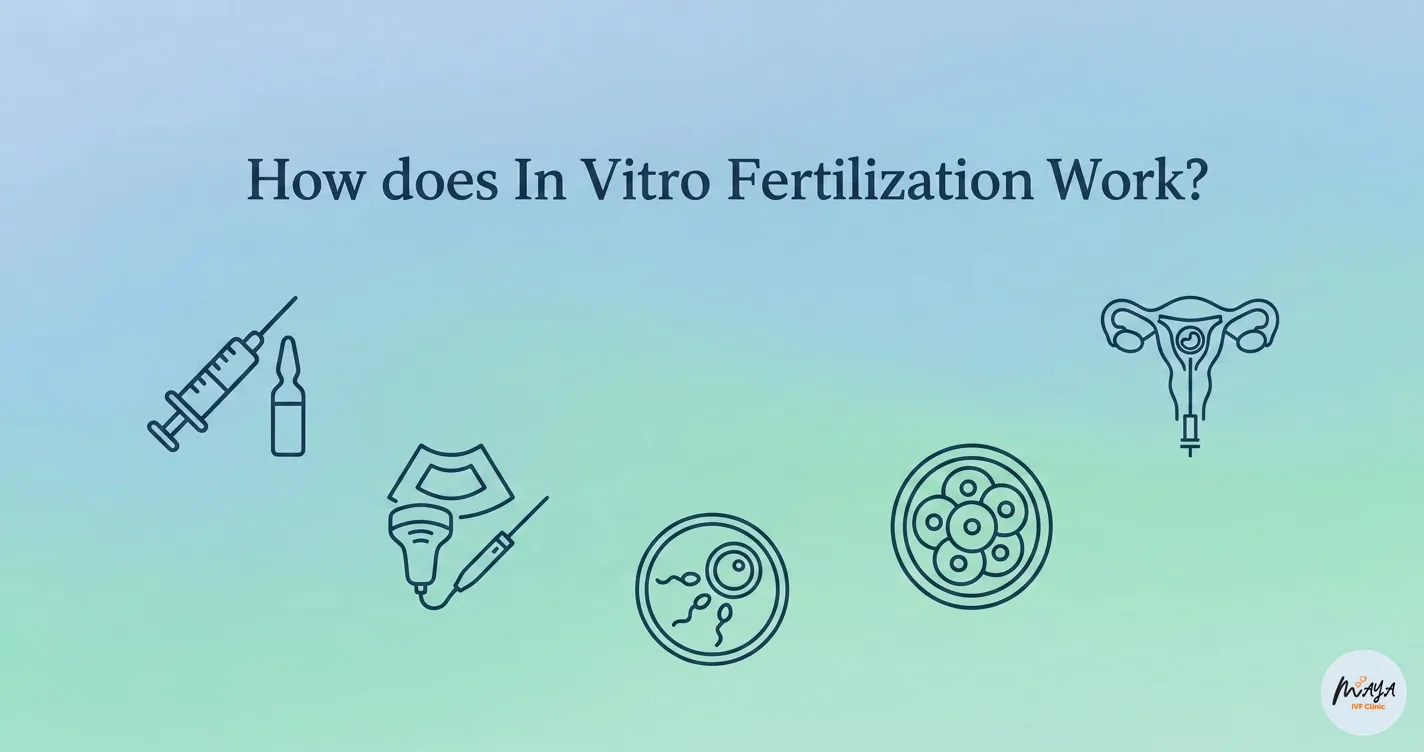
In IVF (in vitro fertilization), medication helps the ovaries develop several eggs. The eggs are collected, combined with sperm in a laboratory, and the resulting embryos are grown for a few days. One embryo is then placed in the uterus, and any extra suitable embryos can be frozen. About two weeks later, a pregnancy test shows whether the cycle has worked.
"In vitro" means "in glass," a reference to fertilization taking place in a lab dish instead of inside the body. IVF doesn't copy natural conception step for step. It supports the stages that are hardest to achieve unaided, such as egg development, fertilization, and early embryo growth.
Is IVF always the first step?
No. At Maya IVF Clinic, treatment is staged. Where it makes sense, couples start with lifestyle changes, ovulation induction or intrauterine insemination (IUI), and move to IVF or ICSI when those steps haven't worked or when the diagnosis calls for it. Blocked fallopian tubes, endometriosis, low ovarian reserve, and severe male-factor infertility are common examples. You can read how the clinic approaches IVF treatment at Maya IVF Clinic in Kathmandu on its service page.
The IVF cycle at a glance
Stage 1: Fertility assessment
Before treatment begins, your fertility team reviews your medical and reproductive history, any earlier treatment, and relevant test results. Depending on your situation, that can include ovarian reserve testing, a semen analysis, and imaging of the uterus and fallopian tubes. Not everyone needs the same tests, and a single result rarely tells the whole story. If you'd like to understand how numbers such as AMH and semen parameters are interpreted, this guide to AMH and semen analysis results is a useful read. You can also see what the clinic offers for fertility assessment and diagnostic testing.
Stage 2: Ovarian stimulation and monitoring
In a natural cycle, the body usually matures a single egg. In IVF, daily hormone injections, generally for roughly 8 to 14 days, encourage several follicles (the fluid-filled sacs that hold the eggs) to grow. More eggs give the lab more chances to create healthy embryos.
During this time you'll have regular ultrasound scans and, often, blood tests. These show how your ovaries are responding, help your doctor adjust the medication, and signal when to move to the next step. They also help the team spot overstimulation early. Drug choices and doses are personal, so always follow the plan your clinic gives you.
Stage 3: The trigger injection
When the follicles reach the right size, you'll be given a trigger injection that completes egg maturation. Retrieval is then scheduled for about 34 to 38 hours later, so the eggs are collected just before the body would release them naturally. Timing matters here, so your clinic will give you an exact appointment.
Stage 4: Egg retrieval
Egg retrieval is a short procedure done with ultrasound guidance. A fine needle passes through the vaginal wall into each follicle, the fluid is gently drawn out, and an embryologist looks for the eggs under a microscope. There's no cut in the abdomen.
Sedation or anesthesia is normally used for comfort. The procedure often takes around 20 minutes, and many people are ready to go home within a few hours. Mild cramping afterward is common, though experiences vary. How many eggs are collected differs from person to person, and not every egg will be mature.
Stage 5: Sperm collection and preparation
A semen sample is usually provided on the day of retrieval. The lab then processes it to separate healthy, active sperm from the rest of the fluid. If the ejaculate contains no sperm, your doctor may suggest a minor surgical retrieval instead. No single preparation method suits everyone, so the lab will choose one based on the sample.
If your partner is working abroad
Many couples in Nepal plan treatment around a partner's overseas employment. Tell the team early. Depending on the circumstances, sperm may sometimes be frozen ahead of time, and Maya IVF lists sperm cryopreservation among its services. Whether that's right for you is a medical decision, and the clinic has dedicated information for couples living apart because of foreign employment. For a deeper look at the male side of fertility, see the clinic's male fertility evaluation and treatment options.
Stage 6: Fertilization (conventional IVF or ICSI)
There are two ways to bring egg and sperm together:
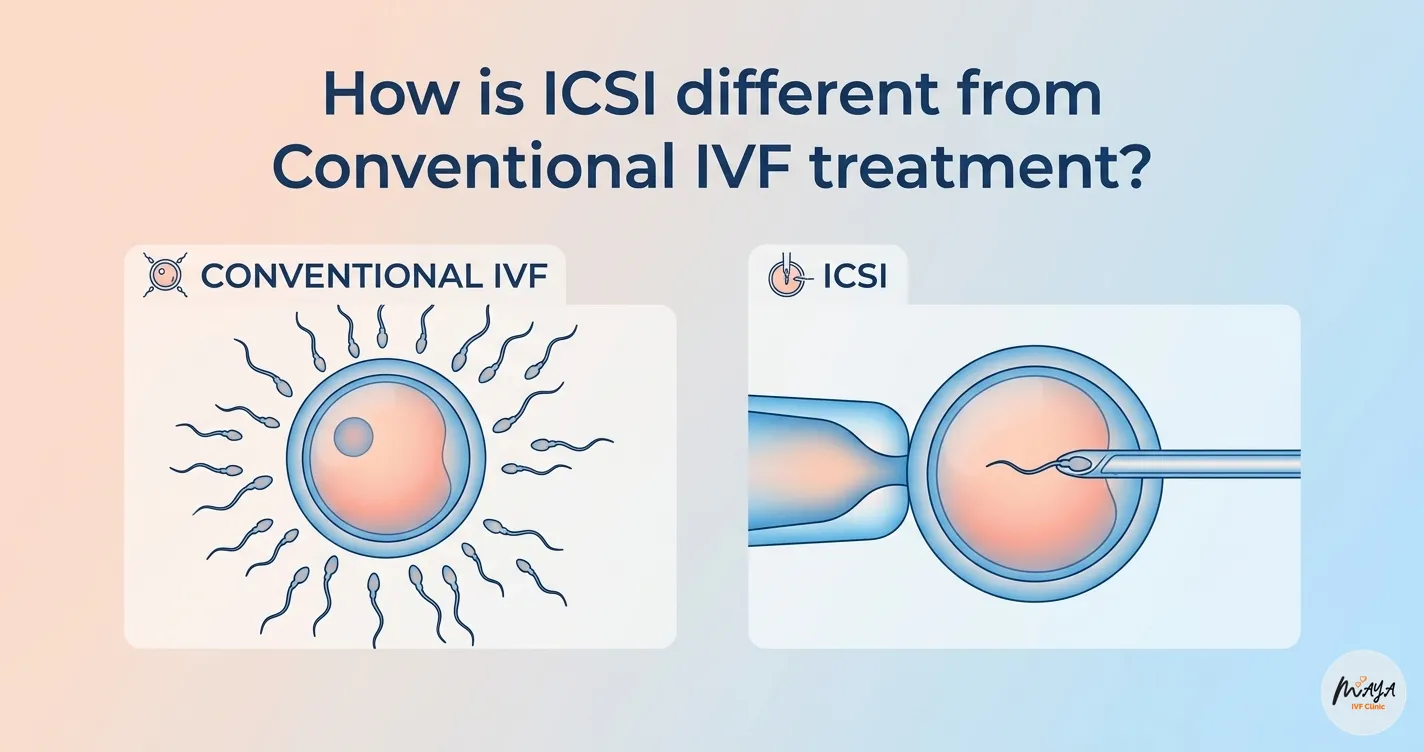
Conventional IVF: eggs and prepared sperm are placed together in a dish, and fertilization happens naturally.
ICSI (intracytoplasmic sperm injection): an embryologist injects a single sperm directly into an egg. It's often used when sperm count, movement, or shape is a concern, or when fertilization is unlikely without it.
ICSI is a laboratory technique used within IVF. It isn't a separate treatment, it isn't needed in every cycle, and it doesn't guarantee a pregnancy. Your doctor will explain which approach fits your case.
Stage 7: Embryo culture
The day after fertilization, the lab checks which eggs have fertilized. Not all of them will. Clinical summaries commonly describe roughly two-thirds to four-fifths of eggs fertilizing, but that's a general range, not a prediction for any one person.
Here's a simple guide to what happens next:
Embryos can be grown for anywhere from two to six days before they're transferred or frozen. Some stop developing along the way. That's a normal biological limit and not a sign that anything was done wrong.
Why the numbers drop at each stage
IVF is a chain of steps, and a cycle can pause or end at any link. Not every follicle contains a mature egg, not every egg fertilizes, not every embryo reaches the blastocyst stage, and not every transferred embryo implants. This is why teams aim for several eggs and why no clinic can honestly promise a result. A good question to ask your doctor is what these stages typically look like for someone with your age and diagnosis.
Stage 8: Embryo transfer
Transfer is much simpler than egg retrieval. A thin, flexible catheter passes through the cervix and releases the embryo into the uterus. It takes just a few minutes, and anesthesia is often unnecessary.
How many embryos? Transferring more than one embryo increases the chance of twins or higher-order multiples, which carry greater health risks for both the mother and the babies. ASRM guidance recommends limiting the number of embryos transferred and describes elective single embryo transfer as the most effective way to reduce multiple pregnancy. Your doctor will talk through the right number for you, based on your age, the quality of your embryos and your history.
Fresh or frozen transfer?
Fresh transfer: the embryo is transferred in the same cycle as egg retrieval.
Frozen embryo transfer (FET): embryos are frozen, and one is thawed and transferred in a later cycle.
Some teams recommend freezing all embryos, for example, when the ovaries responded very strongly, when the uterus would benefit from more preparation time, or when embryos are being genetically tested. Neither route is better for everyone. If you're curious about testing options, the clinic outlines its genetic and advanced procedures on its website.
Stage 9: Freezing embryos (cryopreservation)
Suitable embryos that aren't transferred right away can be frozen and stored for later. Not every cycle produces embryos that are suitable for freezing, so it's best not to assume this in advance. Maya IVF lists cryopreservation of eggs, sperm, and embryos among its services.
Optional lab techniques
Some clinics also offer extras such as laser-assisted hatching, which Maya IVF describes as helping an embryo with a thickened outer shell implant. These techniques aren't necessary for every embryo or every patient. If one is suggested, ask why it's recommended in your case.
Stage 10: The two-week wait and the pregnancy test
After transfer, you may be prescribed hormones such as progesterone to support the uterine lining. Your clinic will give you a test date, usually about two weeks after transfer, although instructions range from roughly 10 to 16 days depending on the clinic. Testing earlier than advised can mislead you. A blood test measuring hCG, or a urine test, checks for pregnancy, so use the date you're given.
If the result is positive: a scan a few weeks later confirms the pregnancy is developing as expected.
If it's negative: it's normal to feel disappointed, angry or numb. Your doctor can review the cycle with you and talk through the options. You don't have to decide anything straight away.
How long does IVF take?
There's no single answer. Stimulation typically lasts one to two weeks, and the time from the start of stimulation to the pregnancy test is often described as about four to six weeks. Some sources count from the first testing visit and quote six to eight weeks, which is why published ranges don't always match. Your own timeline depends on:
your protocol and menstrual cycle
how your ovaries respond and how much monitoring you need
whether you have a fresh or frozen transfer (a frozen transfer adds a separate preparation cycle)
clinic scheduling and your personal circumstances
What shapes your IVF plan?
IVF is individual. Your specialist will consider your age, diagnosis, ovarian reserve, sperm quality, how you responded to any earlier treatment, uterine and tubal factors, other medical conditions, local regulations, and your own preferences. You can meet the fertility specialists and embryologists who guide treatment at Maya IVF Clinic on the team page.
Risks and limitations
IVF is widely used and generally safe, but it isn't risk-free, and it doesn't always lead to a pregnancy.
Ovarian hyperstimulation syndrome (OHSS): an overreaction to fertility medication. It's usually mild but can occasionally be serious.
Multiple pregnancy: more likely when more than one embryo is transferred.
Ectopic pregnancy and miscarriage.
Procedure-related risks: such as bleeding, infection, or reactions to anesthesia.
An unsuccessful cycle: eggs may not fertilize, embryos may stop developing, or implantation may not happen.
Emotional strain: many people find treatment stressful, and support matters.
Contact your clinic promptly if you develop severe abdominal pain, rapid swelling of the abdomen, or difficulty breathing during treatment. If you're comparing providers, this guide on how to choose a good IVF clinic lists questions worth asking.
Talk to a fertility specialist
If you're considering IVF, a consultation is the best way to learn what would be involved in your case. Maya IVF Clinic is at BBC Building, UN Park, Kupandole, Kathmandu, and is open Sunday to Friday, 9:00 AM to 6:00 PM. You can contact the clinic by calling +977-1-5455499 or emailing info@mayaivfclinic.com. The website lists a free online consultation option, and OPD visits carry a minimum charge.
Frequently asked questions
What are the main stages of IVF?
Assessment, ovarian stimulation and monitoring, the trigger injection, egg retrieval, sperm preparation, fertilization, embryo culture, embryo transfer, optional freezing, and a pregnancy test.
Is IVF painful?
Egg retrieval is done with sedation or anesthesia. Injections, bloating, and cramping can be uncomfortable, and experiences vary from person to person.
Does every IVF cycle need ICSI?
No. Your doctor recommends it based on sperm and egg factors.
Can every embryo be frozen?
Only suitable embryos can be, and some cycles don't produce any.
When do I take the pregnancy test?
On the date your clinic gives you, which is generally about two weeks after transfer.
Can IVF guarantee a baby?
No. Outcomes depend on factors such as age, diagnosis, and embryo quality. Have more questions? The clinic's IVF frequently asked questions page may help.
Our Latest Blogs

Infertility Myths and Facts in Nepal: What Couples...
Quick AnswerInfertility affects an estimated 1 in 6 people globally during their reproductive years,...
How Is ICSI Different From Conventional IVF Treatm...
Quick answer: Conventional IVF places sperm and eggs together in a dish and allows fertilization to...
5 Common Causes of Infertility in Women
OverviewWhen months pass without a positive pregnancy test, worry tends to creep in quietly. If that...

 Nepal International Fertility and Laparoscopic Centre (NIFLC).
All rights reserved.
Nepal International Fertility and Laparoscopic Centre (NIFLC).
All rights reserved.