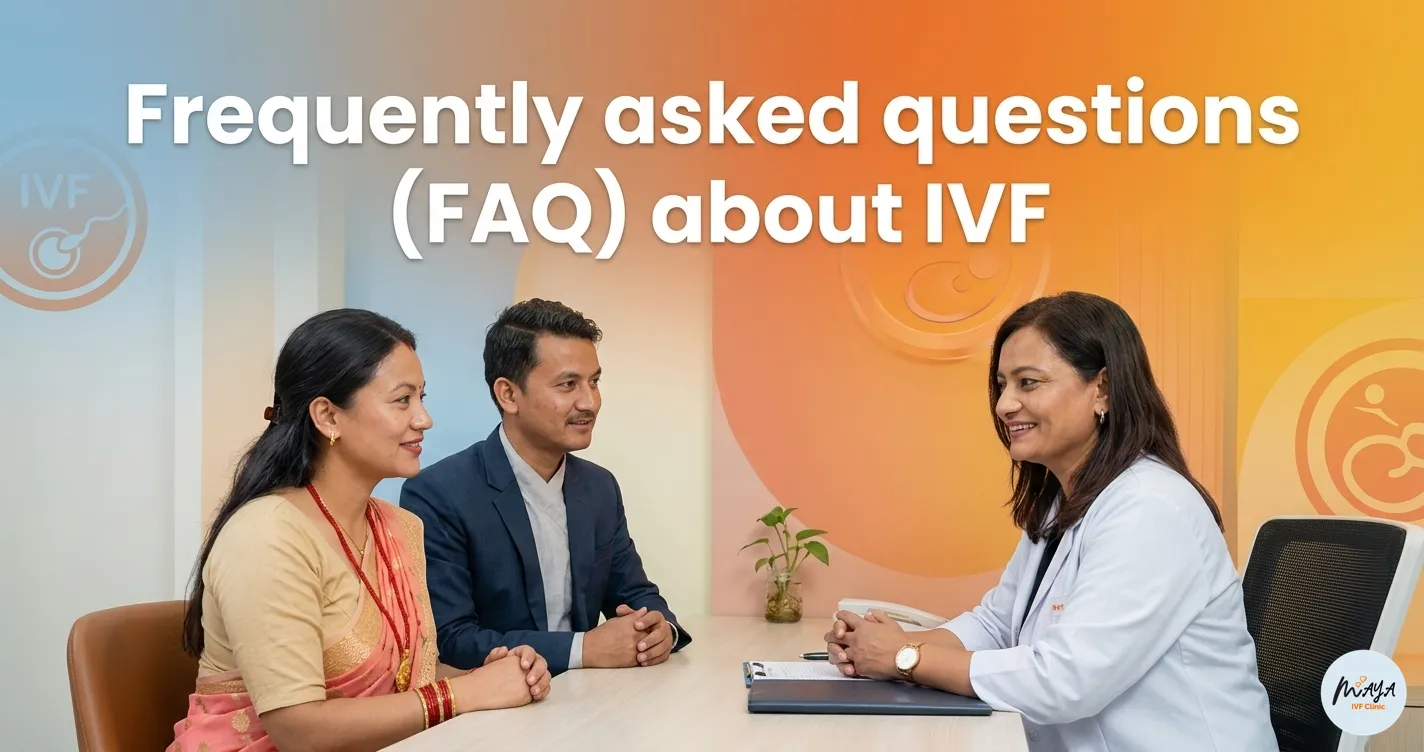
Frequently Asked Questions About MAYA IVF
Overview
Starting to look into IVF usually brings a lot of questions. This guide from MAYA IVF Clinic in Kathmandu answers the ones people ask most: how IVF works, how long a cycle takes, whether it leads to twins, how fresh and frozen transfers differ, what the risks are, what affects the cost, and when it is time to see a specialist.
It is general information, not personal medical advice. The right plan for you depends on your age, your diagnosis, and your test results. If you would like more answers after reading, visit our FAQs page or browse our health blogs.
IVF at a Glance
What Is IVF, and How Does It Work?
IVF (in vitro fertilization) is a type of assisted reproductive technology in which eggs are collected from the ovaries and fertilized with sperm in a laboratory. The resulting embryo is then either transferred into the uterus or frozen for a later transfer.
IVF doesn't copy natural conception. It replaces the early steps. Medicines stimulate the ovaries to develop several eggs; the eggs are retrieved, and embryologists fertilize them and watch the early development of the embryos. Implantation, though, still has to happen naturally in the uterine lining (the endometrium). The eggs and sperm may come from the couple or from donors. To see how this works in practice, read about our IVF treatment in Nepal.
How Long Does an IVF Cycle Take?
For most people, one IVF cycle takes about four to six weeks, according to the UK regulator, the HFEA. You may see shorter figures, such as "2 to 3 weeks." These usually describe only part of the cycle, for example stimulation through to egg retrieval.
Your own timeline depends on the stimulation protocol, how your ovaries respond, how your embryos develop, whether you will have a fresh transfer or freeze your embryos, and whether genetic testing is added. Tests come first, and a frozen embryo transfer adds a later cycle.
What Happens During an IVF Cycle?
A cycle usually moves from testing and ovarian stimulation to egg retrieval, fertilization, embryo culture, and embryo transfer, with a pregnancy test about two weeks later. Protocols differ between clinics and patients, but the steps generally look like this:
Consultation and testing: your medical history, hormone tests, a pelvic ultrasound, and a semen analysis. Our fertility assessment and diagnostics service covers this stage, and our fertility specialists guide you through it.
Ovarian stimulation: hormone injections encourage several follicles to develop.
Monitoring: Ultrasound scans, and sometimes blood tests, track follicle growth and guide any dose changes.
Trigger injection: where the protocol uses one, a medicine matures the eggs before collection.
Egg retrieval: a short procedure, usually under sedation, collects the eggs (oocytes) from the follicles. Our team includes an anesthesiologist, Dr. Niroj Hirachan.
Fertilization: the eggs are combined with sperm, or, when clinically indicated, a single sperm is injected into an egg (ICSI). You can read more about reproductive techniques at our clinic.
Embryo culture: embryologists such as Embr. Preeti Bista and Rashika Maharjan monitor development, sometimes up to the blastocyst stage.
Fresh transfer or embryo freezing: an embryo is transferred, or embryos are frozen (cryopreserved).
Frozen embryo transfer (FET): when appropriate, a stored embryo is thawed and transferred in a later, prepared cycle.
Pregnancy test: usually about two weeks after the transfer, followed by a clinic scan if it is positive.
Does IVF Increase the Chance of Twins or Multiple Pregnancy?
IVF can increase the chance of twins, but the main driver is the number of embryos transferred, not IVF itself. Transferring more than one embryo raises the chance of twins or triplets, while single embryo transfer greatly lowers it. Twins can still happen, rarely, if one embryo splits.
Multiple pregnancy raises the risk of premature birth, low birth weight, and complications such as pre-eclampsia. For that reason, the HFEA encourages single embryo transfer where it suits the patient. In UK clinics, the IVF multiple birth rate fell to 3.4% in 2023 as single embryo transfer became common. How many embryos to transfer is decided individually, based on your age, embryo quality, and treatment history.
What Is the Difference Between Fresh and Frozen Embryo Transfer?
A fresh embryo transfer places an embryo in the uterus during the same stimulated cycle as egg retrieval. A frozen embryo transfer (FET) uses an embryo that was frozen earlier and is transferred in a later, separately prepared cycle.
If genetic testing is part of your plan, our genetic and advanced procedures page explains what is available.
Which Is Better: Fresh or Frozen Embryo Transfer?
Neither is better for everyone. Research shows no clear overall advantage for freezing all embryos when it comes to cumulative live birth, although freezing may lower the risk of ovarian hyperstimulation syndrome (OHSS) in women who are at risk. Your specialist will recommend one based on your situation.
A Cochrane review (2021) found moderate-quality evidence that freezing all embryos is probably not superior to a conventional approach for cumulative live birth, and low-quality evidence that it may lower the risk of OHSS in women at risk. A randomized trial in women with regular ovulation (New England Journal of Medicine, 2018) found similar live birth rates (48.7% with frozen transfer vs 50.2% with fresh) and less OHSS with frozen transfer (0.6% vs 2%).
Results can differ with diagnosis, embryo factors, uterine preparation, and the group of patients studied. A fresh transfer may shorten the time to a first pregnancy attempt, while a freeze-all approach may reduce the risk of OHSS.
How Much Does IVF Treatment Cost?
IVF cost depends on the clinic, the treatment protocol, the medicines you need, and any add-on procedures, so no single figure applies to everyone. Ask for a written, itemized estimate for a complete treatment cycle that shows what is included and what is billed separately.
Please request a current treatment-cycle estimate from our team at +977-1-5455499, +977-9813755826, or at info@mayaivfclinic.com.
News reports say Nepal's 2025 Ministry of Health standards for infertility services aim to make fees transparent and require Ministry permission before a facility offers IVF. Whichever clinic you choose, ask to see its permission and what its estimate covers. Our guide on how to choose an IVF clinic lists more questions worth asking.
What Factors Affect the Cost of IVF?
The cost depends on which services your plan needs, and it rises if you need more than one cycle or transfer. An estimate may include:
Consultation and fertility testing
Ovarian stimulation medicines (dose and duration vary with your response)
Ultrasound and blood monitoring
Egg retrieval, including sedation
Laboratory fertilization and embryo culture
ICSI, if clinically indicated
Embryo transfer
Embryo freezing and ongoing storage
Frozen embryo transfer cycles
Additional procedures, such as embryo genetic testing, if recommended
Follow-up care
What Factors Affect IVF Success?
Age is the biggest factor. UK data for 2024 show an average IVF birth rate of 30% per embryo transferred, ranging from 38% at ages 18 to 34 down to 8% at ages 43 to 44. These figures can't predict what will happen in your own case.
The HFEA data covers UK-licensed clinics, uses patients' own eggs, and combines fresh and frozen transfers. The figures are preliminary and are given per embryo transferred, not per cycle started. We don't cite national statistics for Nepal because we haven't found reliable ones.
Other factors include ovarian reserve and response, the cause of infertility, sperm quality, embryo quality, and laboratory conditions, and uterine factors such as fibroids, body weight, smoking, and clinic protocols. Results from different clinics are only comparable when they use the same measure and similar patients, so ask each clinic how it defines and reports its results.
What Are the Risks or Side Effects of IVF?
IVF is generally safe, but it does carry risks: medicine side effects, a rare reaction called OHSS, small risks from egg retrieval, a slightly higher chance of ectopic pregnancy, and emotional strain.
Fertility medicines can cause hot flushes, mood changes, headaches, and restlessness (NHS). OHSS is a rare reaction to stimulation. Most cases are mild (bloating, nausea, discomfort), but rapid weight gain, severe abdominal pain, repeated vomiting, or breathlessness need urgent medical attention.
Egg retrieval carries small risks, including bleeding and infection. Ectopic pregnancy is slightly more likely after IVF, and the ASRM cites about 1%. The emotional strain of treatment is common too, so ask your clinic about counseling and support. You can also read about our well-being services.
Contact your clinic promptly if you have severe pain, heavy bleeding, a fever, or trouble breathing.
What Is the Difference Between IVF and IUI?
IVF fertilizes eggs in a laboratory. Intrauterine insemination (IUI) places prepared sperm directly into the uterus around ovulation, so fertilization happens inside the body. IUI is less invasive and usually less costly, while IVF involves ovarian stimulation, egg retrieval, and embryo culture.
The right option depends on your diagnosis, age, fallopian tube status, sperm quality, and prior treatment. ICSI is a laboratory technique used within IVF, not an alternative to it, and IVF is not the first treatment for everyone. Both IUI and IVF are part of our reproductive techniques services.
Who May Need IVF?
IVF may be recommended for blocked or damaged fallopian tubes, severe male-factor infertility, endometriosis, ovulation disorders that simpler treatment hasn't helped, diminished ovarian reserve, or unexplained infertility after other treatments have not worked. It may also be used when donor eggs or sperm, or embryo genetic testing, are part of the plan.
Our Know Your Problems pages explain conditions such as low AMH, endometriosis, fibroids, and recurrent miscarriage. If you have PCOS, our article on polycystic ovary syndrome is a good place to start.
Blocked tubes, endometriosis, and fibroids may also call for a laparoscopic assessment. Prof. Dr. Gyanendra Man Singh Karki is our senior gynae laparoscopic surgeon.
Both partners are usually evaluated because sperm quality can shape the approach. Our male fertility solutions service is supported by Dr. Robin Bahadur Basnet, a urosurgeon and andrologist. Keep in mind that IVF works around the cause of infertility rather than removing it.
What Should I Check Before Choosing an IVF Clinic in Kathmandu?
Check that the clinic is permitted to provide IVF, ask for a written itemized estimate, ask how it reports its results, and confirm who is on the clinical team and how to reach them if something goes wrong.
Permission: Nepal's 2025 Ministry of Health standards reportedly require Ministry permission for IVF services. Ask any clinic to confirm its status.
Estimate: Request an itemized estimate for a complete cycle, including medicines, freezing, and storage.
Results: Ask how the clinic defines and reports its outcomes and for which age groups.
Team: Look for named fertility specialists, an andrologist, an anesthesiologist, and embryologists. You can meet our fertility team and read about MAYA IVF Clinic.
Access: We are at BBC Building, UN Park, Kupandole, Kathmandu, open Sunday to Friday, 9:00 AM to 6:00 PM, and closed on Saturday. If you are traveling from abroad, start with our International page.
Questions to bring to your appointment:
What is the likely cause?
Is IVF the right first step?
What does the cycle estimate include?
How many embryos would you transfer?
How does the clinic report its results?
Is the clinic permitted to provide IVF?
IVF is a well-established treatment, but it is not a single, one-size-fits-all path. How long it takes, what it costs, and how likely it is to work all depend on your age, your diagnosis, and your test results. The most useful first step is usually an honest conversation with a fertility specialist who can look at your own situation.
Before you decide, ask for a written, itemized estimate. Ask how the clinic reports its results, and check that it is permitted to provide IVF. Our guide on how to choose an IVF clinic can help you prepare your questions. If you would like to talk it through, you can meet our fertility team or request a free online consultation. You can also call us on +977-1-5455499 or +977-9813755826, or write to info@mayaivfclinic.com.
More Frequently Asked Questions About IVF
Does IVF guarantee pregnancy?
No. Each embryo transfer has a limited chance of success, which depends on age, embryo quality, and diagnosis. Some people need more than one transfer or cycle. Ask your specialist for realistic expectations based on your own results.
How many IVF cycles may be needed?
There is no fixed number. Some people conceive after the first transfer, while others need several. Your specialist can estimate this from your age, ovarian response, and the number and quality of your embryos.
Can frozen embryos be used later?
Yes. Frozen embryos can be thawed and transferred in a later FET cycle, although not every embryo survives thawing. How long embryos can be stored depends on your clinic's storage program, your consent, and local regulations. Ask how your clinic reports survival rates and what storage fees apply.
What happens after embryo transfer?
Most people return to light activity quickly, many clinics prescribe progesterone, and a pregnancy test is scheduled about two weeks later. Wait for the clinic's blood test, because fertility medicines can make home tests misleading. Ask your clinic what level of activity is advisable.
If the test is positive and you would like continuing care, see our gynecological and obstetric care service.
Can couples living apart for work have IVF?
Often this can be planned around travel dates, but the options depend on the clinic's protocols and local rules, so ask before you book travel. Many couples in Nepal live apart because of foreign employment, and we list it among the situations on our Know Your Problems page. A fertility specialist can explain how treatment timing could work for your circumstances, so get in touch to talk it through.
When should I see a fertility specialist?
The ASRM suggests an evaluation after 12 months of trying if you are under 35 and after 6 months if you are 35 or older. See a specialist sooner if you have irregular periods, a known condition such as endometriosis, repeated pregnancy loss, or an abnormal semen analysis (ASRM, Defining infertility).
Our Latest Blogs

Infertility Myths and Facts in Nepal: What Couples...
Quick AnswerInfertility affects an estimated 1 in 6 people globally during their reproductive years,...
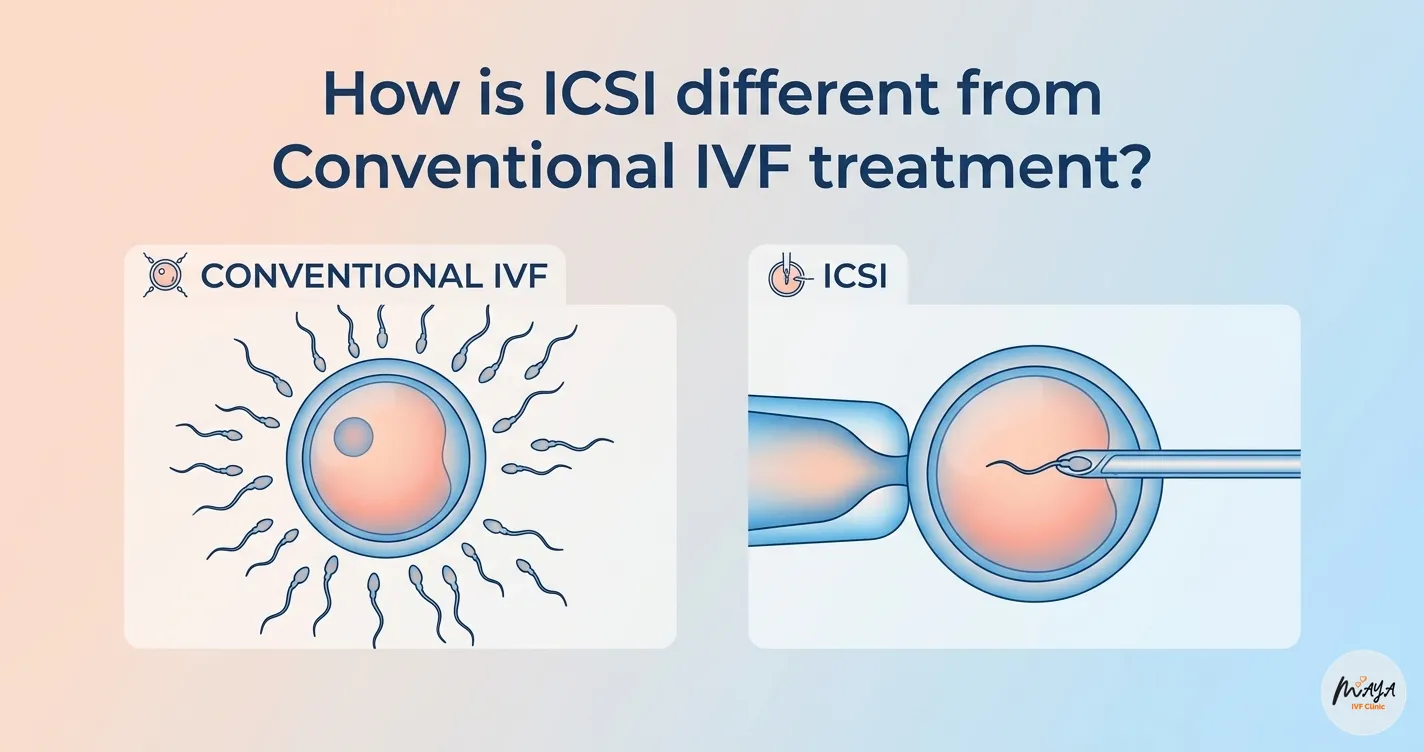
How Is ICSI Different From Conventional IVF Treatm...
Quick answer: Conventional IVF places sperm and eggs together in a dish and allows fertilization to...
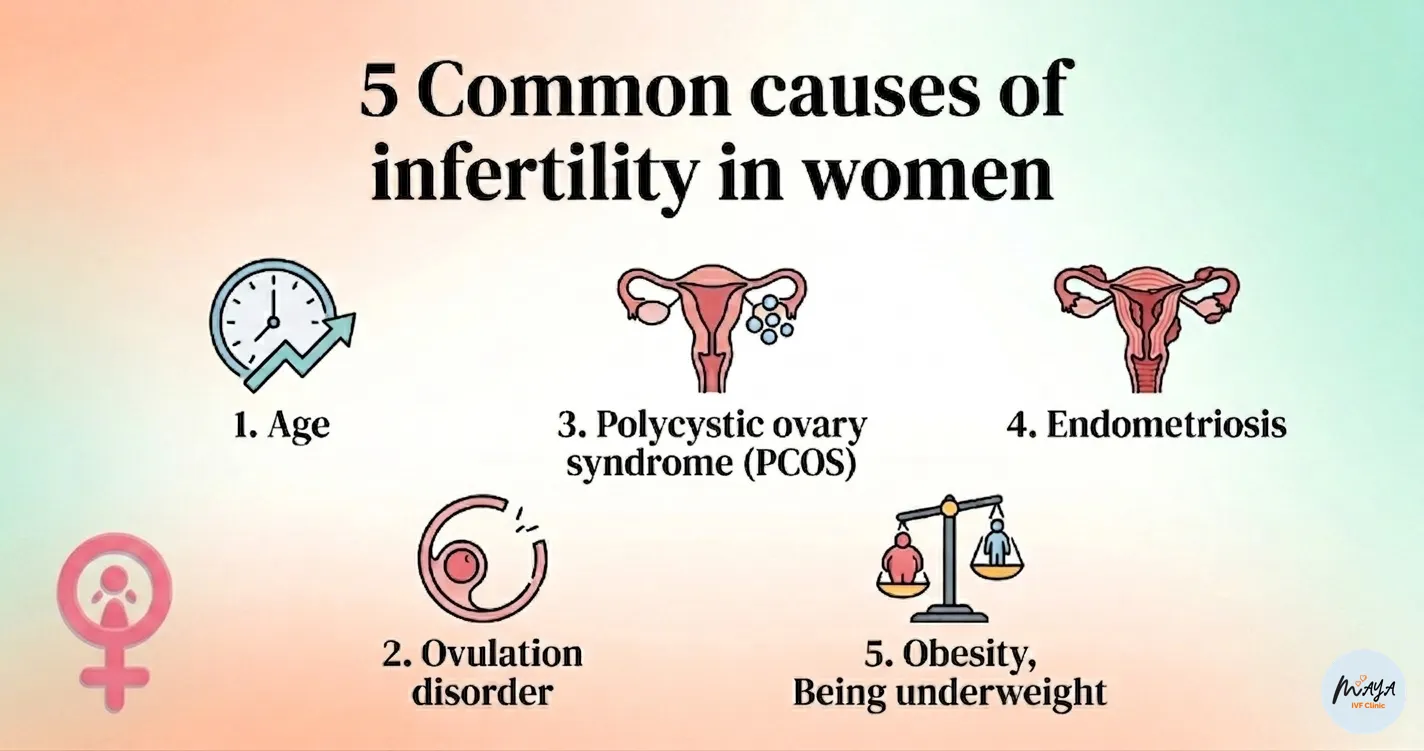
5 Common Causes of Infertility in Women
OverviewWhen months pass without a positive pregnancy test, worry tends to creep in quietly. If that...

 Nepal International Fertility and Laparoscopic Centre (NIFLC).
All rights reserved.
Nepal International Fertility and Laparoscopic Centre (NIFLC).
All rights reserved.