
Low OATS male infertility showing low sperm count, poor motility, and abnormal shape affecting fertility.
Blog Details
- Home
- Blog Details
Low OATS Male Infertility: Causes & Treatment
Overview
An abnormal semen analysis can be unsettling, especially when the report contains a word like oligoasthenoteratozoospermia. The reassuring starting point is that OATS describes a pattern in a semen sample, not a verdict on whether you can become a father. This guide explains what OATS means, why it happens, how it is evaluated, and when IUI, IVF, or ICSI may be considered.
What Is OATS?
OATS (also written OAT or OAT syndrome) stands for oligoasthenoteratozoospermia: a semen result with low sperm concentration, reduced sperm movement, and a larger-than-expected share of abnormally shaped sperm. It is a laboratory finding, not a single disease, and several conditions can produce it. Many people search for "low OATS," but the "oligo" in the name already means low, so clinicians simply say OATS or OAT.
What Do Oligo, Astheno, and Terato Mean?
Oligozoospermia: sperm concentration or total sperm number below the reference limit.
Asthenozoospermia: reduced sperm motility, especially forward (progressive) movement.
Teratozoospermia: a high proportion of sperm with an abnormal shape.
OATS means all three are present, graded mild, moderate, or severe by how far the results fall below the reference limits.
How to Read Your Semen Report
Most laboratories, including those in Nepal, compare your result with the WHO laboratory manual (6th edition, 2021). It lists these lower reference limits:
These values mark the fifth percentile of recently fertile men. They are not a pass/fail line: some fertile men fall below them, and some men above them still struggle to conceive.
Does OATS Mean a Man Is Infertile?
No. OATS lowers the chance of conception in a given month, but it does not automatically mean a man cannot father a child.
What happens next depends on severity, the underlying cause, the woman's age, ovarian reserve, ovulation and tubal health, how long the couple has been trying, and the timing of intercourse. Guidelines recommend assessing both partners at the same time rather than reading the semen report in isolation.
OATS and Male Infertility in Nepal
In Nepal, testing often starts with the woman, and men may delay a semen analysis because of stigma. Hospital studies from Nepal report male factors in a substantial share of infertility cases: an Eastern Nepal teaching-hospital study found them in about 37%, and among couples seeking IVF, severe oligozoospermia was the most common male-factor diagnosis. These figures come from specific hospital populations, not national data. Occupational heat exposure, relevant to some men working abroad, has been linked to changes in semen quality, though not in every case. Couples living apart because of overseas work can ask a clinic about timing semen collection, or freezing, around the woman's cycle.
What Causes OATS?
Factors often overlap, and sometimes no cause is found. The main groups:
Testicular: varicocele (enlarged veins in the scrotum), past testicular injury or torsion, undescended testes, and damage from infection or inflammation.
Hormonal: Disorders of the hypothalamus or pituitary and low testosterone production (hypogonadism) can disrupt sperm production.
Genetic: Klinefelter syndrome, Y-chromosome microdeletions, and other chromosomal changes. These matter more in severe cases.
Obstruction: blockages in the sperm-carrying tubes more often cause very low counts or no sperm and are checked for when the picture suggests it.
Medications and substances: testosterone therapy and anabolic steroids can sharply suppress sperm production. Tobacco, heavy alcohol use, some drugs, and some cancer treatments are also linked to poorer semen quality.
General health: obesity, diabetes, and long-term illness are associated with poorer semen quality.
Does OATS Cause Symptoms?
Usually not. Most men feel well, with normal erections and ejaculation, and only learn about OATS when conception takes longer than expected. Testicular pain or swelling, low libido, erectile problems, or signs of hormone imbalance are not caused by OATS itself, but may point to an underlying condition worth assessing.
How Is OATS Diagnosed?
Diagnosis starts with a semen analysis covering volume, concentration, total sperm number, motility and morphology. Counts vary naturally between samples, and illness, fever, abstinence time and collection problems can affect a result, so one abnormal report is rarely the final word. The 2025 WHO infertility guideline suggests repeating the test after at least 11 weeks when any parameter is outside the reference range. Follow your laboratory's abstinence instructions.
When indicated, a specialist may add:
a medical history and physical examination, including a check for varicocele
hormone blood tests, since AUA/ASRM guidance suggests FSH and testosterone testing for men with low sperm counts
a scrotal ultrasound
tests for infection
genetic testing, such as karyotype or Y-chromosome microdeletion testing, usually for severely reduced counts or suggestive findings
Not every man needs every test. Sperm DNA fragmentation testing, for example, is not routine, so ask your specialist whether it would change your plan.
What to Do After an Abnormal Report
Avoid self-treating. Do not start testosterone, steroids, or supplements on your own.
Plan a repeat test at least 11 weeks later.
List your history: medications, past injury or surgery, high fevers, smoking, alcohol, or drug use.
Involve your partner; her assessment should happen alongside yours.
See a specialist if the result is markedly low or the repeat is still abnormal.
Can OATS Improve?
Sometimes. If a reversible cause is found, such as a medication, a varicocele or a hormonal problem, semen quality may improve. Sperm production takes about 74 days, and maturation and transit add more time, so a change made today may show up in a semen sample only about three months later. That is an average, not a deadline, and in many men no reversible cause is found.
Treatment Options for OATS
Treating the Underlying Cause
Treatment follows the diagnosis: stopping a harmful medication, managing illness such as diabetes, treating infection, or addressing a hormonal disorder or obstruction. No single treatment "fixes" OATS.
Lifestyle and Health Changes
WHO suggests low-cost lifestyle advice for couples with infertility: stopping smoking, moderating alcohol, maintaining a healthy weight, physical activity, and a balanced diet. These support general health and may help sperm, but cannot promise a change in OATS.
Cannabis evidence is mixed, with no reliable recovery timeline. Stress is linked to reproductive outcomes in some studies but rarely explains OATS alone.
Varicocele Treatment
AUA/ASRM guidance supports considering varicocele repair for men with a palpable varicocele, abnormal semen parameters, and infertility who are trying to conceive. WHO takes a similar position and does not recommend treating subclinical varicoceles found only on imaging. Repair does not benefit every man and is no guarantee of pregnancy.
Hormonal Treatment and the Testosterone Warning
Hormonal treatment makes sense only when tests show a hormonal cause, such as raised prolactin.
Testosterone is not a fertility treatment:
Under the AUA/ASRM male infertility guideline, clinicians should not prescribe exogenous testosterone to men interested in current or future fertility, because it can suppress the signals that drive sperm production. If you use testosterone or anabolic steroids and want to conceive, speak to a qualified clinician rather than self-treating or stopping abruptly.
Supplements
The same guideline calls the benefit of antioxidants and vitamins "of questionable clinical utility," and the WHO made no recommendation for or against them. Some studies show semen-parameter changes, but better pregnancy or live-birth rates are not established. Discuss supplements with your doctor first.
IUI, IVF, and ICSI for Male-Factor Infertility
IUI (intrauterine insemination): prepared sperm are placed in the uterus. It may be considered when enough motile sperm remain after laboratory preparation and female factors are favorable.
IVF: eggs are collected after ovarian stimulation, combined with sperm in the laboratory, and the resulting embryo is transferred.
ICSI: a form of IVF in which an embryologist injects a single sperm directly into each mature egg.
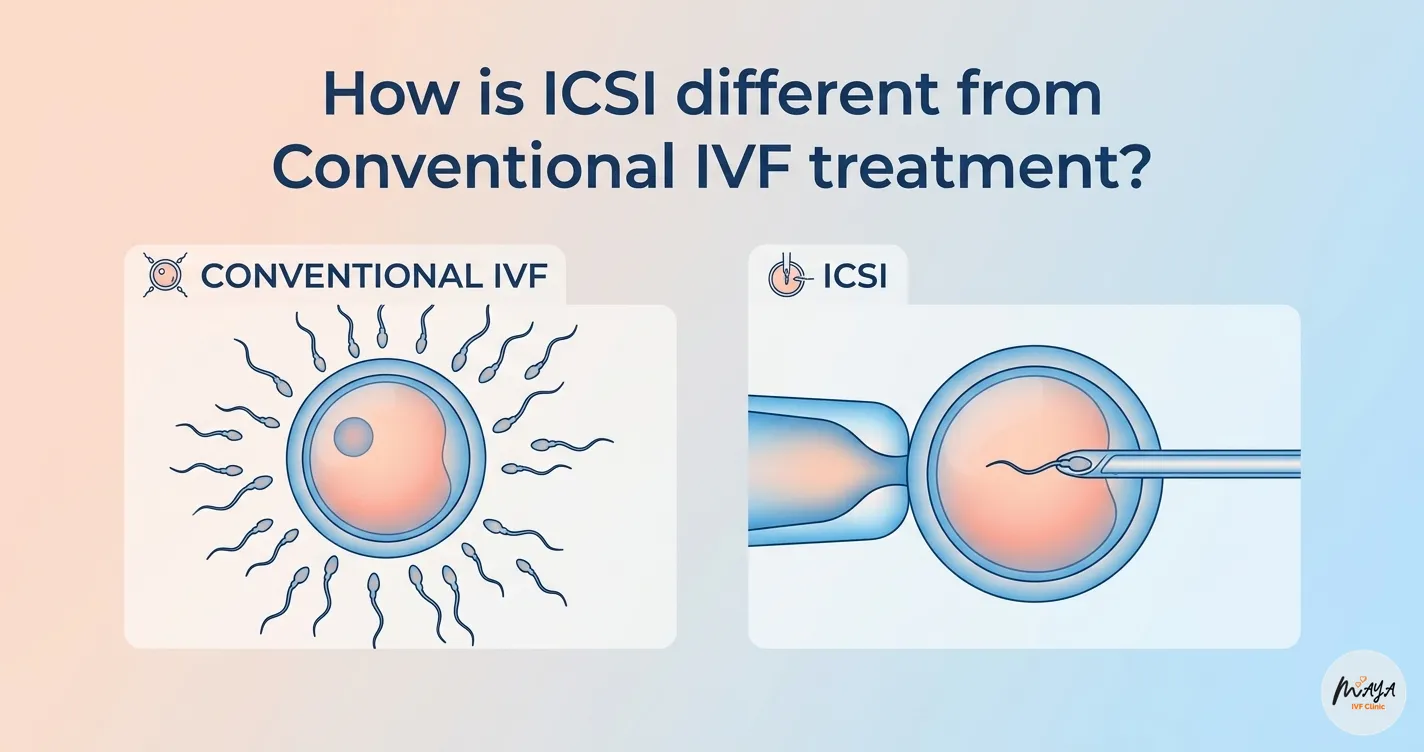
ICSI is not a standalone treatment: it is one step within IVF that addresses fertilization without correcting the cause of the sperm problem. Maya's guide to how ICSI differs from conventional IVF explains the lab steps.
Can ICSI Help With Severe OATS?
Often, yes. AUA/ASRM notes that ICSI appears to override the effects of poor concentration, motility, and morphology, provided adequate viable sperm can be found.
ICSI needs one viable sperm per egg, not a large count. That is not a guarantee. Fertilization can fail, embryos may not develop, implantation may not occur, and a pregnancy may not continue to live birth.
There is no single success rate for OATS:
Fertilization, clinical pregnancy and live-birth rates are different outcomes, and results depend strongly on the woman's age, ovarian reserve, embryo quality, the male cause and the laboratory. Ask any clinic for live-birth rates per started cycle for couples like you, and how they define them.
Baby health:
Most children born after ICSI are healthy. Studies report slightly higher birth-defect rates after assisted reproduction than natural conception; differences between ICSI and conventional IVF are small and inconsistent. It is hard to separate the procedure's effect from infertility itself, parental age and genetic factors.
Sperm retrieval and freezing:
Surgical retrieval is mainly for men with no sperm in the ejaculate; most men with OATS do not need it. Sperm can be frozen even when numbers are low, sometimes across several samples, and used later for ICSI, though freezing guarantees nothing.
Can a Man With OATS Still Have a Biological Child?
Many do: naturally when OATS is milder and the woman's fertility is favorable, after the cause is treated, or with IUI, IVF, or ICSI. Because causes and severity vary, prognosis needs individual evaluation.
When Should You See a Fertility Specialist?
Consider an assessment if a semen report is abnormal, after about a year of trying (6 months if the woman is 35 or older), or with a history of undescended testes, testicular injury, varicocele, cancer treatment, or testosterone or steroid use. Maya IVF Clinic's male fertility services in Kathmandu cover male evaluation and treatment planning alongside assessment of the female partner.
Frequently Asked Questions
Can OATS be treated naturally?
Healthy habits support overall health but are not a proven treatment for OATS. Treating a reversible cause, such as a medication or varicocele, is more likely to help.
Is ICSI the only option?
No. Depending on severity and the cause, options include treating the cause, IUI, or IVF. ICSI is most often advised for severe cases.
Does testosterone affect sperm count?
Yes. Exogenous testosterone can suppress sperm production, and it is not a fertility treatment.
Does varicocele cause OATS?
It is one possible contributor, not the only one. Repair is considered for a palpable varicocele with abnormal semen when trying to conceive.
Can sperm be frozen with a low sperm count?
Yes, sperm can often be frozen even when numbers are low. Whether it is useful depends on the treatment plan.
Is OATS permanent?
It depends on the cause. Some are reversible, and some are not, so it needs individual evaluation.
Our Latest Blogs
Infertility Myths and Facts in Nepal: What Couples...
Quick AnswerInfertility affects an estimated 1 in 6 people globally during their reproductive years,...
How Is ICSI Different From Conventional IVF Treatm...
OverviewConventional IVF places sperm and eggs together in a dish and allows fertilization to happen...
5 Common Causes of Infertility in Women
OverviewWhen months pass without a positive pregnancy test, worry tends to creep in quietly. If that...
 Nepal International Fertility and Laparoscopic Centre (NIFLC).
All rights reserved.