
IVF Cost in Nepal
If you've spent the last few days collecting quotes from different clinics and ending up more confused than when you started, that's an extremely common place to be. One clinic quotes NPR 150,000. Another quote from NPR is 600,000. Neither number, on its own, tells you very much—because "IVF cost" rarely means the same thing twice. This guide exists to fix that: not to sell you anything, but to help you understand exactly what you're paying for, what tends to get left off the initial quote, and what questions actually protect your budget.
Quick Answer
A single IVF cycle in Nepal typically costs between NPR 300,000 and 500,000 for the core clinical procedure, though published estimates across different clinics vary considerably—some quote figures as low as NPR 120,000, while others are closer to NPR 650,000 or more, depending on what's included. That gap isn't a typo, and it isn't one clinic being dishonest and another being fair. It almost always comes down to what's actually inside the number.
Consultations, ovarian stimulation medication, egg retrieval, fertilization, and embryo transfer are usually bundled into a base package figure, but medications, ICSI, embryo freezing, and donor programs are frequently priced as add-ons rather than included from the start. So a "low" quote from one clinic and a "high" quote from another might, once everything is added up, land very close to each other, or they might not. There's no way to know until you see both broken down line by line.
The honest answer to "What will this cost me?" is it depends heavily on your specific diagnosis, and no clinic can give you a truly accurate number before reviewing your test results. Anyone who quotes you a confident, final figure before knowing your history is giving you a marketing number, not a medical one. What you can do right now, before you've even had a consultation, is learn what should be in that number—so that whatever figure you're eventually given, you know exactly what to ask about before you accept it.
Key Takeaways
The wide range in advertised prices isn't clinics being dishonest—it usually reflects genuinely different inclusions, not a directly comparable "price."
Medications are one of the most commonly under-quoted costs and can add a meaningful amount depending on your body's response.
ICSI, donor programs, embryo freezing, and genetic testing are usually separate line items, not automatically included.
The cheapest quote is not automatically the best value—ask what's excluded, not just what's included.
A written, itemized estimate, not a verbal headline figure, is what actually protects your budget.
Financial planning for IVF should account for the possibility of more than one cycle.
Why Do Two Clinics Quote Completely Different Prices
This is usually the very first thing that confuses people, and it's worth addressing head-on: two Kathmandu clinics can quote you numbers that differ by two or three times, without either one necessarily being dishonest.
The most common reason is simply what is counted as "the cost." Some quotes cover only the basic clinical procedure: retrieval, fertilization, and transfer. Others fold in medications, initial testing, or one round of embryo freezing. A lower number often just means fewer things are included, not that the clinic is cheaper overall once you add everything up.
Our fertility specialists frequently explain that the single biggest driver of your actual, final cost isn't the clinic's price list; it's your specific diagnosis. A patient who needs ICSI, donor eggs, or extensive genetic testing will pay meaningfully more than a base quote suggests, regardless of which clinic they choose.
What This Means For You: Instead of comparing headline numbers, ask each clinic for the same thing: a full, itemized estimate based on your actual test results, not a generic package price. Two clinics quoting the same "base price" can still leave you with very different final bills.
What a Base IVF Package Usually Includes
A standard package generally covers:
Doctor visits & Transvaginal Ultrasound (TVS) throughout the procedure
Stimulation & hormonal injections for Oocyte Pick-Up (OPU)
Oocyte retrieval under anesthesia
Operating Theater (OT) charges
Embryology charges
Intracytoplasmic Sperm Injection (ICSI) + Conventional IVF
OT/Lab disposables, IVF media
Embryo transfer (one attempt)
Endometrium lining preparation
Embryo thawing
What it usually does not include, unless specifically stated:
Oral hormonal drugs & progesterone injections for Embryo Transfer (ET), blood tests, albumin in case of PCOs, endometrial biopsies (approx. 35-45 k)
Pregnancy care till delivery
Embryo storage fees
Genetic testing of embryos (PGT)
Freezing and storage of extra embryos
A second embryo transfer, if the first doesn't succeed
Donor egg, sperm, or embryo costs
Doctor Insight: During fertility consultations at Maya IVF Clinic, our team often helps couples understand that "package price" and "total cost" are two different things. Asking a clinic to clearly separate the two, in writing, before you commit is one of the most protective things you can do for your budget.
Sample IVF Cost Comparison Table
Published estimates for a single IVF cycle vary noticeably across Nepali clinics and sources. The table below reflects the broad range currently seen, presented as a starting reference point (not a quote and not specific to any one clinic).
Why the ranges overlap so much: Different clinics and different sources reporting on them use different currencies, denominators, and inclusion assumptions. This is exactly why a single advertised number is hard to compare directly. Treat every figure here as a planning reference, and ask your own clinic for a written estimate based on your specific case.
Add-On Costs Couples Often Don't See Coming
Beyond the obvious add-ons above, a few costs surprise couples specifically because they're rarely mentioned upfront:
A cancelled or converted cycle (if stimulation doesn't progress as expected and the plan changes mid-cycle)
Anesthesia fees for egg retrieval are sometimes billed separately from the procedure itself
Post-transfer medications (progesterone support), which continue for weeks after transfer. Repeat monitoring visits if your body responds slowly to stimulation and needs extra scans or blood draws
Pregnancy confirmation testing and early scans, sometimes billed outside the IVF package
Counseling sessions (if you choose to use them), which are genuinely worth budgeting for rather than being an afterthought
Common Mistake: Assuming the number on the first quote is the number you'll actually pay. Ask specifically, "What is the realistic total, including medications and the most likely add-ons for someone with my test results?"
Understanding Package Inclusions vs. Optional Services
Not every "optional" service is optional for every patient; some are medically necessary depending on diagnosis, while others are genuinely elective upgrades.
Usually medically necessary, not truly optional, depending on your case: ICSI (for significant male-factor infertility), donor gametes (for specific diagnoses like premature ovarian insufficiency or azoospermia), and additional monitoring visits if your response requires them.
Usually genuinely elective: Elective embryo freezing beyond what's clinically needed, elective genetic testing when there's no specific risk factor, and private room upgrades or concierge-style services some clinics offer.
What This Means For You: When a clinic recommends an add-on, it's fair to ask directly: "Is this recommended because of something specific in my results, or is this an optional upgrade?" A transparent clinic will answer that distinction clearly, without pressure.
A Realistic Budget Planner
Use this as a starting framework, not a final number. Fill in your own clinic's written estimate once you have it.
A Fictional Couple's Budget Example
Meet Raj and Anisha: a couple from Pokhara planning their first IVF cycle. Their clinic's base package quote was NPR 350,000. Because Raj's semen analysis showed reduced motility, ICSI was medically recommended, adding roughly NPR 60,000. Anisha's stimulation protocol required a slightly higher medication dose than average, adding approximately NPR 80,000. They also budgeted NPR 40,000 for travel and short-term accommodation in Kathmandu during the monitoring phase and set aside a contingency of NPR 100,000 in case a second cycle was needed.
Their realistic total planning figure ended up closer to NPR 630,000, which is nearly double the original headline quote. This did not happen because anything went wrong, but because their actual diagnosis included costs that were not part of the base package. This is a common pattern, not an unusual one, and it is exactly why an itemized estimate matters more than a single advertised price.
Unexpected Expenses Couples Forget to Plan For
Time off work during monitoring visits and the two-week wait after transfer
Transport costs for frequent short-notice appointments during stimulation
Nutritional supplements recommended by your specialist
A second round of counseling or emotional support after a difficult cycle
Storage fees for frozen embryos are billed annually by many clinics
Follow-up costs if early pregnancy complications need monitoring
Traveling to Kathmandu for IVF: What It Adds to Your Budget
Many Nepalese couples from outside the Kathmandu Valley, along with several international patients, travel specifically for IVF treatment in Kathmandu, where several of Nepal's more established fertility clinics are based. If this applies to you, factor in the following:
Multiple trips (not one): stimulation monitoring typically requires several visits over roughly two weeks before retrieval.
Short-term accommodation for the monitoring and retrieval phase
The possibility of an extended stay if your cycle needs adjustment
Return travel for the pregnancy test and early scan, roughly two weeks after transfer
What This Means For You: If you are traveling to Kathmandu for treatment, ask your clinic directly how many in-person visits your specific protocol will require. This affects your travel budget more than almost anything else.
The Emotional Cost of IVF (That No Estimate Includes)
No financial planner captures this part, but it is real: IVF asks a lot of a couple emotionally, and that has its own kind of cost, even if it does not show up on an invoice. The waiting between appointments, the two-week wait after transfer, and the possibility of a cycle not working accumulate in ways that are easy to underestimate when you are focused on the financial numbers.
Budgeting time and space for emotional support, whether that is counseling, a support group, or simply protected time with your partner, is a legitimate and valuable part of preparing for treatment (not an indulgence layered on top of it).
The Time Commitment Behind the Price Tag
A single IVF cycle typically spans four to six weeks from the start of stimulation medication to the embryo transfer, though this varies by individual protocol. Within that window, expect several monitoring visits (blood tests and ultrasounds), the retrieval procedure itself, a few days of embryo development in the lab, and the transfer. After transfer, a roughly two-week wait follows before a pregnancy test can confirm the result.
What This Means For You: If you are planning around work or travel, build in flexibility for the monitoring phase specifically. Appointment timing during stimulation often shifts based on how your body is responding, sometimes with only a day or two of notice.
Checklist Before You Pay Any Advance
Have you received a written, itemized estimate (not just a verbal number)?
Does the estimate clearly separate the base package from likely add-ons (medications, ICSI, freezing)?
Have you asked what happens financially if the cycle is cancelled partway through?
Do you know the clinic's refund or credit policy if treatment doesn't proceed as planned?
Have you asked whether the quote assumes one embryo transfer or includes a backup transfer?
Have you confirmed which tests, if any, are billed separately from the package?
Do you have this in writing, with a clear validity period for the quoted price?
Questions to Ask Your Clinic Before Committing
"Based on my specific test results, what would my realistic total cost be, rather than the average patient's?"
"What exactly happens, financially, if my cycle needs to be cancelled or converted?"
"Is a frozen embryo transfer included, or is that a separate cost if the first transfer doesn't work?"
"What's your policy if I need a second full cycle?"
"Which of the recommended add-ons are medically necessary for me specifically, and which are optional?"
Questions to Ask Your Doctor
"Given what you've seen in my case, is there anything specific likely to increase my costs beyond those of a typical patient?"
"How does my age or diagnosis affect the number of cycles you'd realistically plan for?"
"Is there anything about my case that would make ICSI or additional testing medically necessary rather than optional?"
Red Flags Worth Noticing
A clinic that won't provide a written estimate before you pay anything
Pressure to pay a large advance immediately, especially paired with urgency ("this price is only available today")
A quoted success rate given with no explanation of what it measures or how it is calculated
Reluctance to explain, clearly and calmly, what happens if a cycle is cancelled partway through
No clarity on refund or credit policy if treatment doesn't proceed
A price that seems dramatically lower than every other quote you've received, with no explanation of what's excluded
None of these automatically mean a clinic is untrustworthy, but each one is worth a direct, calm question before you commit.
Myths vs. Facts About IVF Cost
Common Mistakes Couples Make With IVF Budgeting
Comparing headline prices instead of itemized estimates, which makes clinics look more different (or similar) than they actually are.
Budgeting for exactly one cycle, without a contingency for a second attempt.
Not asking about medication costs upfront, since these are frequently the biggest under-quoted items.
Paying a large advance without a written cancellation or refund policy.
Overlooking travel, accommodation, and time-off-work costs, especially for couples traveling into Kathmandu.
Skipping the emotional planning side entirely, treating IVF as a purely financial and medical event.
Frequently Asked Question
What is the average cost of one IVF cycle in Nepal?
Published estimates vary considerably, roughly in the range of NPR 300,000 to 500,000 for a base cycle, with some clinics quoting lower and others higher depending on inclusions. A written, itemized estimate from your specific clinic is more reliable than any general range.
Why do IVF cost quotes differ so much between clinics?
This occurs mainly because "the cost" means different things at different clinics. Some quotes include medications and monitoring, while others only cover the core procedure, with everything else billed separately.
Are medications included in the base IVF price?
Usually not. Stimulation medications are commonly billed as a separate, sometimes substantial, cost. Ask for this explicitly before assuming it is included.
Does IVF cost more if I need ICSI or donor eggs?
Yes. Both are typically priced as additions to the base package, and the amount varies by clinic.
Should I budget for more than one cycle?
It's a reasonable and common approach. Many patients need more than one cycle to achieve a pregnancy, and budgeting only for a single attempt can create financial pressure partway through treatment.
What should I ask for before paying any advance?
A written, itemized estimate; clarity on what happens if the cycle is cancelled or converted; and the clinic's refund or credit policy, in writing.
Is IVF in Nepal cheaper than in other countries?
Nepal is generally considered more affordable than many Western countries for comparable procedures, which is part of why some international patients travel here for treatment, though "affordable" should never replace asking the same detailed cost and outcome questions you would anywhere else.
Our Latest Blogs

Infertility Myths and Facts in Nepal: What Couples...
Quick AnswerInfertility affects an estimated 1 in 6 people globally during their reproductive years,...
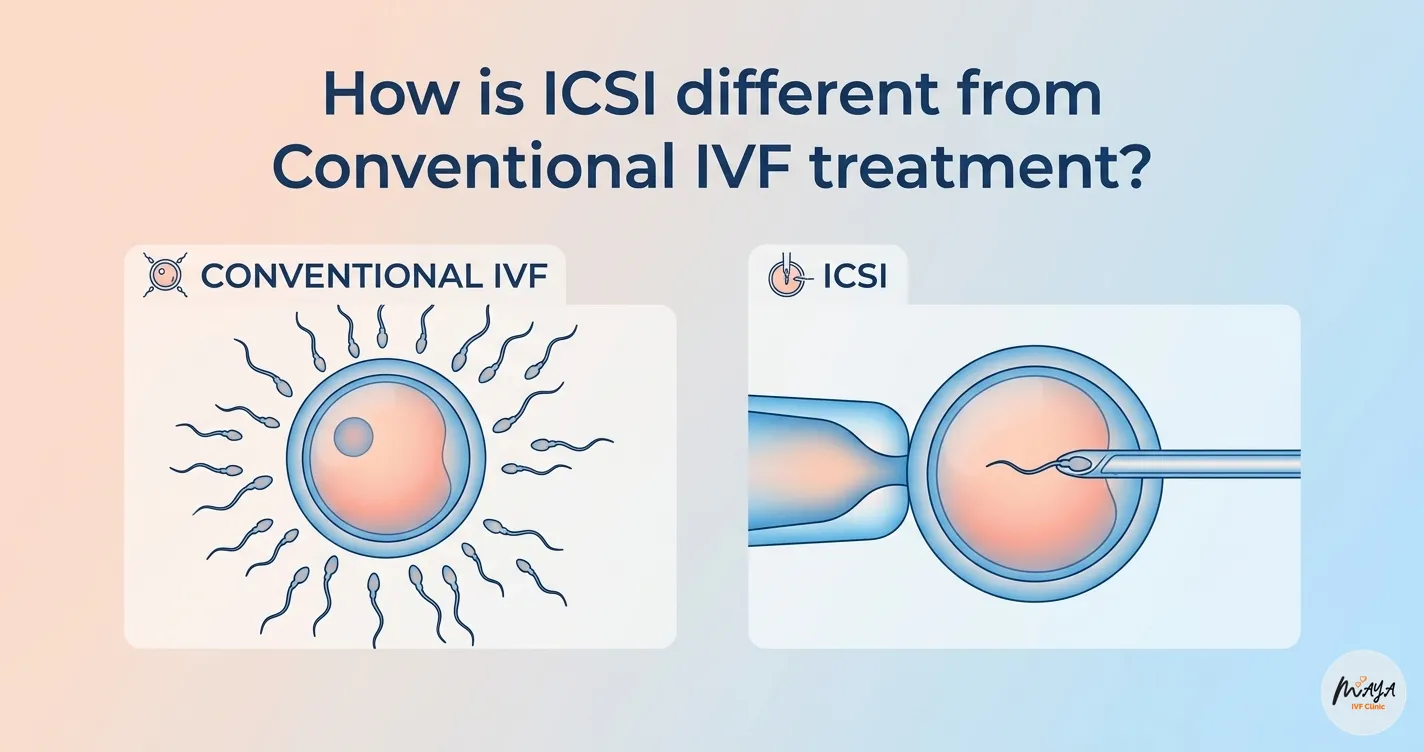
How is ICSI different from Conventional IVF treatm...
ICSI and Conventional IVF both are forms of assisted reproductive treatment (ART) in which eggs are...
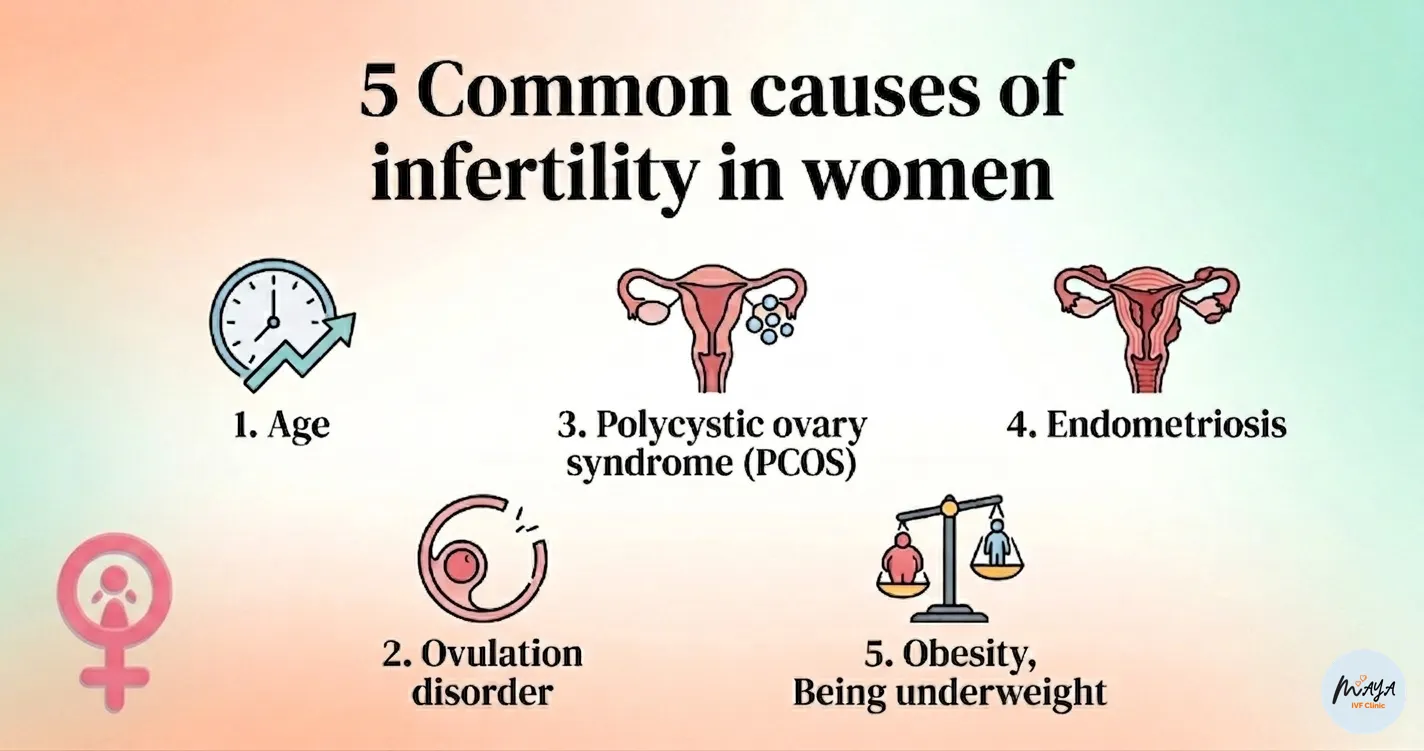
5 Common causes of infertility in women
A condition is diagnosed as infertility when a heterosexual couple is unable to conceive after one y...
 Nepal International Fertility and Laparoscopic Centre (NIFLC).
All rights reserved.
Nepal International Fertility and Laparoscopic Centre (NIFLC).
All rights reserved.